


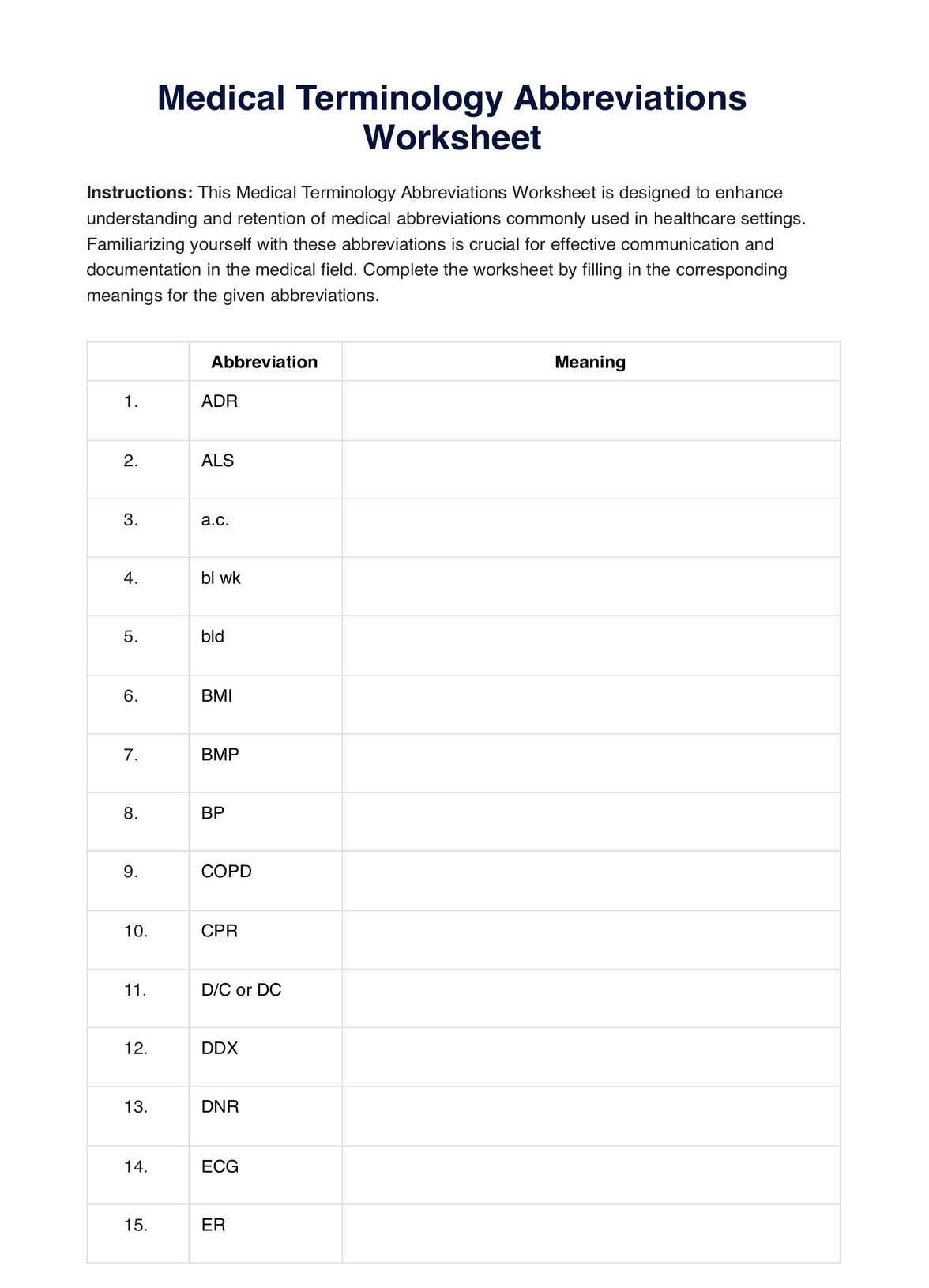




An introduction to medical terminology abbreviations
Understanding medical terminology can initially feel like deciphering an enigmatic code. For many, it's akin to navigating uncharted waters, each unfamiliar term and abbreviation acting as an unexplored territory. If you've ever found yourself grappling with the complexities of medical conversations, you're not alone. This journey is a shared experience, especially for those entering the realms of healthcare, nursing, or any field associated with the human body.
In the medical domain, effective communication is a must. Imagine a scenario where a healthcare professional relays crucial information using intricate language filled with medical abbreviations and terms. It's like receiving a cryptic message, leaving you intrigued and slightly puzzled. That's precisely where grasping medical terminology becomes indispensable.
This introduction serves as your gateway into the world of medical terminology abbreviations. It's not just about memorizing a list of terms; it's about unraveling the language that forms the backbone of healthcare communication. From deciphering the meanings of medical abbreviations to understanding the intricacies of terms associated with the muscular, respiratory, endocrine, urinary, skeletal, lymphatic, and more, this journey is about learning the language that defines human anatomy.
Whether you're one of the nursing students completing coursework or someone keen on comprehending the medical dialogue surrounding your health, the significance remains unchanged. In your field, you will encounter medical terms and prefixes from cells, organs, diseases, and procedures, and gradually, you'll find yourself equipped to decode the messages embedded in medical jargon. Consider this learning opportunity not as an intimidating challenge but as a step toward understanding the language that defines our human body.









