









What is a Lateral Step Down Test?
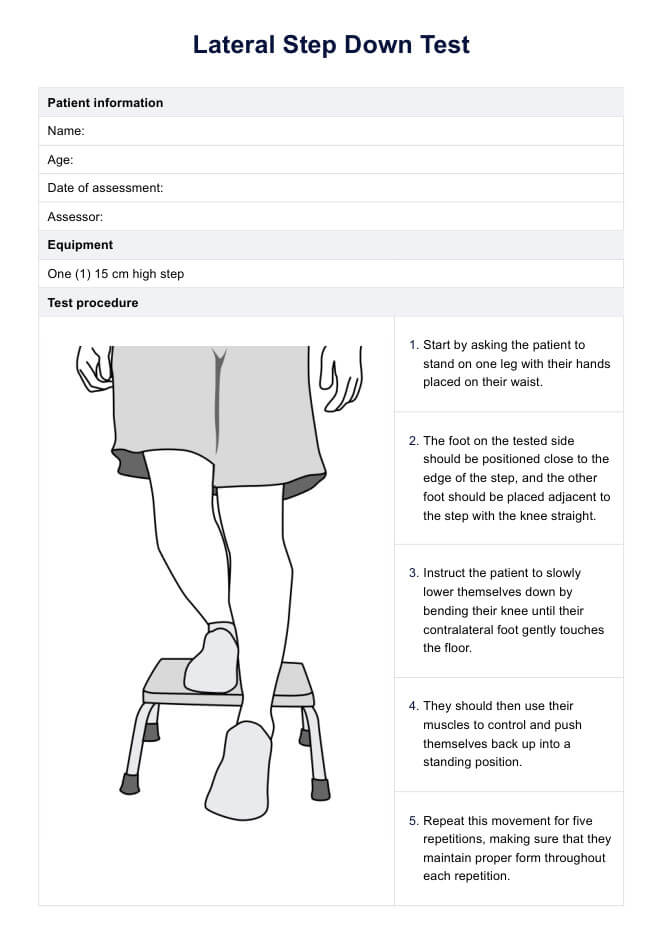
The Lateral Step Down Test is a functional movement assessment used in sports physical therapy and rehabilitation settings to evaluate lower extremity movement quality, particularly focusing on the knee position and the quality of movement. In this test, the individual stands on a step or platform with the contralateral leg hanging off the side. The starting position involves the individual standing tall with their knee straight on the involved leg and the contralateral leg freely hanging. The test involves a controlled descent of the unsupported leg towards the floor, with the goal of assessing the ability to control movement and maintain stability through the knee joint.
Key aspects evaluated during the Lateral Step Down Test include the alignment of the knee over the foot, the smoothness of movement, and the ability to maintain balance throughout the descent and ascent phases. Proper execution of the test helps clinicians identify potential weaknesses or imbalances in the lower extremity kinetic chain, which can inform targeted rehabilitation strategies. The Lateral Step Down Test is particularly useful in assessing functional asymmetries and rehabilitation progress in individuals recovering from lower extremity injuries or surgeries.









