






What is Kohler's disease?
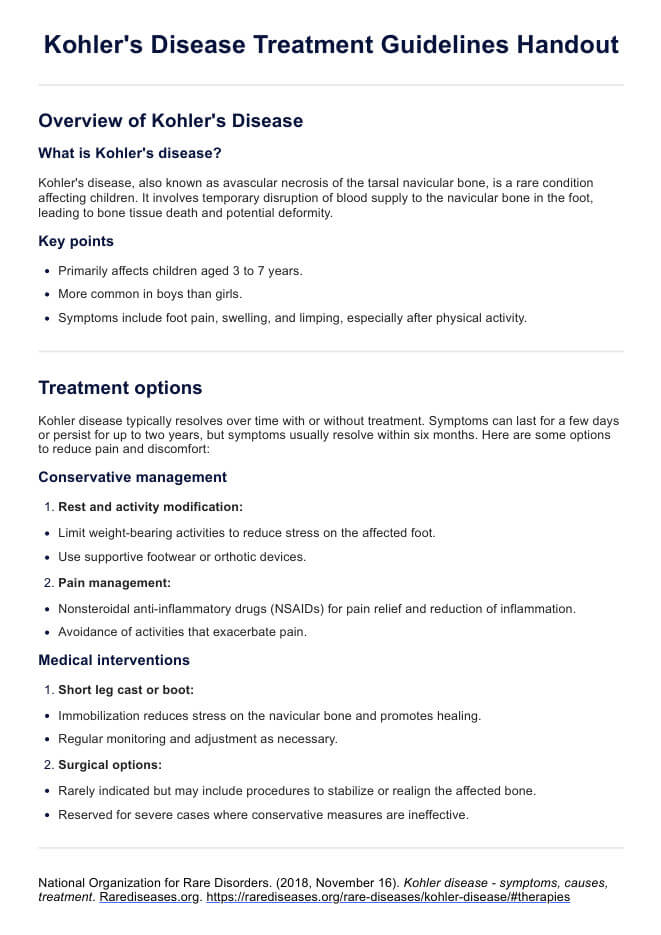
Kohler's disease, also known as Köhler disease or avascular necrosis of the tarsal navicular bone, is a rare bone disorder primarily affecting children. It occurs due to temporary disruption of blood supply to the tarsal navicular bone, which is a small bone in the foot essential for maintaining its arch. This condition leads to avascular necrosis, a process where bone tissue dies due to lack of blood supply and blood vessels. As a result, the affected bone may become painful, swollen, and tender.
Typically diagnosed between the ages of 3 and 7 years, Kohler's disease predominantly affects boys more than girls. Symptoms often include limping or difficulty walking, particularly after physical activity. Diagnosis involves clinical evaluation, X-rays, and other bone imaging techniques to confirm delayed bone formation characteristic of avascular necrosis.
Treatment options vary based on the severity of symptoms and may include conservative measures such as rest, pain relievers, and supportive footwear to alleviate discomfort while the bone heals naturally. In more severe cases, orthopedic surgery might be necessary to alleviate pain and restore normal bone function. Although Kohler's disease is rare, prompt diagnosis and appropriate treatment can help manage symptoms effectively.









