






What is an INR blood test?
Blood clotting tendencies are the proclivity of the blood to form clots, a critical process that prevents excessive bleeding when a blood vessel is injured. However, an increased or decreased blood clot tendency can lead to serious health complications. An elevated clotting tendency can result in unnecessary clots, leading to conditions such as deep vein thrombosis or stroke. On the other hand, decreased clotting can result in excessive bleeding, making even minor injuries potentially dangerous.
A prothrombin time test measures how long it takes for blood to clot, assessing the functioning of clotting factors, especially in the extrinsic and common pathways. A healthcare professional takes a blood sample, adds thromboplastin and calcium, and records the clotting time in seconds. The prothrombin time test may also be called the International Normalized Ratio (INR) Blood Test since results are reported as an international normalized ratio (INR), which standardizes the clotting time across different labs.
Patients on the blood-thinning medication warfarin (which prevents dangerous blood clots) need regular INR tests to evaluate the medication's effectiveness and adjust dosages as necessary. This monitoring is crucial for managing the risk of blood clots and diagnosing a bleeding disorder in patients with abnormal bleeding or clotting symptoms.
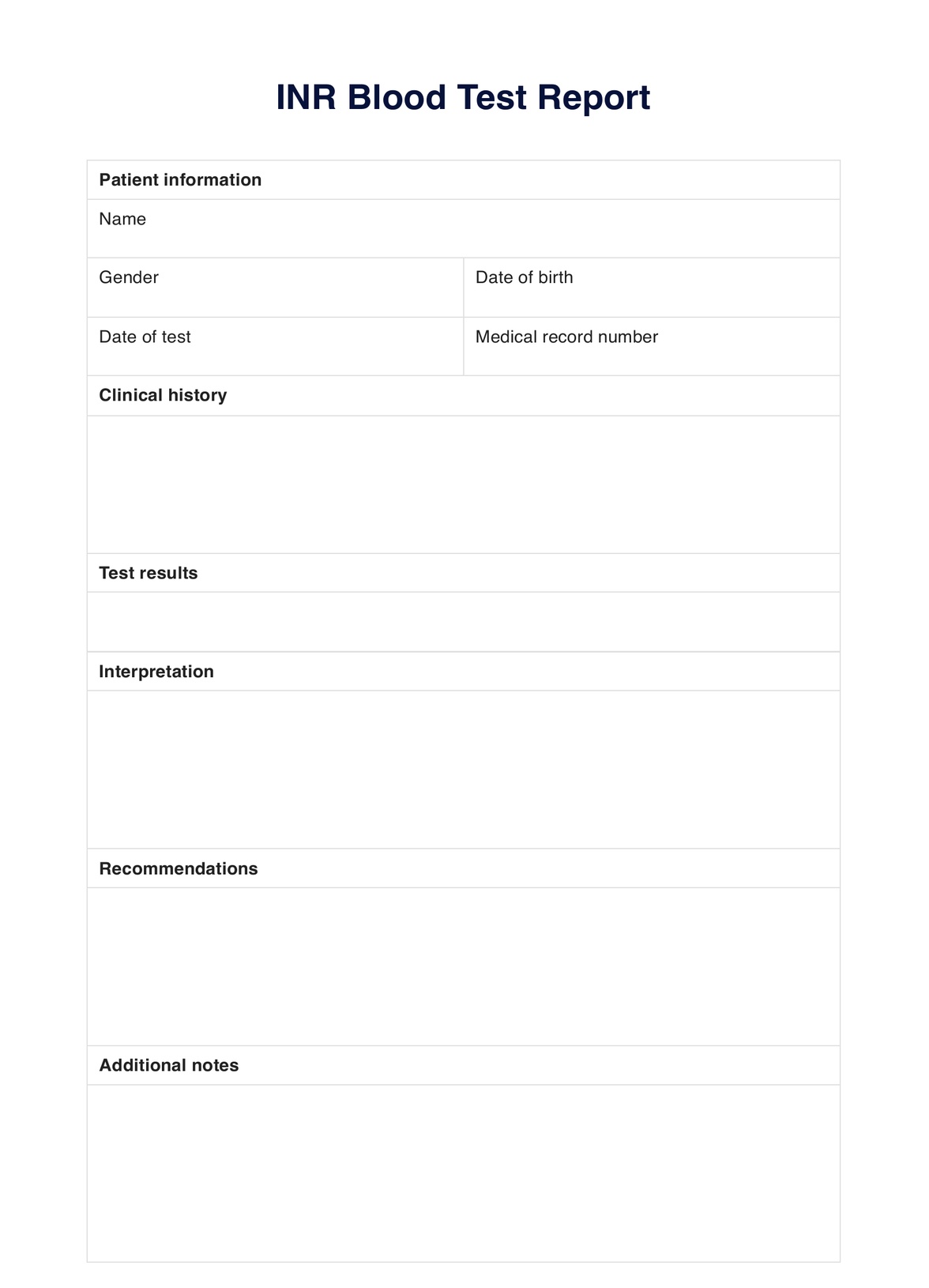
A blood sample is taken during the examination, and the results are calculated to determine the patient's blood clotting ability. The results are then documented in an INR Blood Test Report, which records the patient's clotting tendencies. This report is essential for tracking the patient's progress, adjusting medication dosages, and identifying potential risks or complications. It provides healthcare professionals with valuable information to make informed decisions regarding patient care.









