







What is an Elderly Home Safety Checklist?
The importance of good home safety can't be overstated. Good home safety equates to an environment that reduces risks and promotes one's well-being. Doing so often involves regular home safety evaluations to determine potential hazards and take necessary precautions.
A home safety assessment helps prevent potential hazards, and securing a home environment decreases the risk of accidents and injuries, improving individuals' well-being and providing peace of mind. Effective home safety measures empower individuals to move around their residences with confidence and autonomy, nurturing feelings of safety and relaxation.
Elderly home safety is a critical aspect of aging in place. It focuses on creating an environment that minimizes risks and promotes well-being for seniors. It involves proactive measures to address potential hazards within the living space, ensuring a secure and comfortable atmosphere.
Falls are the second leading cause of unintentional injury deaths worldwide, with approximately 684,000 fatalities annually, predominantly affecting adults aged 60 and above. Such emphasizes the necessity for prevention strategies focusing on education, safer environments, research, and policies (World Health Organization, 2021).
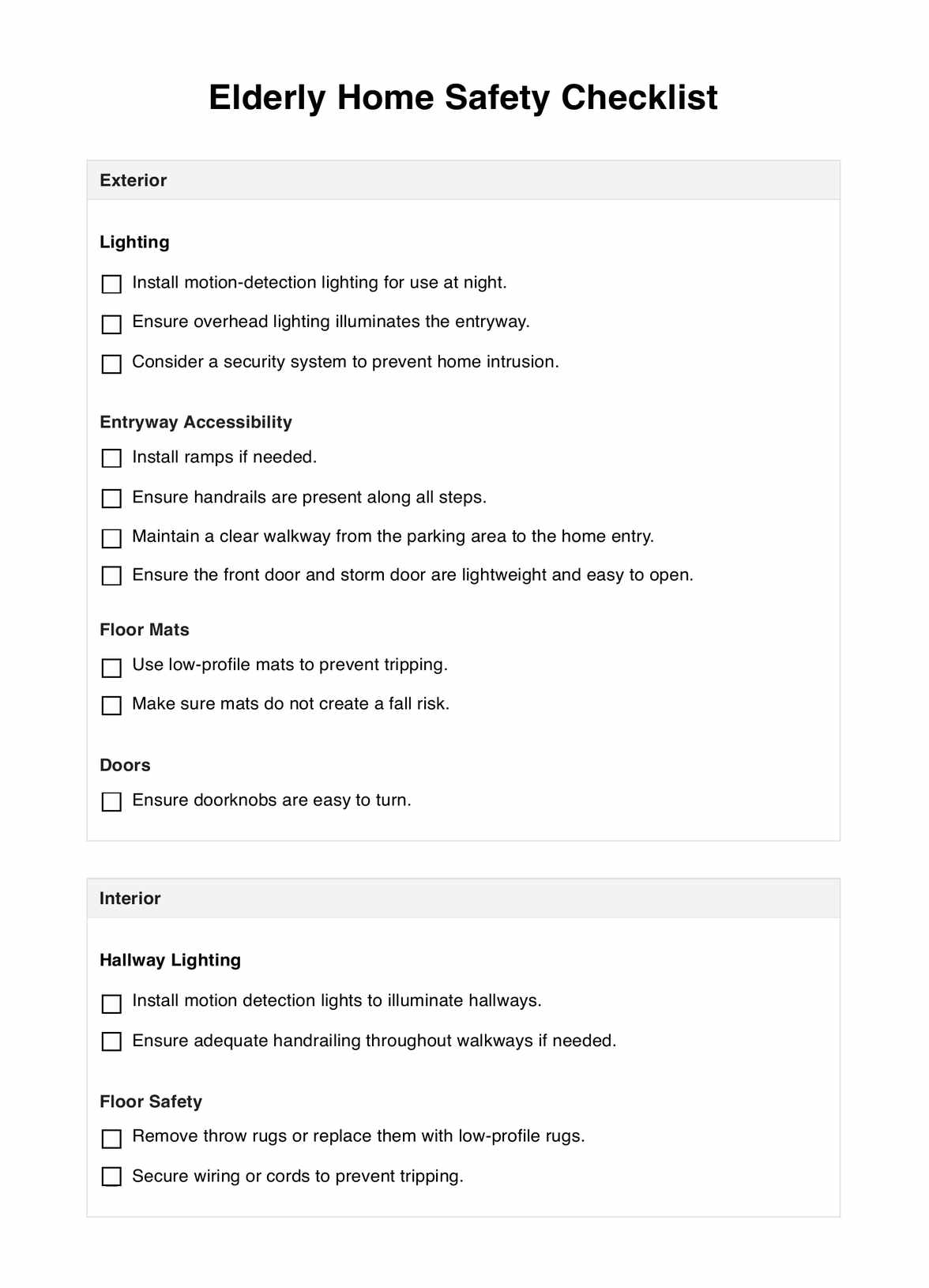
An Elderly Home Safety Checklist is a structured guide assessing and enhancing the safety of a senior's living environment. The checklist covers the home's exterior and interior aspects, including adequate lighting, entryway accessibility, floor safety, stairways, kitchen, living spaces, bedroom, and bathroom. It includes recommendations for essential safety products like medical alert systems, smoke alarms, and carbon monoxide detectors and offers insights into financial assistance options.
Safety assessments are not limited to an older adult's home. In fact, organizations also conduct safety assessments to protect their establishment, personnel, and staff, which is usually done with the help of a Safety Assessment tool.









