What is a women's wellness exam?
A women’s wellness exam is a routine checkup designed to evaluate and support a woman's physical and overall well-being (University of Utah Health, 2024). It is a key part of preventive care, aiming to identify potential risk factors, address ongoing health concerns, and monitor reproductive health over time.
These well-woman exams are typically conducted annually and play a critical role in detecting issues such as breast cancer, cervical cancer, and high blood pressure before they progress. Through comprehensive wellness screening, healthcare providers gather important data through screening tests, clinical assessments, and patient interviews to tailor recommendations based on age, family health history, and other factors.
Many women rely on this visit to discuss topics like birth control options, menopausal symptoms, and abnormal bleeding. The well-woman visit offers healthcare professionals a structured opportunity to deliver education, provide timely referrals, and establish a care plan built around each woman’s unique needs.
Components of a women's wellness exam
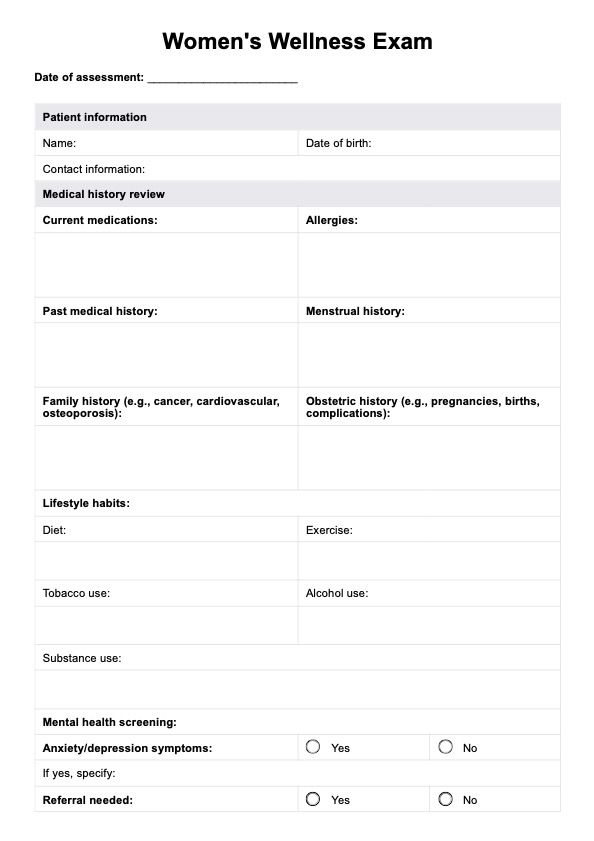
A comprehensive woman’s wellness exam includes several essential components to ensure a thorough evaluation of women’s health. It begins with a detailed review of the medical history, including sexual history, current medications, and lifestyle habits. Reviewing family health history helps identify inherited conditions such as breast or ovarian cancer.
The physical exam assesses general physical health and includes checking vital signs such as blood pressure, heart rate, and respiratory rate. Height, weight, and BMI are also recorded. A breast exam is performed to detect any signs of breast cancer, including lumps, skin changes, or nipple discharge (Henderson et al., 2023).
The gynecologic pelvic exam evaluates the health of the reproductive organs, including the uterus, cervix, and ovaries (Bialy et al., 2024). This may also involve a Pap test (or Pap smear) to screen for cervical cancer. The frequency of Pap smears depends on age and risk factors.
Based on patient history, blood tests and additional screening tests (e.g., for STIs, cholesterol, and diabetes) may be ordered. Counseling during the visit typically includes guidance on birth control options, menopausal symptoms, and wellness planning. Healthcare professionals use this time to address patient concerns, promote disease prevention, and build long-term health strategies.