
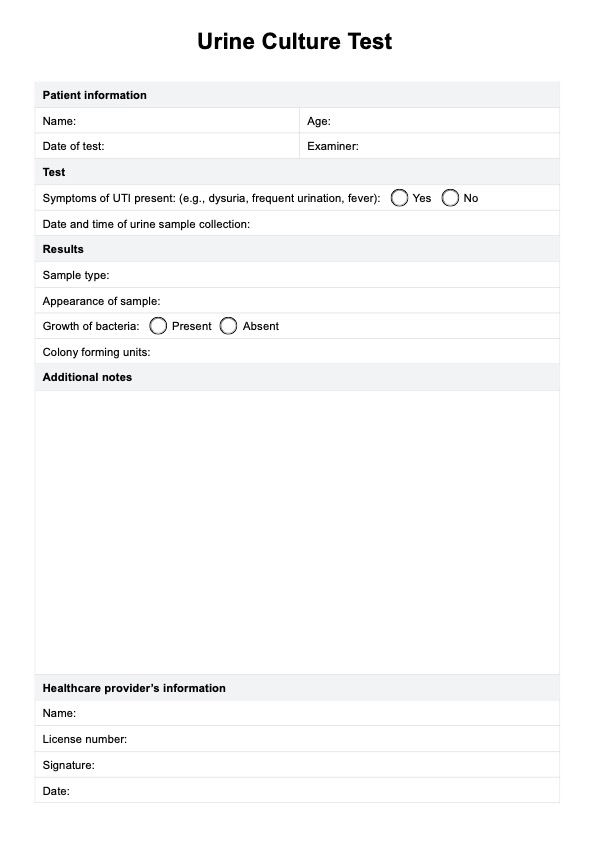




What is a Urine Culture Test?
A Urine Culture Test is a laboratory test used to identify the presence of microorganisms, such as bacteria or yeast, in the urinary tract. This test is primarily conducted to diagnose urinary tract infections (UTIs), which can affect various parts of the urinary system, including the bladder and kidneys. By analyzing a urine sample, healthcare providers can determine whether an infection is present, the type of organism causing it, and the most effective treatment.
To perform the test, individuals must collect a urine sample using a method known as the clean catch urine sample. Once the urine samples are collected, they are sent to a lab where urine cultures are grown to identify the presence of infection-causing organisms. If bacteria or yeast are detected, it indicates a urinary tract or bladder infection.
Urine culture results typically fall within normal value ranges, which means either no growth or insignificant growth of organisms. However, when a UTI is present, the test will reveal the specific bacteria involved, enabling healthcare providers to determine and prescribe appropriate antibiotics. Correct diagnosis is critical in preventing overdiagnosis and reducing the risk of antibiotic resistance, which can occur when infections are treated incorrectly.
The Urine Culture Test is essential in diagnosing and treating urinary tract infections, helping healthcare practitioners develop effective treatment plans and improving patient outcomes. Regular testing is crucial, especially for patients with recurrent infections, as it ensures accurate treatment and promotes better antibiotic stewardship.









