
Practitioners should guide patients on using correct training techniques, appropriate protective gear during physical activities, and maintaining sufficient strength and flexibility around the knee. These measures are crucial in minimizing the risk of injuries and ensuring knee joint stability.
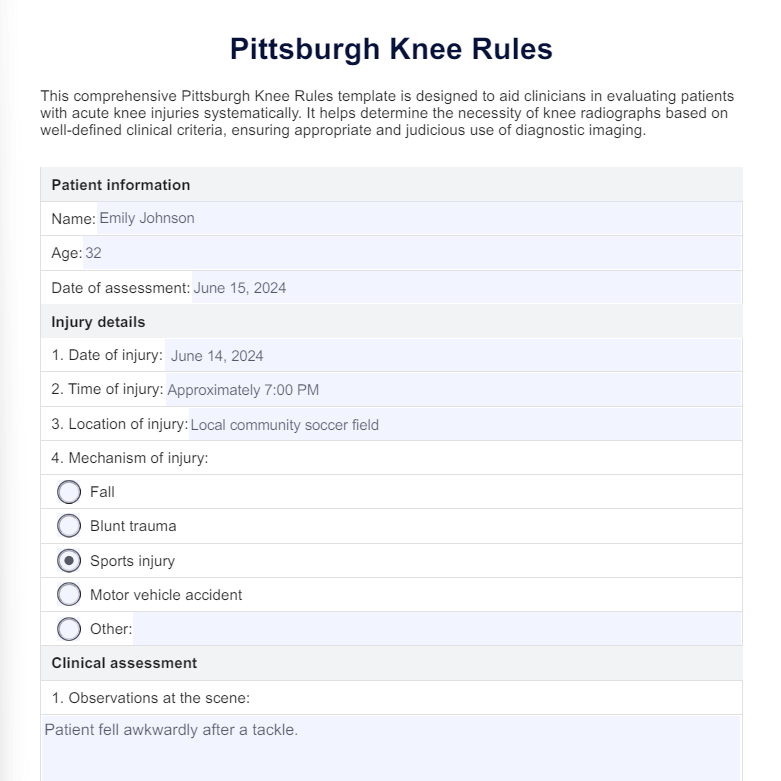



Pittsburgh Knee Rule
Read about the Pittsburgh Knee Rules, a clinical decision rule tool for managing acute knee injuries. Learn about their application and reliability.

Use Template
Pittsburgh Knee Rule Template
Commonly asked questions
Yes, without appropriate treatment, acute knee injuries can progress to chronic conditions such as persistent pain, instability, and degenerative joint diseases. Healthcare providers should educate patients on these potential risks and the importance of proper rehabilitation.
Healthcare providers should advise patients to seek medical attention promptly after a knee injury, especially if symptoms like severe pain, swelling, or limited mobility are present. Timely medical evaluation prevents further damage and facilitates effective treatment strategies.










EHR and practice management software
Get started for free
*No credit card required
Free
$0/usd
Unlimited clients
Telehealth
1GB of storage
Client portal text
Automated billing and online payments