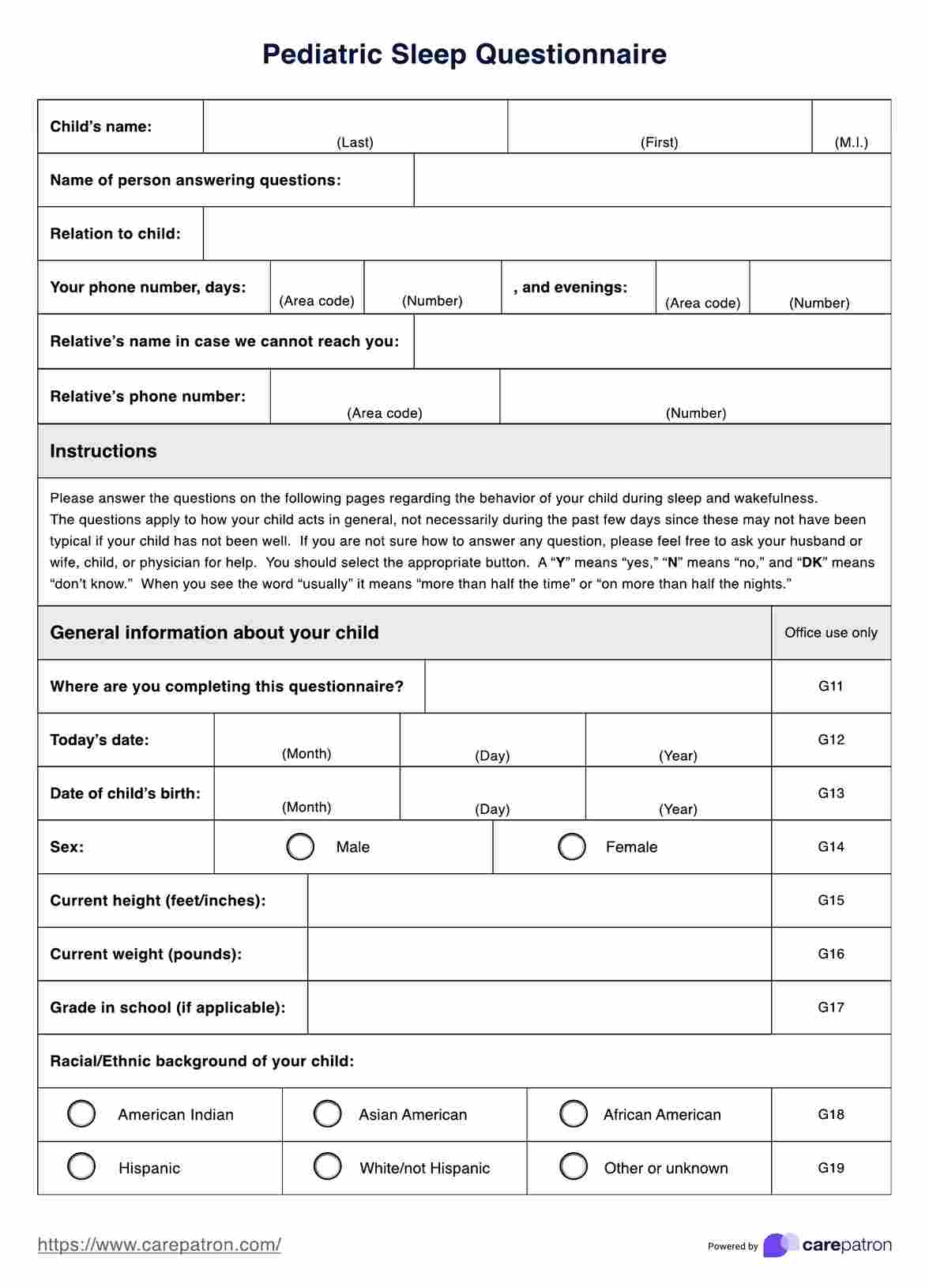
How to score the PSQ
Assessing pediatric sleep health using the PSQ involves scoring the responses provided by caregivers or individuals. The SRBD scale contains 22 symptom items about snoring frequency, loud snoring, observed apneas, difficulty breathing during sleep, daytime sleepiness, inattentive or hyperactive behavior, and other pediatric OSA features. Children aged 2±18 years who had polysomnographically-confirmed sleep-disordered breathing (n = 54).
Responses to each item are scored as follows: "yes" = 1, "no" = 0, and "don't know" = missing. The mean response on non-missing items yields a score of 0 to 1. Scores exceeding 0.33 are considered positive and indicate a high risk for pediatric sleep-related breathing disorders.
What does the PSQ measure?
The PSQ evaluates various aspects of sleep health in children, including snoring frequency, observed apneas, difficulty breathing during sleep, daytime sleepiness, and inattentive or hyperactive behavior. It consists of 22 symptom items categorized into three domains: sleepiness, snoring, and inattention/hyperactivity.
How to calculate PSQ
To calculate the PSQ score, sum the responses for each domain: sleepiness, snoring, and inattention/hyperactivity. Then, divide the total by the number of items in the respective domain. A score exceeding 0.33 in any domain suggests a heightened risk for pediatric sleep-related breathing disorders, warranting further evaluation by a healthcare professional.
Does the PSQ help combat sleep disorders in children?
Yes, the PSQ plays a crucial role in combating sleep disorders in children by facilitating early detection and intervention. By systematically assessing various aspects of sleep health, the PSQ enables healthcare practitioners and caregivers to identify potential issues such as sleep-disordered breathing, snoring, and daytime sleepiness. With timely identification, appropriate interventions can be implemented to address these concerns, ultimately promoting better sleep quality and overall well-being in children.
What are some behavioral problems associated with sleeping difficulty?
Sleep difficulties in children can manifest in various behavioral problems, impacting their overall well-being. Some common behavioral issues associated with sleeping difficulty include:
- Increased irritability and mood swings
- Difficulty concentrating and poor academic performance
- Hyperactivity and impulsivity
- Emotional instability and anxiety
- Aggressive behavior and tantrums
These behavioral problems can significantly affect a child's daily functioning and quality of life. Identifying and addressing the underlying sleep issues is crucial for managing and improving behavioral outcomes in children.
What is sleep-disordered breathing?
Sleep-disordered breathing refers to a spectrum of breathing abnormalities that occur during sleep, ranging from snoring to obstructive sleep apnea (OSA). It involves interruptions or changes in normal breathing patterns, often characterized by episodes of partial or complete obstruction of the upper airway. These disruptions can lead to fragmented sleep, decreased oxygen levels in the blood, and daytime sleepiness.
Sleep-disordered breathing can affect individuals of all ages, but it is prevalent in children and can have significant impacts on their health and well-being if left untreated.