









What is Horner's syndrome?
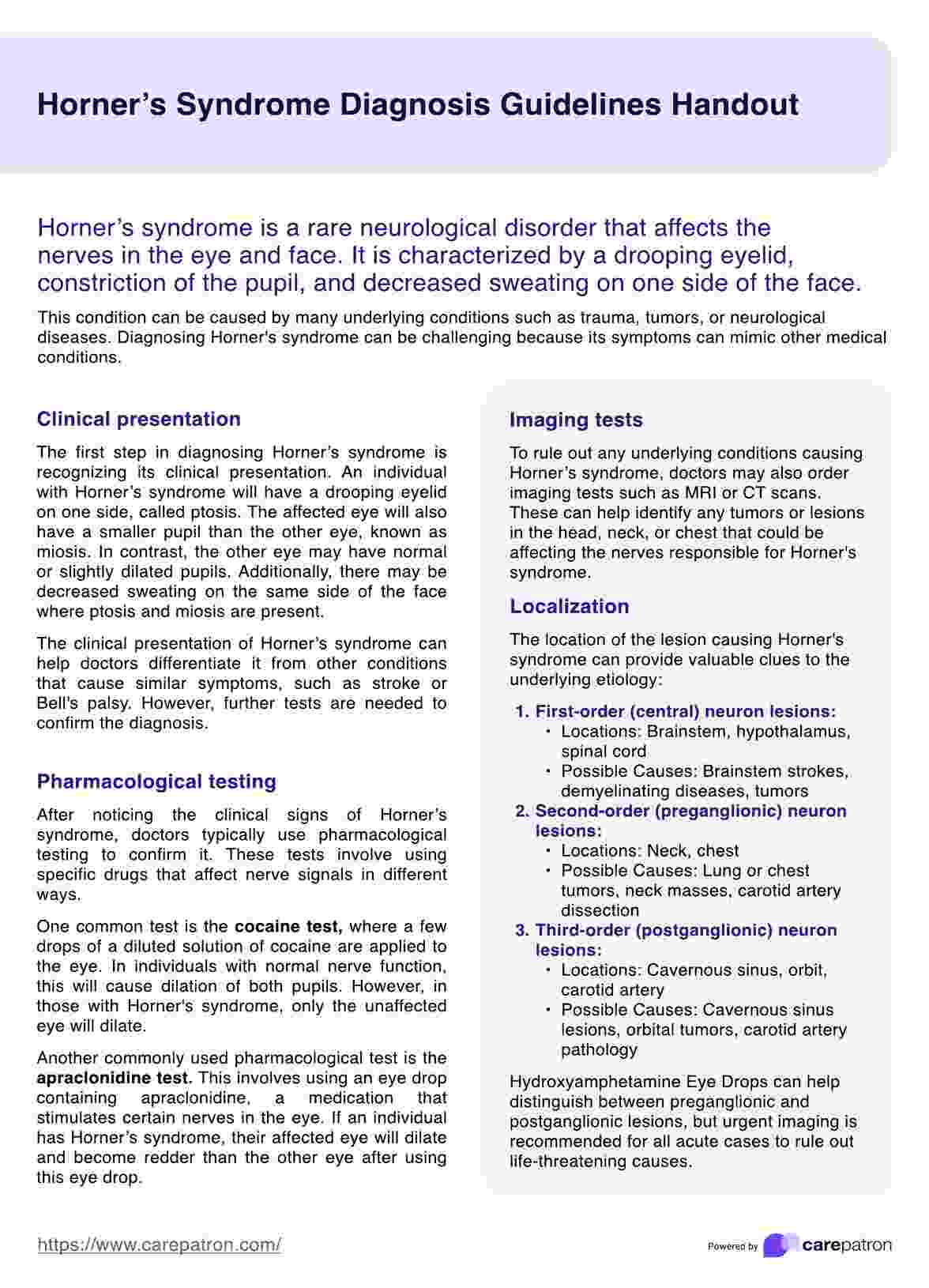
Horner's syndrome is a rare medical condition that affects the sympathetic nervous system. It is characterized by a combination of symptoms, including drooping of one eyelid, constriction of the pupil in one eye and decreased sweating on one side of the face.
The syndrome can be congenital (present at birth) or acquired due to damage to the nerves that control facial muscles. In some cases, it can also be caused by underlying medical conditions such as tumors or stroke.
Causes of Horner's syndrome
Horner's syndrome arises from a disruption in the sympathetic nervous system pathway. This pathway can be interrupted by various factors:
- Carotid artery dissection: A tear in the lining of the carotid artery in the neck can disrupt nerve signals.
- Spinal cord injury: Damage to the spinal cord can affect the nerve pathway involved.
- Tumors: Tumors in the chest, neck, or skull base can press on the pathway.
- Syringomyelia: A cyst within the spinal cord can compress the sympathetic nerves.
- Congenital Horner syndrome: This rare form is present at birth due to an underdeveloped or damaged nerve pathway.
Symptoms of Horner's syndrome
While Horner's syndrome can affect people of any age, it's relatively uncommon. The telltale signs usually appear on one side of the face and include:
- Ptosis: A drooping upper eyelid.
- Miosis: A constricted pupil compared to the other eye.
- Anhidrosis: Reduced sweating on the affected side of the face.
A slight facial flushing or a sunken eyeball appearance might occur in rare cases.
Treatment For Horner's syndrome
The treatment approach for Horner's syndrome depends on the underlying cause. If a specific cause, like a tumor, is identified, addressing that issue becomes the primary focus.
However, in some cases, no underlying cause (idiopathic Horner syndrome) can be found, and no specific treatment may be necessary.









