





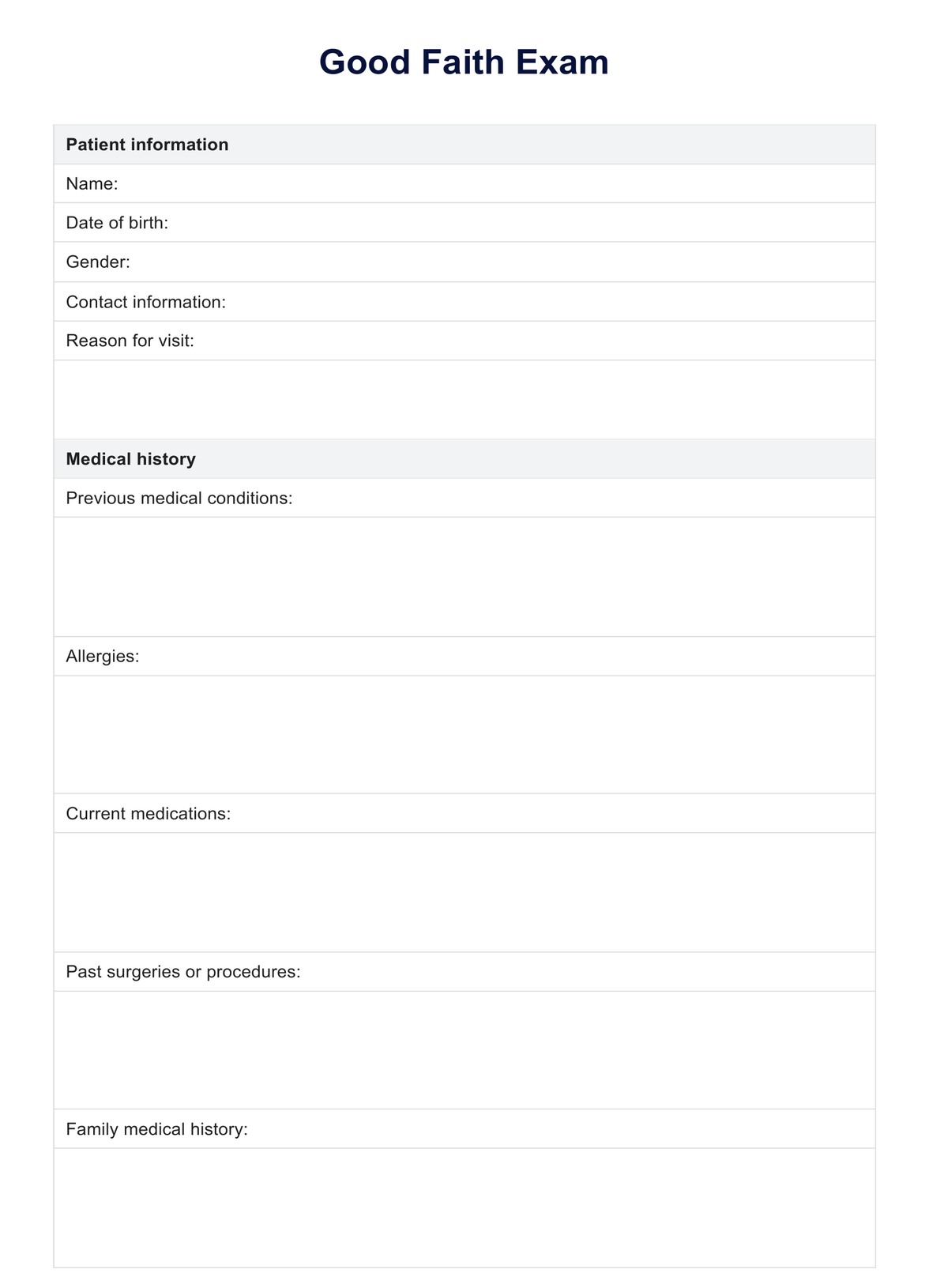




What is a Good Faith Exam?
A Good Faith Exam is a critical assessment conducted by healthcare professionals, such as physicians, nurse practitioners, or physician assistants, to ensure the appropriateness and safety of treatments and procedures. During an initial Good Faith Exam, the practitioner thoroughly reviews the patient's medical record and performs a physical examination to evaluate the patient's physical condition. This process helps identify whether the procedure is medically necessary and if there are any underlying health issues that could affect the outcome of the proposed medical procedure.
The importance of a Good Faith Exam lies in its role in prioritizing patient safety. By thoroughly understanding the patient's medical history and current health status, practitioners can tailor treatments to the patient's individual needs, thus minimizing risks associated with multiple treatments. This is especially relevant in medical spas, where elective procedures are standard. A Good Faith Exam ensures that all treatments are medically justified and that any contraindications are identified beforehand.
A supervising or collaborating physician often oversees the process to maintain high standards of care. In summary, performing a Good Faith Examination is essential for providing safe and effective medical care, as it ensures that all medical procedures are conducted with a comprehensive understanding of the patient's health.
Which healthcare professionals conduct this exam?
Various healthcare professionals can conduct a Good Faith Exam, each playing a vital role in ensuring the safety and appropriateness of medical treatments and procedures. Here is a concise list of the professionals who typically perform these exams:
- Physicians (MDs or DOs)
- Nurse practitioner
- Physician assistant
- Dentists (DDS or DMD)
- Chiropractors
These professionals are trained to conduct thorough evaluations, review medical histories, and ensure that any medical procedure is safe and appropriate for the patient's health.
What does this exam entail?
A Good Faith Exam consists a comprehensive review of the medical records, including past illnesses, surgeries, and current medications. The healthcare professional then conducts a physical examination to assess the patient's overall physical condition. This exam may include checking vital signs, evaluating organ function, and identifying potential health risks.
The goal is to ensure that any planned medical treatments or procedures are safe and appropriate for the patient. This thorough assessment helps prioritize patient safety and tailor medical care to individual needs.









