








What is Erb's palsy?
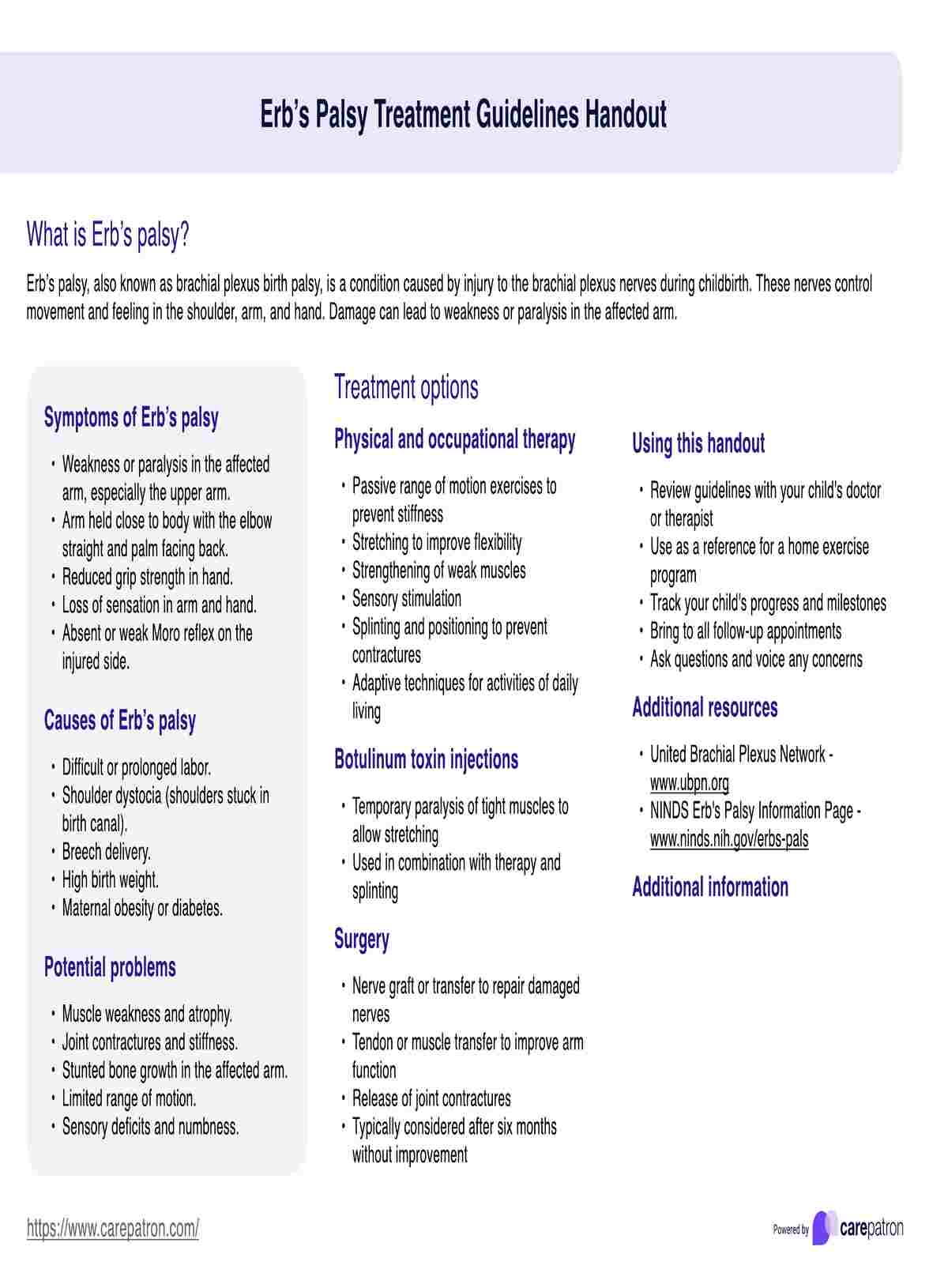
Erb's palsy, also known as a brachial plexus injury or birth palsy, is a condition resulting from injury to the brachial plexus nerves during childbirth. The brachial plexus is a network of nerves that provides movement and sensation to the shoulder, arm, and hand. When these nerves are damaged, they can cause weakness or paralysis in the affected arm.
Erb's palsy symptoms
The severity of symptoms varies based on nerve injury and the extent of damage to the brachial plexus nerves, ranging from mild cases that may resolve on their own to more severe injuries that can result in permanent impairment. The symptoms of Erb's palsy include the following:
- Weakness or paralysis in the affected arm
- Lack of movement in the shoulder, elbow, wrist, or hand
- The arm is held close to the body with the elbow straight
- Decreased grip strength in the hand
- Loss of sensation in the arm
Causes of this brachial plexus palsy
The main causes of Erb's palsy include:
- Shoulder dystocia: This occurs when the baby's shoulder becomes stuck behind the mother's pubic bone during delivery, requiring the head and neck to be pulled to the side.
- Difficult, prolonged labor: This is especially common with larger babies over 8-9 pounds (macrosomia).
- Breech delivery: When the baby is delivered feet-first, it puts pressure on the raised arms.
- Excessive pulling: Excessive pulling on the baby's head, neck, or shoulders by the doctor during a difficult delivery can stretch or tear the brachial plexus nerves.
- Maternal risk factors: These include obesity, diabetes, or an unusually shaped pelvis.
- Use of assistive delivery tools: Tools like forceps or vacuum extraction can cause undue pressure.
Potential problems this palsy may cause
Some of the potential long-term problems and complications caused by Erb's palsy include:
- Muscle weakness and atrophy: The affected arm may have decreased strength and muscle mass due to impaired nerve function, leading to significantly less muscle development than the unaffected arm.
- Contractures (tightening of muscles and joints): Tightening of the muscles, tendons, and joints can occur, limiting the range of motion. A common issue is a bent elbow due to a very tight joint, known as an elbow contracture.
- Impaired bone growth in the affected arm: Impaired nerve innervation can lead to stunted growth from the shoulder to the fingertips, making the affected arm noticeably smaller. Nerves influence growth and development so that the injured arm may grow more slowly.
- Reduced range of motion: Limited shoulder, elbow, wrist, and/or hand movement is common due to muscle weakness and contractures. The arm may lack the ability to straighten or rotate normally.
- Sensory deficits: Some loss of feeling or sensation in the arm, hand, and fingers may persist, with numbness in the arm increasing the risk of accidental burns or injuries.









