




What is cervical spondylosis?
Cervical spondylosis, affect the cervical spine, or the neck region of the spinal cord. According to Kuo and Tadi (2023), it occurs due to the natural wear and tear of the bones and cartilage in the cervical spine over time, particularly as people age. This degenerative process can lead to the formation of bone spurs, also known as osteophytes, which can cause discomfort and pain.
One of the primary symptoms of cervical spondylosis depends in every patient. Some may feel chronic neck pain, which may radiate to the shoulders and arms. In some cases, it can also lead to cervical radiculopathy, a condition characterized by pain, muscle weakness, or numbness caused by compression or irritation of the nerve roots in the cervical spine. This could lead to possible cervical spondylosis diagnosis.
In severe cases, the condition can result in cervical myelopathy, a condition where the spinal canal becomes narrowed, putting pressure on the spinal cord. This can lead to symptoms such as difficulty walking, loss of coordination, and weakness in the hands and arms.
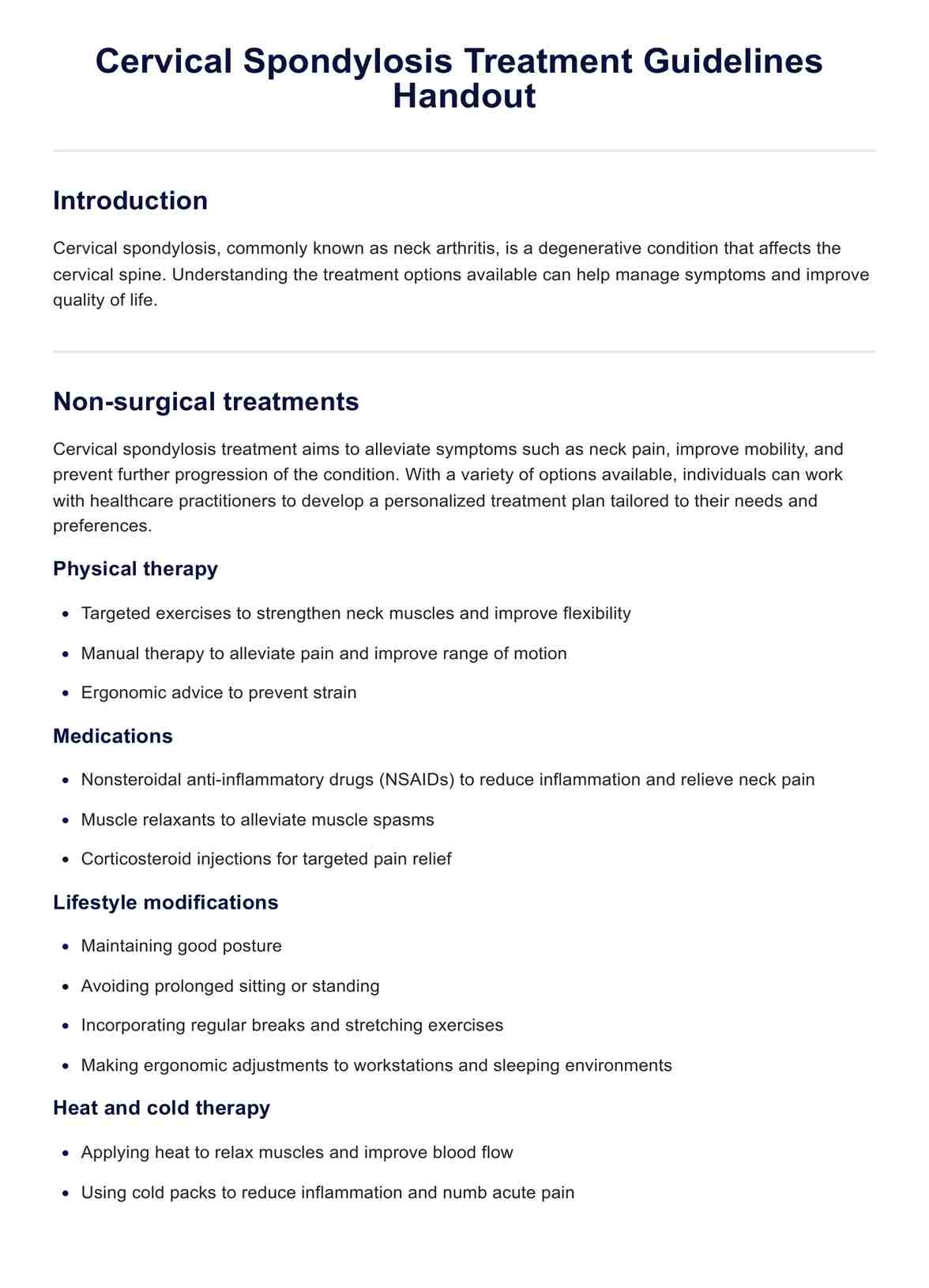
Treatment for cervical spondylosis aims to relieve pain and improve mobility. This may include conservative measures such as physical therapy, muscle relaxants, and nonsteroidal anti-inflammatory drugs (NSAIDs) to reduce inflammation and alleviate discomfort. In some cases, more invasive interventions like surgery may be necessary to decompress the spinal cord and pinched nerve roots, especially if conservative treatments fail to provide adequate relief. Understanding the symptoms and available treatment options is crucial for effectively managing cervical spondylosis and promoting long-term neck health.









