




What is the Schatzker Classification?
The Schatzker Classification system is a method used by medical professionals to categorize fractures of the tibial plateau. This is essential because it helps guide the treatment approach for these injuries. The tibial plateau, part of the top of the tibia or shinbone, is critical for knee joint stability and motion. Injuries to this area can significantly affect knee alignment and functionality.
Dr. Joseph Schatzker developed this classification system to provide a clear framework for describing the different types of tibial plateau fractures based on the fracture's characteristics and location. The system uses radiographic imaging to assess the extent and nature of the fracture, which in turn influences decisions about surgical or non-surgical treatments.
What are the classification of tibial plateau fractures?
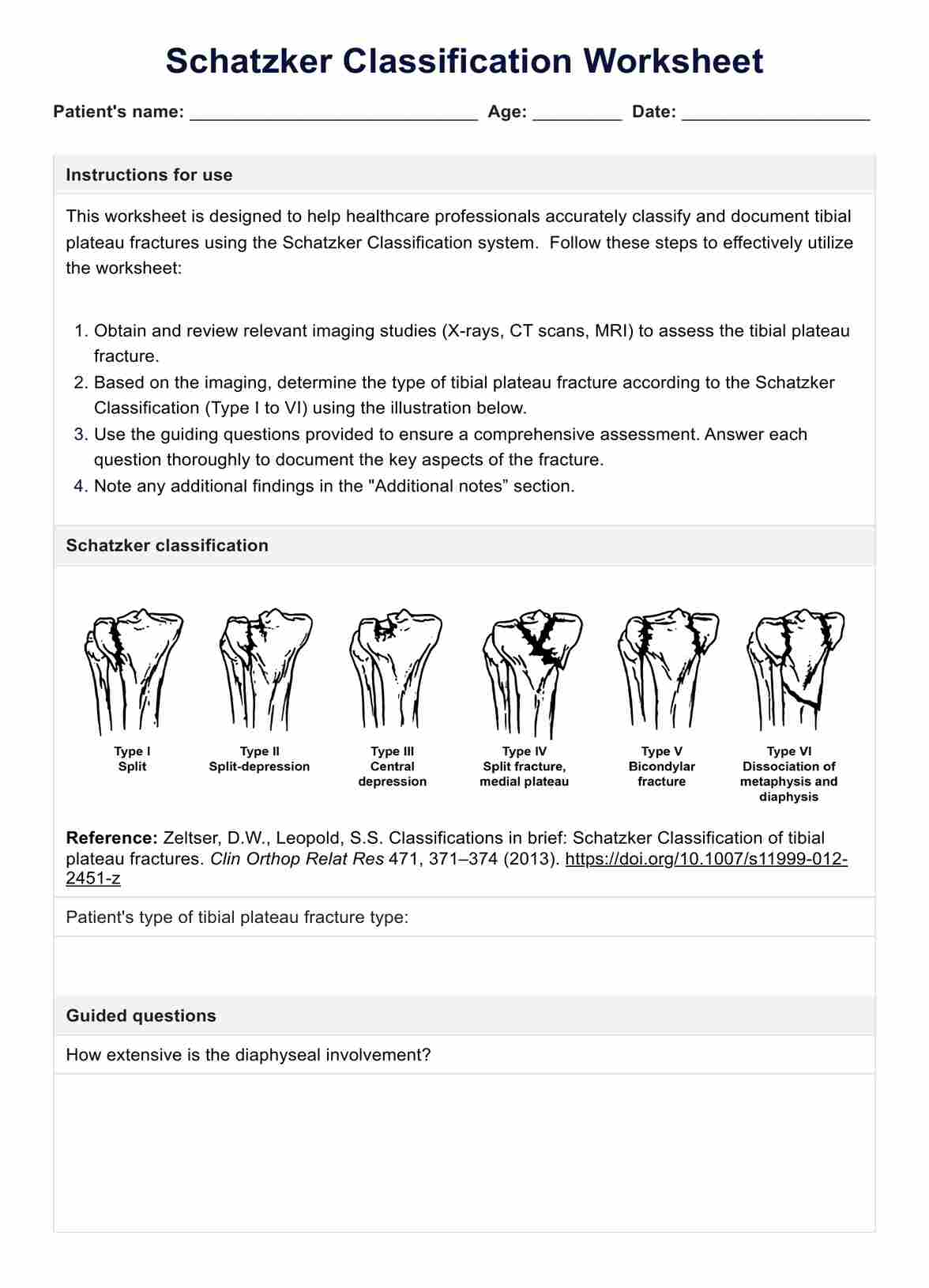
The Schatzker classification divides tibial plateau fractures into six types, each with distinct features:
- Type I: Lateral plateau fracture without depression. This type involves a cleavage fracture of the lateral tibial plateau without any significant depression of the bone.
- Type II: Lateral plateau fracture with depression. This type is similar to Type I, but it includes a depression of the fracture, where part of the bone is displaced downwards.
- Type III: Two subtypes fall under this classification, and these are:some text
- Type IIIA: Compression fracture of the lateral plateau. This subtype involves a pure depression of the lateral plateau without a cleavage component.
- Type IIIB: Compression fracture of the central plateau. This subtype involves a central depression and may significantly affect the knee's stability.
- Type IV: Medial plateau fracture. This type involves a fracture of the medial tibial plateau and is less common but more severe due to the higher forces typically required to cause a fracture in this thicker, stronger part of the bone.
- Type V: Bicondylar plateau fracture. This type involves fractures of both the medial and lateral tibial plateaus, usually indicating severe trauma and a complex injury pattern.
- Type VI: Plateau fracture with diaphyseal discontinuity. This type extends from the plateau into the shaft of the tibia, disrupting the alignment and integrity of both the plateau and the diaphyseal area.
Each type of fracture in the Schatzker Classification can suggest different treatment options and have different prognoses. Therefore, accurate fracture classification is crucial for achieving the best possible outcomes for patients with tibial plateau fractures.









