




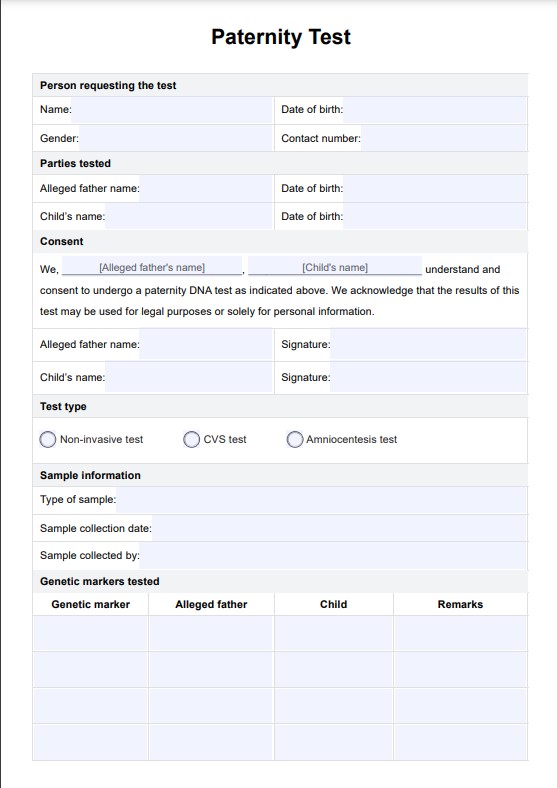




What is a Paternity Test?
A Paternity Test is a scientific method and legal test used to determine whether a man is the biological father of a child. By comparing the genetic material of the alleged father and the child, a DNA Paternity Test analyzes their DNA to establish a biological relationship. This legal DNA test is highly accurate, typically using a sample, such as saliva or blood, from both parties. Different types of test also include a non-invasive test, a CVS test, and an amniocentesis test. The child's DNA is then compared with the alleged father's genetic markers.
DNA Paternity Tests are commonly used in cases of child support, custody disputes, and personal reasons. Legal DNA tests, which require verified documentation, are often needed in court cases, while a home DNA Paternity Test offers a more convenient, private option for individuals who prefer to collect DNA samples at home.
There are also specialized tests, such as prenatal Paternity Testing, which allows for determining paternity before the child is born by analyzing fetal DNA. DNA testing in this context is crucial in resolving questions of paternity early on. Once the DNA test results are processed, they provide definitive answers about biological parentage. Overall, genetic testing plays a vital role in providing clarity and legal resolution for families.









