Benefits of conducting this test
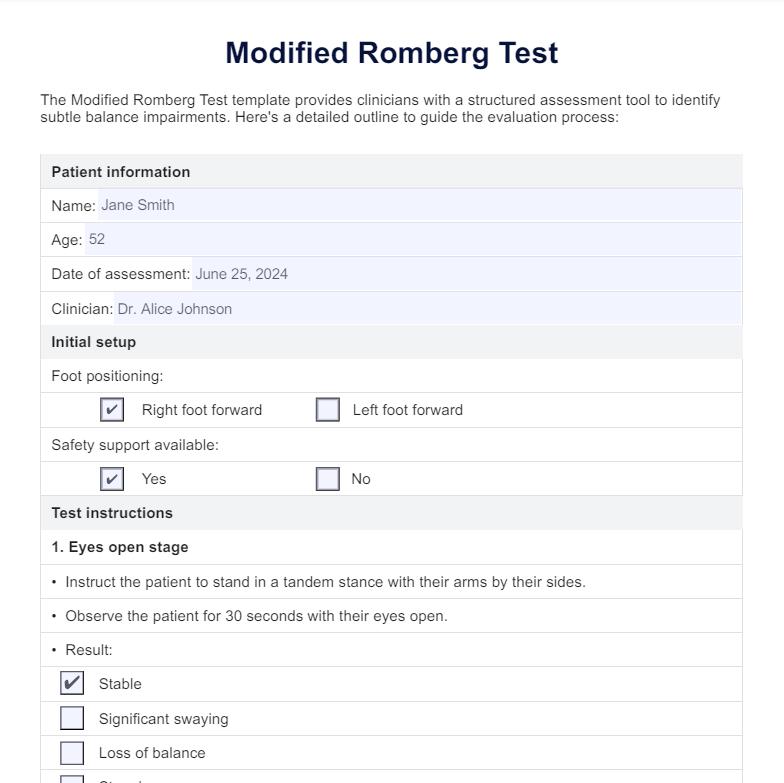
Conducting the free Modified Romberg Test offers several key advantages in assessing and diagnosing balance disorders:
Comprehensive vestibular and proprioceptive assessment
The test effectively evaluates the visual and vestibular components and proprioceptive systems by requiring the patient to maintain balance in a tandem stance, both with eyes open and closed. This reveals deficits in balance crucial for identifying underlying conditions affecting sensory or vestibular function.
Differentiates between visual and non-visual balance components
By performing the test with the patient's eyes open and then closed, clinicians can determine how much the patient relies on visual cues to maintain balance. The eyes-closed stage eliminates visual compensation, uncovering non-visual balance impairments related to the vestibular system or proprioception.
Identifies neurological conditions affecting balance
The test is particularly effective in identifying signs of neurological conditions such as vestibular disorders, sensory neuropathy, and lumbar spine stenosis. A positive Romberg Test, where the patient loses balance or exhibits significant swaying, suggests vestibular dysfunction or issues with proprioceptive sensory pathways.
Facilitates accurate diagnosis and treatment planning
The test provides detailed insights that support the diagnosis of balance impairments and guide treatment plans. Clinicians can tailor their interventions to address the specific sensory or vestibular deficits impacting the patient’s balance.
Overall, the Modified Romberg Test is a valuable tool for healthcare professionals conducting balance assessments, enabling a more accurate and nuanced understanding of balance impairments and their underlying causes.