









What is an ACL injury?
The Anterior Cruciate Ligament (ACL) is one of the key ligaments that helps stabilize the knee joint. It connects the thighbone (femur) to the shinbone (tibia). An ACL injury is a tear or sprain of this crucial ligament.
ACL injuries often occur during activities that involve sudden stops and twists, improper landings, or direct collisions, which are all common in physical sports that require sudden stops and changes in direction like soccer, basketball, and skiing. As such, athletes and active individuals are most susceptible to ACL injuries due to the high demands placed on their knees.
Symptoms include a popping noise at the time of injury, severe pain, rapid swelling, and a feeling of looseness in the joint. Loss of range of motion and discomfort while walking are also common.
ACL injury grades
ACL injuries can range from mild (small tears/sprains) to severe (complete tears). The severity is often graded on a scale:
- Grade 1: Mild damage; the ligament is slightly stretched but still able to keep the knee joint stable.
- Grade 2: A partial tear of the ligament.
- Grade 3: A complete tear of the ligament; the ligament is split into two pieces, making the knee joint unstable.
How to diagnose an ACL injury
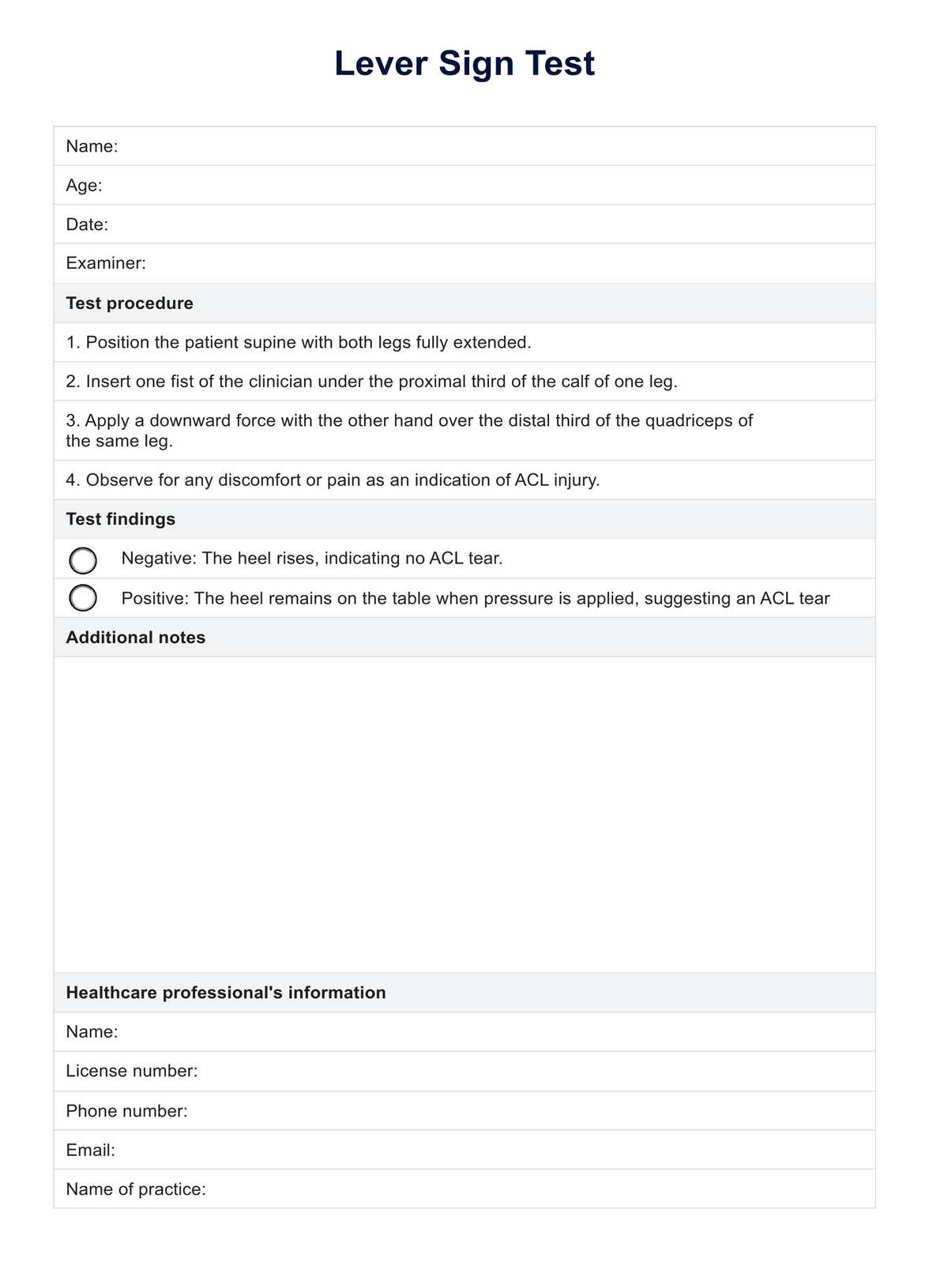
Diagnosing an ACL injury involves a combination of physical exams, patient history, and imaging tests like MRI. Apart from the Lever Sign Test, other clinical tests include:
- Lachman Test: This test checks for anterior translation (forward movement) of the tibia relative to the femur without complete knee extension. It's considered one of the most sensitive tests for ACL injuries.
- Pivot Shift Test: This maneuver assesses if there's a noticeable shift or "clunk" when the knee is moved from a bent to a straight position, which indicates ACL insufficiency. If you need a Pivot Shift Test template, we have one in our template library.
- Anterior Drawer Test: Similar to the Lachman Test, but performed with the knee bent at 90 degrees, this test also checks for excessive forward movement of the tibia. Our template library also has an Anterior Drawer Test ready to download.
In addition to physical exams, imaging like magnetic resonance imaging (MRI) and X-rays play a crucial role in ACL injury diagnosis.









