





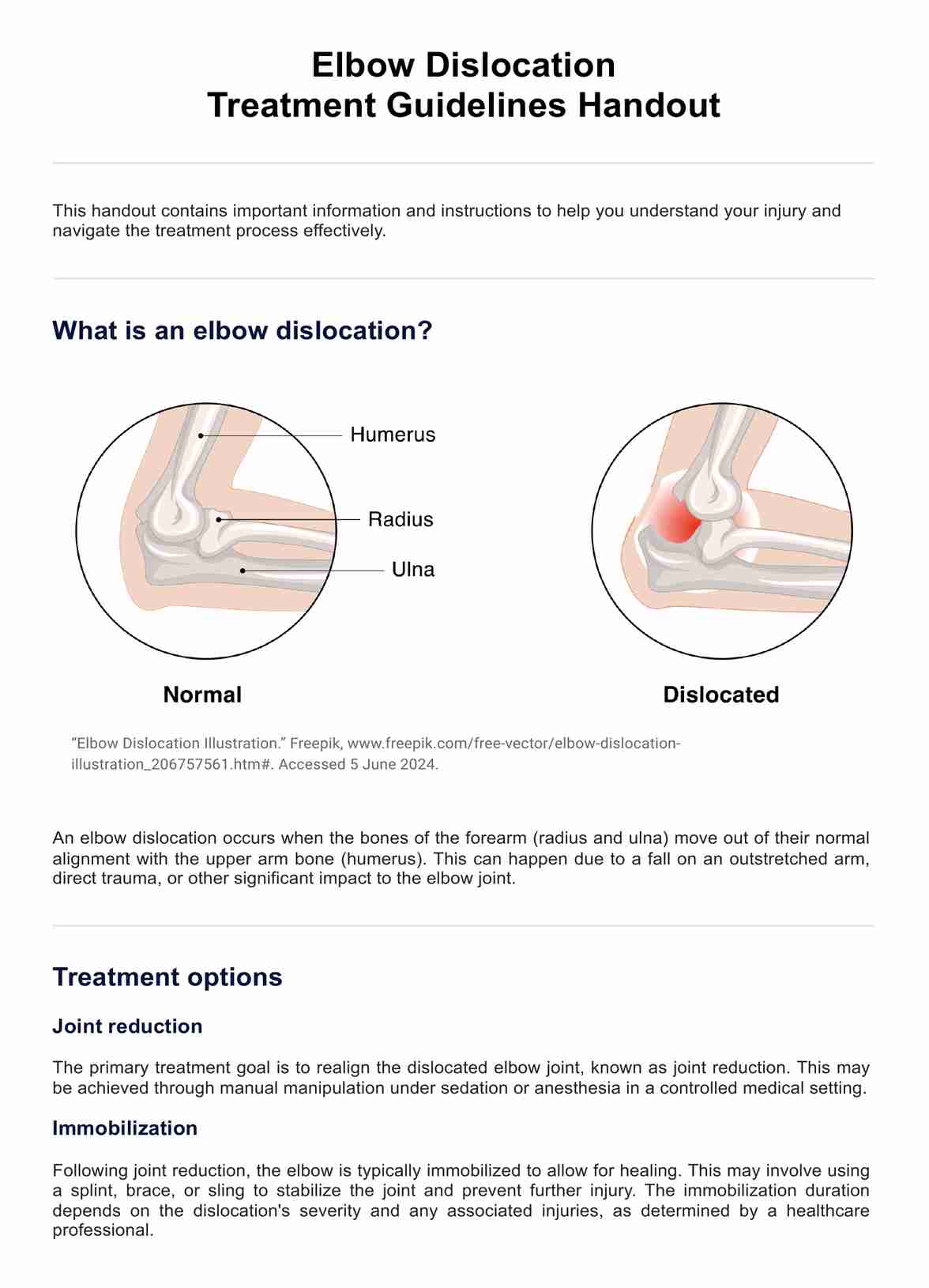




What does it mean to have a dislocated elbow joint?
A dislocated elbow joint results from the misalignment of the forearm bones (radius and ulna) with the upper arm bone (humerus) at the elbow joint, typically caused by a fall on an outstretched arm or direct trauma like a motor vehicle accident. This dislocation can be partial (subluxation) or complete, and it is categorized into simple, without major fractures, or complex, involving associated fractures.
Posterior dislocations, where the forearm is displaced behind the humerus, constitute the majority of cases. Symptoms of most elbow dislocations include intense pain, visible deformity, swelling, and restricted elbow movement, often accompanied by nerve or artery damage manifesting as numbness and poor hand circulation. Urgent medical intervention is crucial to realign the joint, followed by immobilization and rehabilitation.
While simple dislocations typically respond well to non-surgical methods, complex cases often necessitate surgery to repair fractures and ligament tears.
Common causes of elbow dislocation
Risk factors for elbow dislocation include participation in activities with a high risk of falls or direct trauma, such as contact sports or occupations involving manual labor. Common causes of elbow dislocation include acute events like a fall on an outstretched arm or a forceful impact to the elbow, leading to a simple elbow dislocation or complex dislocation. In simple elbow dislocations, there may be soft tissue injury without major fractures.
In contrast, complex dislocations often involve fractures and ligament tears, resulting in recurrent elbow instability and restricted range of motion. Posterior dislocations, where the forearm is displaced behind the humerus, are the most common, but anterior dislocations can also occur, particularly involving the radial head. Acute elbow dislocations require prompt medical attention to prevent further damage and restore joint alignment.
Problems elbow dislocation may cause
Elbow dislocation can lead to a range of problems, both immediate and long-term. Immediately following the dislocation, there can be severe pain, swelling, and deformity of the elbow joint. Nerve or artery damage may occur, resulting in numbness, tingling, or weakness in the hand and forearm due to impaired circulation or nerve compression.
Long-term complications may include chronic instability of the elbow joint, leading to recurrent dislocations or subluxations, which can significantly impair function and quality of life. There may be joint stiffness and limited range of motion, especially if the injury is not promptly treated or if there are associated fractures or soft tissue injuries. In some cases, arthritis may develop over time, further contributing to pain and decreased mobility in the affected elbow.









