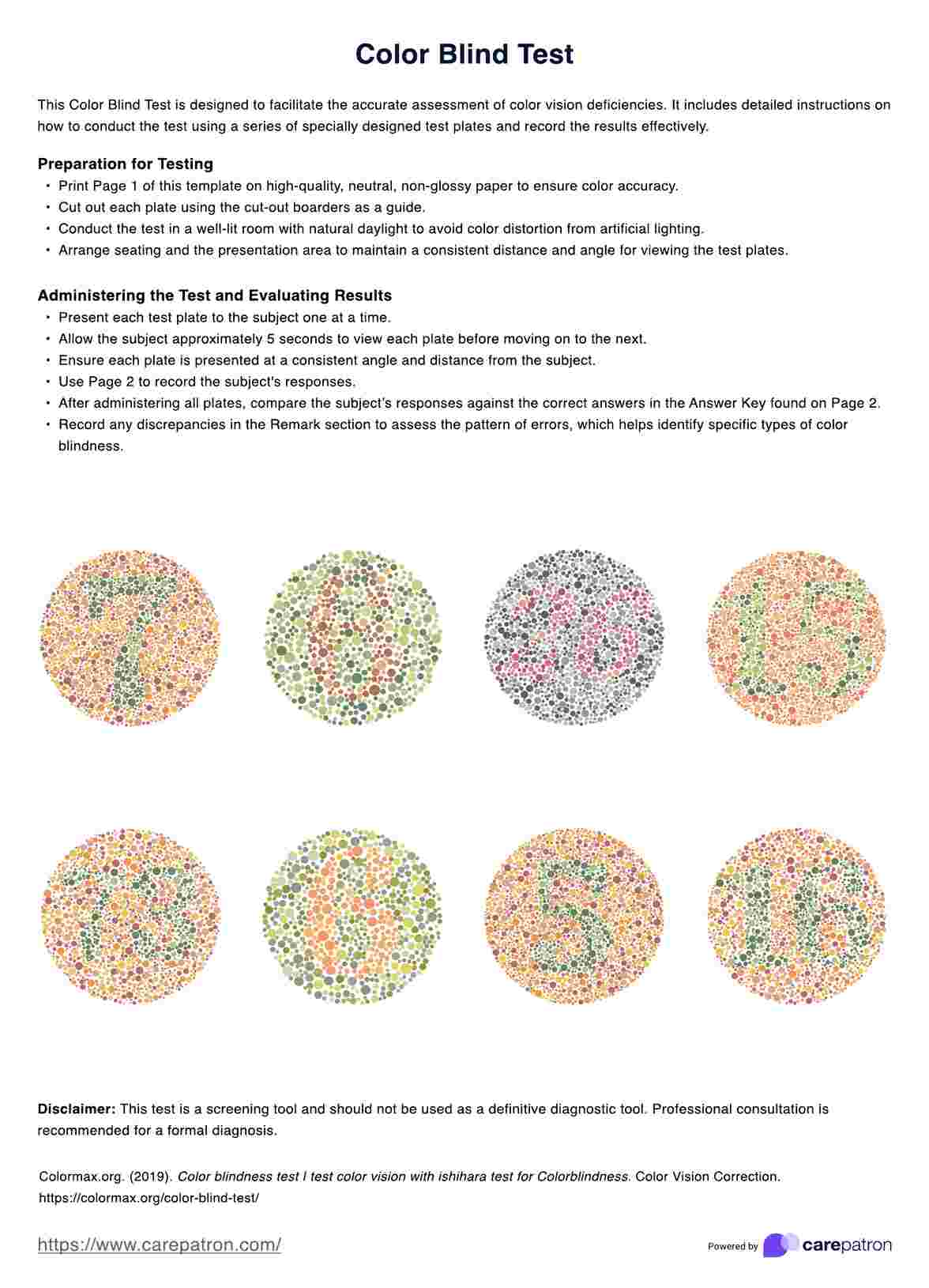
Benefits of taking/conducting this test
Conducting a color blindness test is crucial for identifying individuals with the more severe color blindness or vision deficiencies but also plays a significant role in mitigating challenges that may arise in daily activities, educational settings, and professional environments where normal color spectrum perception is essential. Here are the key benefits of color vision test:
Early detection and intervention
By diagnosing color vision deficiencies early, especially in young children, educational strategies can be tailored to accommodate their needs. This can include using specially designed learning materials that minimize the impact of color blindness on educational development.
Workplace adaptation
For adults, understanding color vision status can lead to necessary adjustments in the workplace, ensuring safety and efficiency. Employers can modify tasks that require color discrimination, potentially reassigning duties to fit the employee's capabilities or providing aids like color-coded tools with alternative labeling.
Informed career choices
Knowing one’s color vision status is vital for individuals considering careers in graphic design, electrical wiring, piloting, or any profession where distinguishing colors is integral to the job. Early testing allows for realistic career planning and exploration of suitable paths that don't heavily rely on color discrimination.
Enhanced personal safety
Accurate color perception is crucial for activities such as driving or operating heavy machinery. Identifying a color vision deficiency can lead to proactive measures, such as using vehicles or equipment with colored lenses or modified displays designed to accommodate color blindness.
Improved quality of life
Understanding and adapting to color vision deficiencies can significantly enhance personal and social interactions. It enables individuals to adjust their environment to reduce errors and misunderstandings due to misperceived colors.
By conducting a color-blind test, individuals gain valuable insights into color differences and their visual capabilities, enabling them to make informed decisions and adjustments in various aspects of their lives. This proactive approach can significantly mitigate the challenges associated with color vision deficiencies.