





A1C CalculatorAI Template IconToolbar IconShare Icon

A1C Calculator

Get access to a free A1C Calculator template and Example PDF today to help your patients keep track of their blood sugar levels.

Ericka Pingol avatar

By Ericka Pingol on Aug 2, 2025.

Fact Checked by Ericka Pingol.

Use Template

What is an A1C Level Calculator?

A1C levels, also known as Hemoglobin A1c, glycated hemoglobin, or HbA1c levels, are the amount of glucose in the blood stream over the past few months, specifically 2-3 months (MedlinePlus, 2022). It can be used as a tool for diagnosing prediabetes and diabetes and monitoring how well diabetes treatment plans and diabetes management plans work. The higher the A1C level, the greater the risk of developing diabetes-related complications (National Institute of Diabetes and Digestive and Kidney Diseases, 2018).

An A1C Calculator is used to estimate the average blood sugar levels and estimated average glucose values over the past few months. It helps patients track and monitor changes in their blood glucose levels over time and compare them to the recommended target range for people with diabetes.

This A1C calculator can also help doctors assess if a patient needs lifestyle modifications or adjustments to medications. This can be especially helpful for those who need access to frequent testing. The calculator supports better blood sugar control and more effective diabetes management.

How does an A1C Calculator work?

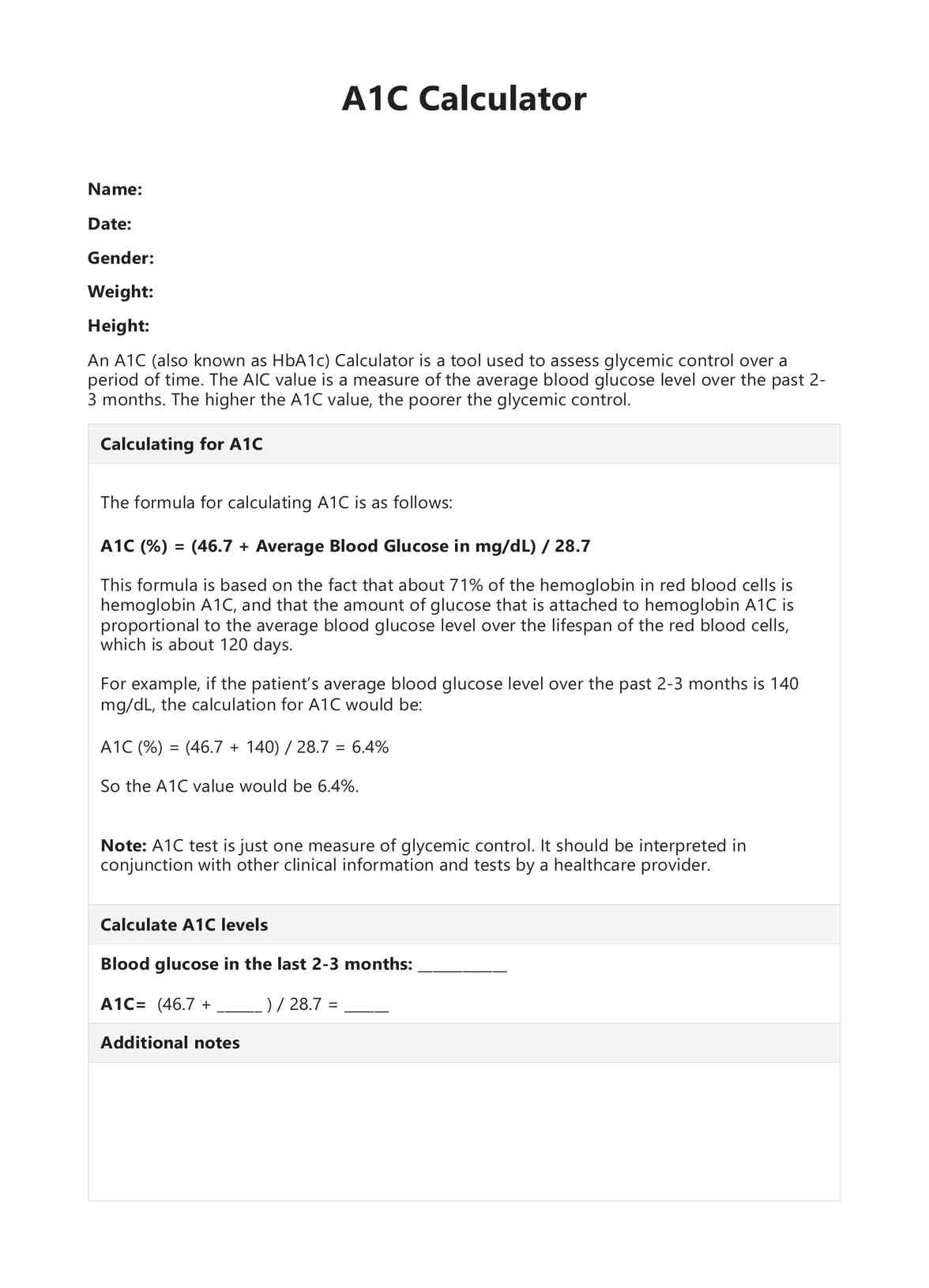
Carepatron's Printable A1C Calculator provides comprehensive steps to calculate patient's A1C levels. It also has a section for note-taking so you can track the patient's progress. Follow these steps to get started:

Step 1: Download the free template

Get a copy of the printable A1C Calculator form using the link on this page. You can also get it from the Carepatron app or the resources library.

Step 2: Explain how it works to the patient

Explain to the patient that the A1C Calculator is based on their average blood glucose and estimated average glucose levels over three months. Tell them it will accurately measure their A1C levels and provide a baseline for tracking progress. This supports better glucose control and aligns with diabetes care recommendations from the American Diabetes Association.

Step 3: Input the patient's information

Using the form, input the patient's information, such as name, age, gender, and weight. Also, plug in their blood glucose levels over the last 2-3 months. You can take these levels from previous records or have the patient test their blood glucose and jot it into the form. This data helps convert A1C levels to estimated average glucose values expressed in mg/dL.

Step 4: Use the formula to calculate A1C levels

Manually compute the patient's A1C levels using the formula provided. Make sure to use the right units of measurement (mg/dL) when doing so. The A1C derived average glucose gives a clear picture of average blood sugar trends.

When would you use this Calculator?

You can reference this printable A1C Calculator template or educate the patients about their personal A1C levels. You also use this to:

See how different lifestyle choices can affect their A1C levels

Our free A1C Calculator can help you quickly compute and track A1C levels. It is also great for understanding the many factors that can influence your patient's A1C levels, such as diet, exercise, and medication. This helps them take the proper steps to keep their diabetes in check and maintain optimal blood sugar levels.

Determine if current treatments are managing A1C in the desired range

The A1C Calculator can help you and your patient understand the effect of any diabetes treatment plan. It can also provide insight into whether current treatments adequately manage the patient's A1C levels. This can be especially helpful for patients needing to learn to track their progress through self-monitoring and consultation with their healthcare provider.

Create a plan that works to manage their A1C levels

Once you clearly understand your patient's A1C levels, the A1C Calculator can help you create an individualized diabetes management plan for them. This plan will help ensure their A1C levels remain in the desired range and support ongoing diabetes control.

Benefits of A1C Calculator

This free A1C Calculator is an easy, quick, and accurate way to get the information you need. It also offers heaps of benefits, including the following:

It's simple to use

There are no complicated formulas or algorithms involved in this calculator, just an easy-to-follow guide. We also provide an example of using the calculator to monitor your patient's A1C levels and convert them to average glucose levels for better glucose control.

It's accurate

The A1C Calculator uses a tried and tested formula, supported by research such as the Translating the Hemoglobin A1c Assay Into Estimated Average Glucose Values (Nathan et. al., 2008) to ensure accuracy. This means you can trust the results, giving you peace of mind that your patient is getting the numbers they need.

It's fully digital

The A1C Calculator is entirely digital, meaning you don't need to worry about messy paperwork or lost charts. The data can easily be downloaded and stored, so it's always right there whenever you need it.

It's free to use

The A1C Calculator is entirely free to use, taking the hassle out of tracking and monitoring. You can spend more time focusing on the patients and less time worrying about paperwork.

References

MedlinePlus. (2022). Hemoglobin A1C (HbA1c) test: MedlinePlus lab test information. MedlinePlus. https://medlineplus.gov/lab-tests/hemoglobin-a1c-hba1c-test/

National Institute of Diabetes and Digestive and Kidney Diseases. (2018). The A1C test & diabetes. https://www.niddk.nih.gov/health-information/diagnostic-tests/a1c-test

Nathan, D. M., Kuenen, J., Borg, R., Zheng, H., Schoenfeld, D., & Heine, R. J., for the A1c-Derived Average Glucose (ADAG) Study Group. (2008). Translating the hemoglobin A1c assay into estimated average glucose values. Diabetes Care, 31(8), 1473–1478. https://doi.org/10.2337/dc08-0545

Commonly asked questions

An A1C Calculator measures the average blood glucose level over the past three months. It's a helpful tool for managing and monitoring diabetes and other conditions related to blood sugar levels.

The A1C calculator is reliable and accurate, providing results well within the accepted range of glycemic measurements.

A1C levels should be tested and calculated every 3 to 6 months. However, if the patient is pregnant or has had a recent illness, it may be advisable to test more frequently.

EHR and practice management software

Get started for free

*No credit card required

Free

$0/usd

Unlimited clients

Telehealth

1GB of storage

Client portal text

Automated billing and online payments







