## **What is a Simple Coaching Agreement Template?**
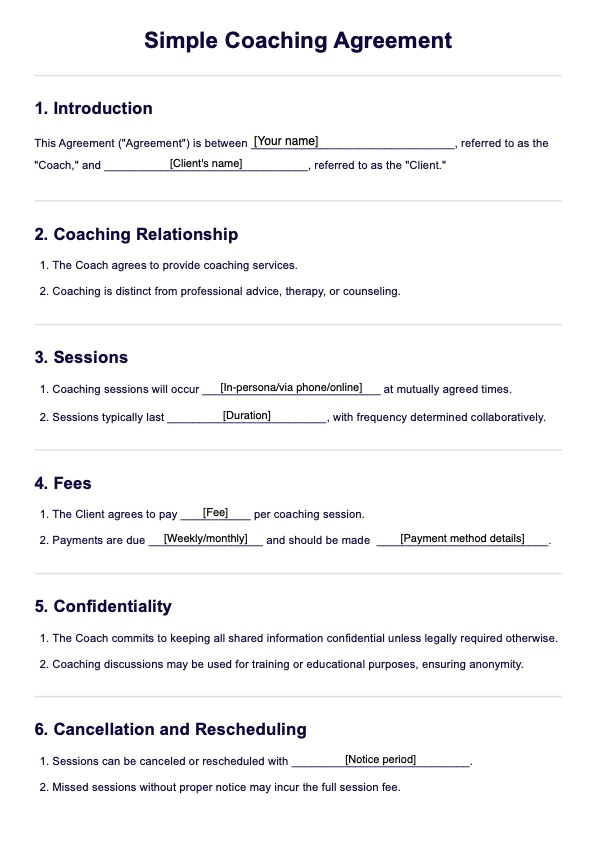
A Simple Coaching Agreement Template is a standardized and comprehensive document that delineates the terms and conditions. It outlines the dynamic relationship between a coach and a client.
This template provides a robust contractual foundation for establishing and sustaining coaching engagements. Its primary function lies in cultivating a profound clarity that extends to the coaching relationship's expectations, responsibilities, and overarching scope, offering a structured roadmap for both parties involved.
Within this contractual framework, practitioners are empowered to articulate session specifics, incorporate confidentiality clauses, and integrate ethical guidelines, creating a professional and ethical coaching partnership.
## **How does this coaching agreement form work?**
Whether you're a professional coach working with clients, having a clear coaching agreement sets the foundation for a successful working relationship. This coaching template is designed to help you outline expectations, protect confidential information, and create accountability.
Let’s walk through how to use the template step by step:
### **Step 1: Download the template**
From this page, click on "Use template" to open a customizable file of the Simple Coaching Agreement Template within the Carepatron app that you can edit before printing or sending to clients. You can also click "Download" to easily get a PDF copy. Fore reference, you can check out our sample coaching agreement.
### **Step 2: Complete basic details**
Once you’ve opened the file, begin by filling in the names of the coach and the client, along with the date and your session schedule.
### **Step 3: Customize the sections to match your practice**
Take time to review each section. You may want to adjust:
- The frequency and duration of sessions
- Your cancellation and rescheduling policy
- Payment terms (especially if you're invoicing or using insurance)
- Any boundaries around communication outside sessions
This is also where you can add any specific terms if, for example, the coach reserves the right to end sessions early due to ethical concerns or safety risks. If you're working with high-risk populations, feel free to insert additional disclaimers or safety procedures.
Make sure that the client agrees to take full responsibility for their progress and that the client acknowledges coaching is not a substitute for medical or mental health care. This can help with dispute resolution can also help prevent issues later on, especially if there’s ever a misunderstanding or disagreement about the coaching process.
### **Step 4: Review together and sign**
Before jumping into your first session, take a few minutes to review the agreement with your client. Clarify any points that might seem confusing, particularly sections about boundaries, fees, or handling confidential information. Emphasize that this document is not meant to compel strict compliance, but to set clear expectations so both parties feel supported and respected.
Once both the coach and the client understand and agree, sign and date the document. You can keep a copy for your records and provide one to the client. This way, if there's ever a concern down the track, whether a direct or indirect result of your sessions, you both have a shared understanding to refer back to.
## **When would you use this coaching agreement form?**
Here are three clear situations where this document becomes essential:
### **When starting a new coaching relationship**
Before you begin working with a client, a coaching agreement helps set the tone. It outlines what the client can expect and what you will and won’t be doing as a professional coach. It also helps avoid confusion and builds trust from the very first session.
### **When working with high-risk or vulnerable clients**
If you’re coaching someone dealing with mental health issues, chronic illness, or life crises, having written terms is a must. It protects both you and the client by clearly explaining the limits of your services. This also allows you to insert safety disclaimers or boundaries upfront if needed.
### **When offering paid coaching packages**
Whenever there’s an exchange of money involved, it’s best to get everything in writing. A coaching agreement helps clarify fees, scheduling, cancellation policies, and refund terms. It minimizes the chances of payment disputes or misunderstandings later on.
## **Benefits of using this template**
Here are the benefits of using this Simple Coaching Agreement Template:
### **Reducing misunderstandings**
The results speak volumes as the template helps reduce misunderstandings within coaching relationships. By providing a structured and clear framework, you can proactively address potential areas of confusion, fostering an environment of mutual understanding.
### **Fostering professionalism**
More than just a formality, this template becomes a tool for facilitating an environment characterized by professionalism. You can enhance your professional image by utilizing the template to establish and communicate clear expectations, creating a positive and respectful coaching atmosphere.
### **Promoting ethical conduct**
The template helps in establishing ethical guidelines aligned with the International Coaching Federation within coaching relationships. By incorporating ethical considerations into the agreement, you safeguard clients and uphold the highest standards of professional conduct.
### **Establishing clear expectations**
This resource allows practitioners to establish clear expectations within their coaching engagements. The template helps session specifics, fees, and other critical elements, ensuring that both parties understand the coaching journey.