Wellness Wheel WorksheetsAI Template IconToolbar IconShare Icon

Wellness Wheel Worksheets

Get Carepatron's free Wellness Wheel Worksheet with an example to help patients assess their overall well-being and identify areas for improvement.

Wynona Jugueta avatar

By Wynona Jugueta on Aug 2, 2025.

Fact Checked by Karina Jimenea.

Use Template

What is a wellness wheel?

A wellness wheel is a structured, evidence-informed wellness tool used to help individuals and healthcare practitioners assess and monitor different aspects of a person's well-being. It divides life into interconnected categories known as wellness dimensions, offering a visual and practical framework for evaluating balance across these areas. Healthcare professionals often integrate the wellness wheel into holistic care planning, coaching, or therapeutic sessions to support a patient’s wellness journey through enhanced self-awareness and actionable goal setting.

The most common version of the wheel includes eight core dimensions: physical wellness, emotional wellness, intellectual wellness, spiritual wellness, social wellness, occupational wellness, environmental wellness, and financial wellness. Each dimension plays a critical role in achieving optimal health and sustained personal growth. For example, physical wellness encompasses maintaining a healthy body through regular physical activity, balanced nutrition, sleep hygiene, and preventive checkups—key components of physical health. Emotional wellness involves emotional regulation, emotional intelligence, stress management, and cultivating positive emotions—all vital to emotional and mental health.

Spiritual wellness supports a sense of meaning and purpose through personal beliefs or reflective practices, which can improve psychological resilience. Meanwhile, environmental wellness focuses on creating and maintaining a healthy personal environment, such as a safe living space or a supportive workspace, which also affects mental clarity and stress levels. Similarly, financial health is essential, impacting everything from decision-making to stress reduction and long-term goal achievement.

Initially conceptualized by Dr. Bill Hettler, co-founder of the National Wellness Institute (2020), the wellness wheel has evolved to reflect a more comprehensive understanding of health. While initially built on six dimensions, modern interpretations often include environmental and financial aspects to reflect changing lifestyles and global health trends.

For healthcare professionals, the wellness wheel offers a repeatable, scalable method to help clients reflect, set goals, and track progress over time—whether it's managing mental health days, improving stress response, or optimizing well-being in multiple life areas. Its real strength lies in its ability to identify overlooked dimensions and guide conversations about building a more fulfilling life.

Wellness Wheel Worksheets Template

Download PDF Template

What is a Wellness Wheel Worksheet?

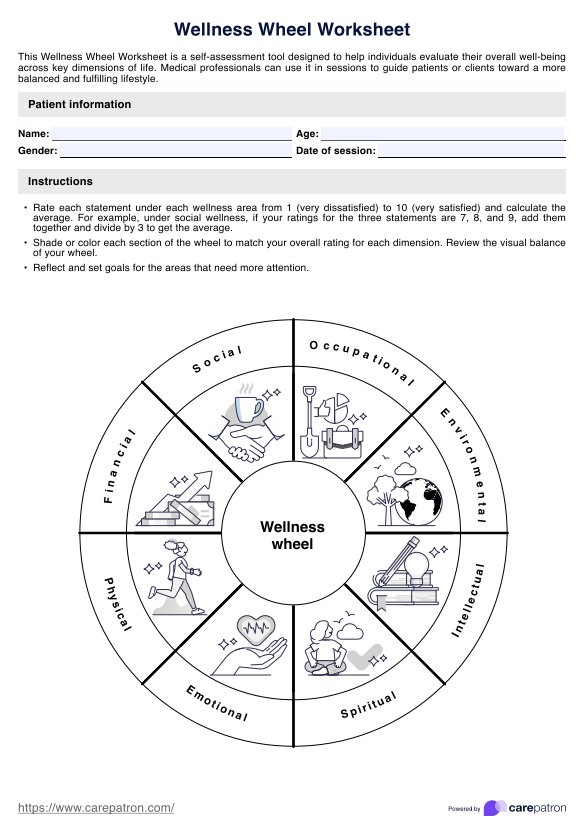
A Wellness Wheel Worksheet is a self-assessment tool that helps individuals evaluate their well-being across multiple dimensions of life. Designed for clinical, therapeutic, or coaching settings, it enables healthcare professionals to guide patients in identifying strengths and areas needing attention.

This worksheet covers core domains, including physical, emotional, intellectual, spiritual, social, environmental, financial, and occupational wellness. Each domain is rated on a scale from 1 to 10, allowing for clear visualization of imbalances. Clients rate each statement under each wellness area from 1 (very dissatisfied) to 10 (very satisfied) and calculate the average. For example, under social wellness, if their ratings for the three statements are 7, 8, and 9, they should add them together and divide by 3 to get the average. Patients reflect on their scores, document brief notes, and set actionable goals.

For healthcare professionals, the worksheet is a practical entry point for holistic discussions, care planning, and follow-up. It promotes structured conversations around lifestyle, balanced life, mental health, coping, and preventive strategies like how to practice mindfulness. By integrating this worksheet into practice, providers can support patients in gaining insight, tracking personal progress, and developing long-term strategies for balanced, sustainable well-being.

How does it work?

The Wellness Wheel Worksheet is easy to integrate into patient care. Carepatron’s digital format makes it efficient for both in-person and remote sessions, helping healthcare professionals guide meaningful conversations around holistic health. Here's how to use it:

Step 1: Access the worksheet template

Click the “Use template” button on this page to get started. You’ll be directed to Carepatron’s secure platform, where the worksheet can be accessed, filled out, and saved within your workflow. No manual setup is required—just one click to bring the tool into your clinical practice.

Step 2: Use the worksheet in patient sessions

During sessions, walk through each wellness dimension with your patient and guide them. The structure encourages self-reflection while giving a clear, visual snapshot of where support is most needed.

Step 3: Discuss how the worksheet works with the patient

Explain how each section relates to their well-being and why balance across these dimensions matters. Use the visual results to spark meaningful discussion about what’s going well, what’s being overlooked, and how certain areas may impact others, such as emotional health influencing physical health.

Step 4: Provide additional patient support and next steps

Based on the worksheet results, help patients set focused goals and suggest appropriate resources or referrals. Use follow-up sessions to track improvements and adjust care plans. The worksheet can also be revisited to monitor progress and reinforce accountability in the patient’s wellness journey.

Benefits of using this worksheet

The Wellness Wheel Worksheet offers several practical advantages for healthcare professionals aiming to deliver well-rounded, patient-centered care. It provides a clear visual representation of a patient’s well-being across multiple life domains, which helps guide clinical conversations and inform holistic treatment strategies. By using this tool, practitioners can efficiently identify wellness gaps and suggest appropriate interventions related to medical care, lifestyle changes, or referrals to other services. It supports the development of sustainable practices in self-management and promotes proactive self-care.

For professionals in behavioral health or integrative care, this worksheet can help patients explore their feelings, evaluate social connections, and recognize how aspects such as job satisfaction, family members, or supportive social networks influence their overall health. It encourages patients to build self-esteem, expand on their creative abilities, and engage in activities that contribute to life balance. The goal-setting section, which can complement tools like a vision board, adds structure to wellness planning.

References

National Wellness Institute. (2020). Six dimensions of wellness. National Wellness Institute. https://nationalwellness.org/resources/six-dimensions-of-wellness/

Commonly asked questions

The eight areas of a wellness wheel typically include physical, emotional, intellectual, spiritual, social, environmental, financial, and occupational wellness. Each dimension represents a key component of overall well-being and contributes to maintaining life balance and health.
Individuals can stay on track by regularly evaluating their wellness in each area, setting realistic goals, and making intentional lifestyle adjustments. Using structured tools like the Wellness Wheel Worksheet helps maintain focus and measure progress over time.

Maintaining well-being supports resilience, enhances quality of life, and reduces the risk of chronic health issues. A balanced state of well-being also improves functioning in personal, social, and professional settings.

EHR and practice management software

Get started for free

*No credit card required

Free

$0/usd

Unlimited clients

Telehealth

1GB of storage

Client portal text

Automated billing and online payments