





Hva er et østradiolnivådiagram?
Estradiol, et hormon frigjort fra binyrene og eggstokkene, er den vanligste typen østrogen hos kvinner og er et primært kvinnelig kjønnshormon. Det er viktig for ulike stadier av seksuell utvikling og reproduktiv helse. Mer spesifikt spiller det et bredt spekter av viktige roller i vekst og utvikling av sekundære kjønnskarakteristikker og vedlikehold av graviditet.
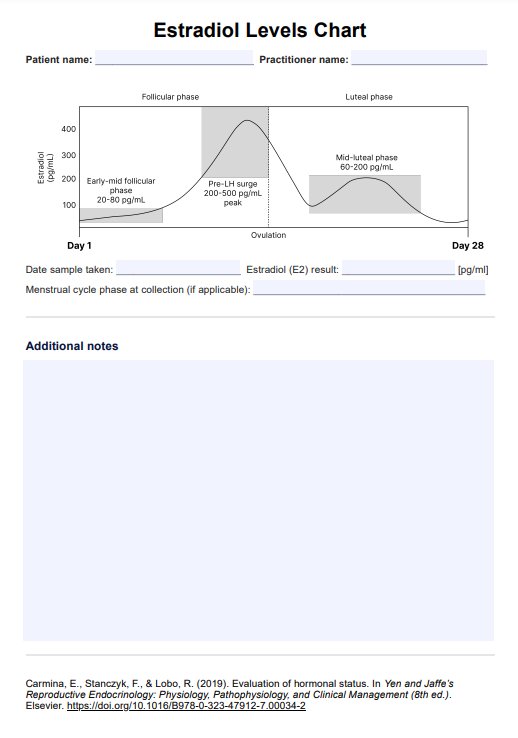
Vårt østradiolnivådiagram er en grafisk ressurs som illustrerer de typiske sykliske svingningene i serumøstradiolnivåer (i pg/ml) gjennom en livmorsyklus. Disse svingningene vil se annerledes ut avhengig av om en person er pre-pubescent, pre-menopausal, gravid eller postmenopausal. Som sådan kan det være et bredt spekter av normale verdier av østradiolnivåer avhengig av syklustiming eller livsstadium.
Et østradiolblodprøveresultat er vanligvis gitt som en enkelt konsentrasjon presentert med det normale referanseområdet for østrogennivåer i befolkningen. I stedet for å gi disse dataene som tall og intervaller, viser dette østradiolnivådiagrammet de gjennomsnittlige østradiolverdiene i befolkningen over 28 dager og kvinnene i normalområdet, uavhengig av syklustidspunkt eller livsstadium.
Denne praktiske ressursen kondenserer mye informasjon om østradiolnivåer til et enkelt visuelt diagram som kan tjene som en enorm pedagogisk ressurs eller tilleggsverktøy sammen med østradiolblodprøveresultater.