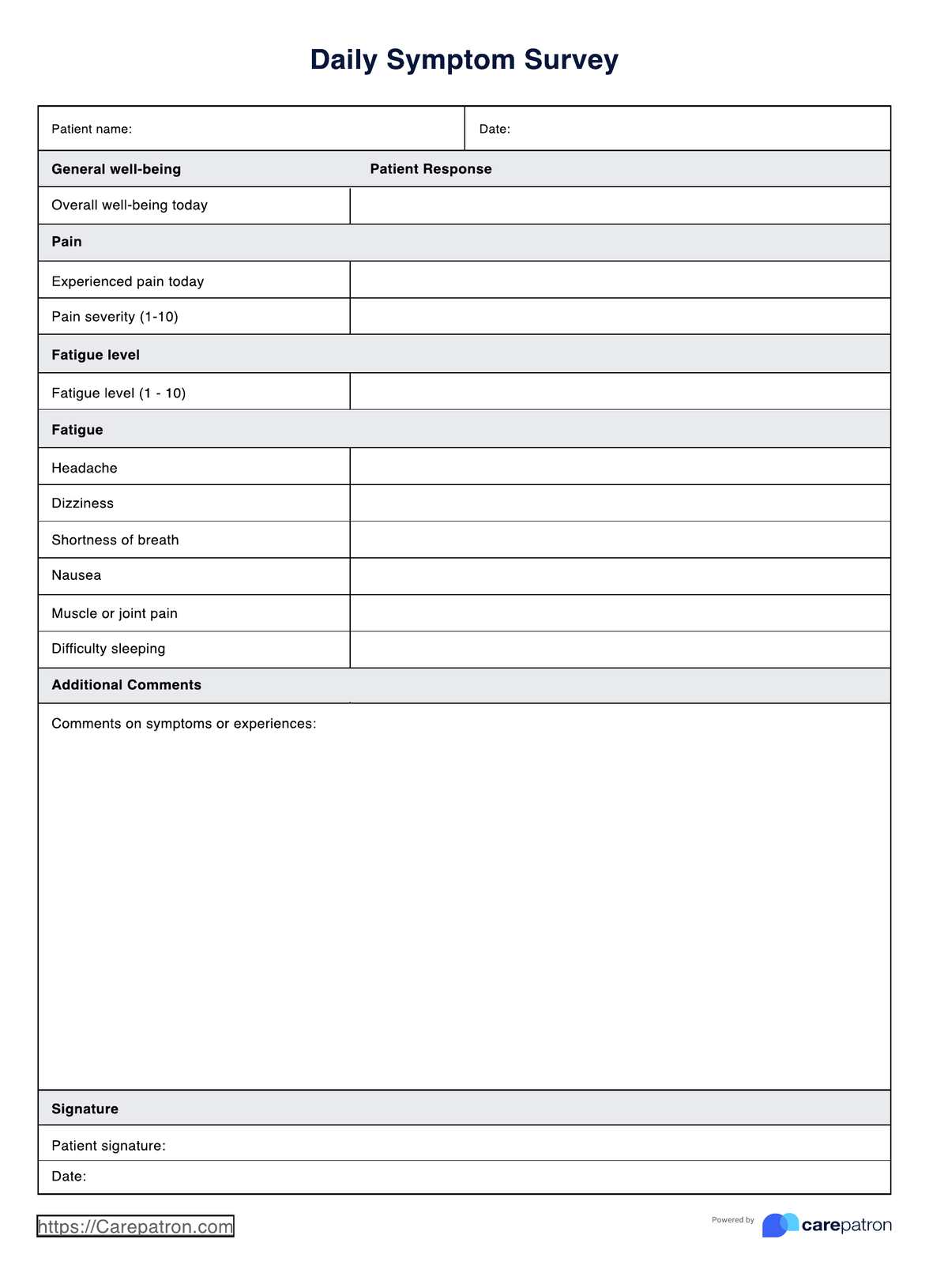
How To Use This Daily Symptom Survey Questions
When monitoring patient health and improving clinical outcomes, a Daily Symptom Survey can be a valuable tool for healthcare professionals. However, it is essential to understand how to use this resource effectively to maximize its benefits. This section will explore the steps involved in using the Daily Symptom Survey questions, providing healthcare professionals with the knowledge and skills to successfully integrate this tool into their practice.
Step 1: Customize the Survey
Before distributing the Daily Symptom Survey, customize the template to suit your practice's specific needs. You can add, remove, or modify questions to align with the conditions or symptoms you monitor.
Step 2: Provide Instructions for Patients
When introducing the Daily Symptom Survey to patients, ensure they understand the purpose and importance of completing it daily. Provide clear instructions on filling out the survey, emphasizing the need for accuracy and honesty in their responses.
Step 3: Distribute the Survey
Distribute the Daily Symptom Survey to patients using your preferred method. This could be through a paper copy, email, or a secure patient portal. If using an electronic format, consider using a platform like Carepatron to streamline the process and automate patient reminders to complete the survey.
Step 4: Monitor Patient Responses
Regularly review patients' responses to the Daily Symptom Survey, looking for trends, changes, or inconsistencies in their reported symptoms. Use this information to inform treatment decisions and address emerging issues or concerns.
Step 5: Discuss Survey Results with Patients
During patient appointments, discuss their survey results, addressing any questions or concerns they may have. This ongoing conversation helps build rapport and trust, encouraging patients to continue engaging with the survey and providing accurate information.
Step 6: Adjust Treatment Plans as Needed
Based on the information gathered from the Daily Symptom Survey, adjust treatment plans to address patients' needs better and improve their health outcomes. This may involve modifying medications, incorporating new therapies, or focusing on specific areas of concern.
By following these steps, healthcare professionals can use the Daily Symptom Survey to monitor patient health, make informed decisions, and optimize treatment plans. By reviewing a Daily Symptom Survey example or Daily Symptom Survey sample, practitioners can better understand how to utilize this valuable tool in their practice.