





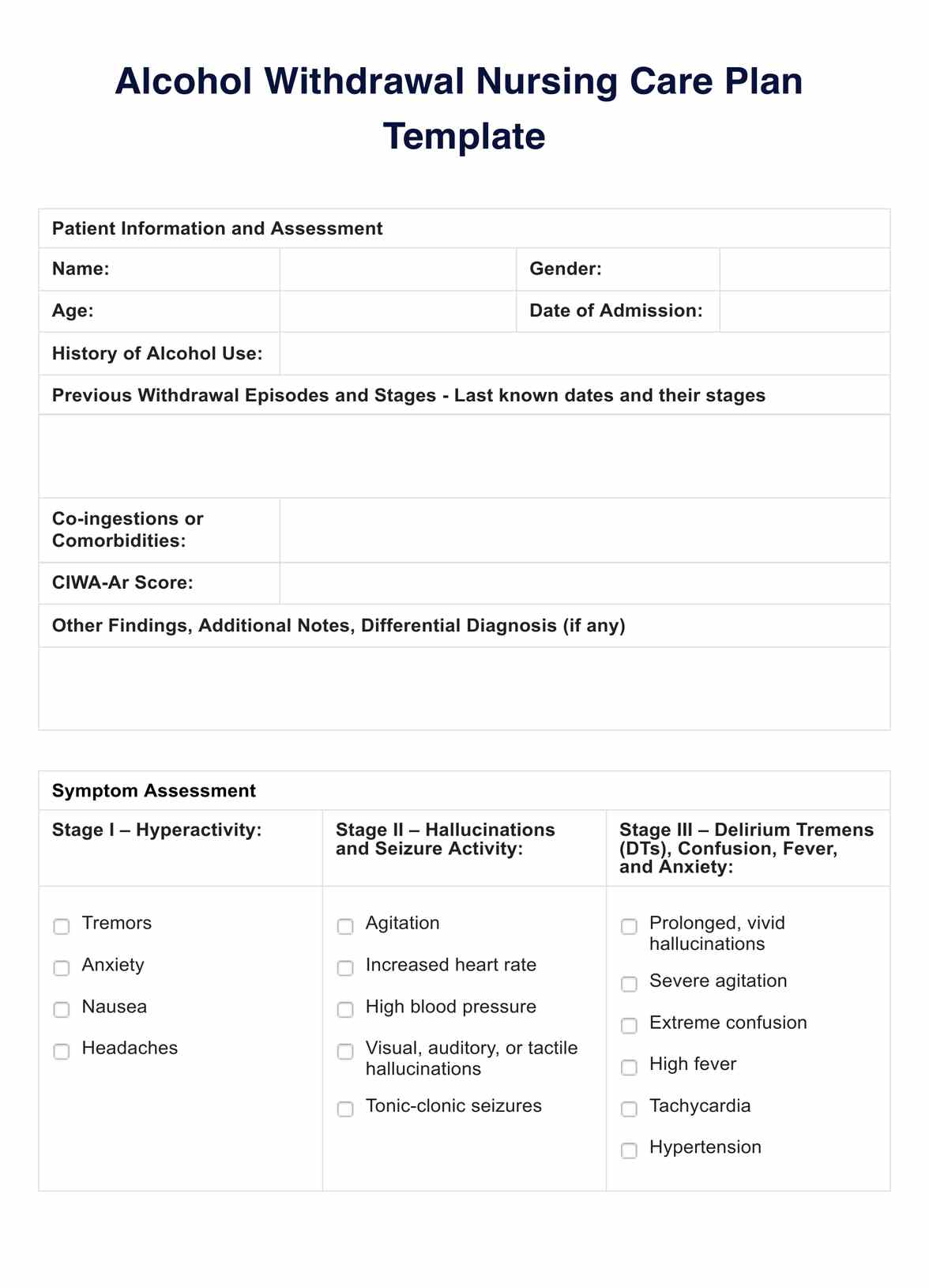




What is an Alcohol Withdrawal Nursing Care Plan template?
An Alcohol Withdrawal Nursing Care Plan Template is a vital resource designed to guide healthcare professionals in systematically managing the challenges associated with alcohol withdrawal. Alcohol Withdrawal Syndrome (AWS) is the body's response to the sudden cessation of heavy and prolonged alcohol use. Its symptoms can range from mild to severe and typically emerge within hours to a few days after the last drink.
The stages of AWS manifest various symptoms:
- Stage I – Hyperactivity: The patient exhibits mild symptoms. These may include tremors, anxiety, nausea, and headaches.
- Stage II – Hallucinations and Seizure Activity: The patient exhibits moderate symptoms such as agitation, increased heart rate, and high blood pressure. There may be some visual, auditory, or tactile hallucinations that can confuse, and there is a chance of tonic-clonic seizures occurring.
- Stage III – Delirium Tremens (DTs), Confusion, Fever, and Anxiety: In rare cases, the patient may experience the severe and potentially life-threatening manifestation of alcohol withdrawal. In DTs, hallucinations are prolonged, vivid, and often terrifying, while seizures are longer and more severe. The patient also experiences high fever, tachycardia, hypertension, severe agitation, tremors, and extreme confusion. DTs is a medical emergency requiring immediate intervention.
The duration of alcohol withdrawal varies. Mild symptoms may last a few days, while more severe cases, especially Delirium Tremens, can persist for a week or longer. The timeline is influenced by factors such as the individual's overall health, the amount and duration of alcohol consumption, and any pre-existing medical conditions.
The complexity of alcohol withdrawal necessitates a structured care plan. The Nursing Care Plan Template provides a framework for healthcare professionals to assess symptoms, monitor progress, and implement appropriate interventions. It addresses the spectrum of symptoms, from mild to severe, ensuring a tailored approach to patient care. We have included Delirium Tremens in the template to emphasize the importance of vigilant monitoring and immediate response to severe alcohol withdrawal symptoms.









