





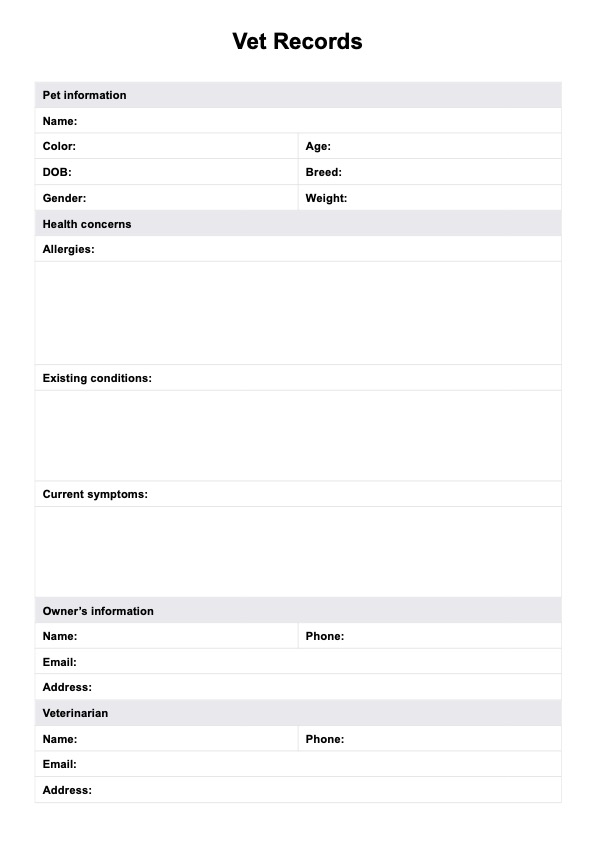



What is a Vet Records Template?
In veterinary medicine, a veterinary record is essential for tracking the medical history of veterinary patients. When a pet visits veterinary clinics or a veterinary hospital, the veterinarian conducts a physical examination and documents any abnormalities, diagnostic tests, or treatment in the veterinary health record. These records provide both the veterinarian and the pet owner with a clear understanding of the pet’s past medical care (Trask, 2022).
Accurate veterinary medical record keeping is crucial for monitoring how patients respond to veterinary medicines and maintaining detailed notes on their overall health. Without a well-maintained vet record template, it would be difficult for veterinarians to recall each patient’s medications, surgeries, or other treatments throughout their lifetime, especially in busy veterinary practices (Trask, 2022).
Additionally, veterinary records serve as a legal document that may be required if a pet parent files a malpractice claim against a veterinary clinic or hospital. Like in human medical care, proper documentation ensures compliance with regulations like health insurance portability and protects both the veterinarian and the pet owners in the event of a dispute (Trask, 2022).
The Vet Records Template includes essential information such as:
- Pet information: Including name, age, DOB, breed, gender, weight, and color.
- Veterinarian details: Including name, clinic, and contact details.
- Health concerns: Including allergies and existing conditions.
- Owner's information: Including name, contact details, and address.
- Immunization history: This includes the age in weeks/months when immunized and the vaccine used.
- Medical history: Including date, description, diagnosis, tests/procedures performed, results, action, medication, and comments.









