


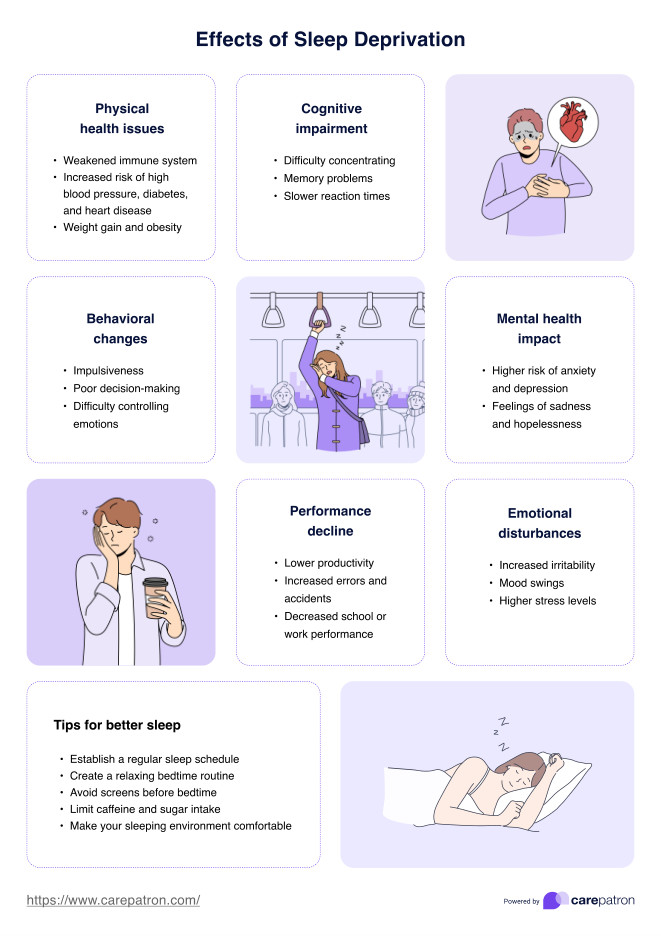




What is sleep deprivation?
Sleep deprivation occurs when an individual gets less sleep than they need to function optimally. For many people, insufficient sleep might stem from lifestyle choices, such as pulling all-nighters for work or school or sacrificing sleep to socialize and have fun. These occasional lapses can seem harmless, but when they become habitual, the consequences add up quickly.
On a more serious note, sleep deprivation can also be caused by underlying medical conditions. Untreated sleep disorders like insomnia, sleep apnea, and restless leg syndrome can lead to trouble sleeping. Additionally, mental health conditions such as anxiety and depression can disrupt sleep patterns, leading to chronic sleep deprivation. Certain medications, shift work, and high-stress environments can also contribute to ongoing sleep deficits.
How is sleep deprivation diagnosed?
Diagnosing sleep deprivation involves thoroughly examining medical history and assessing the symptoms of sleep deprivation:
- Daytime sleepiness: Persistent tiredness and the urge to sleep during the day.
- Difficulty concentrating: Trouble focusing on tasks and slower reaction times.
- Mood changes: Increased irritability, anxiety, and depressive symptoms.
- Impaired cognitive function: Reduced ability to think clearly and make decisions.
- Physical fatigue: Feelings of lethargy and exhaustion throughout the day.
- Sleep disturbances: Issues such as waking frequently at night or taking longer to fall asleep
In addition, you examine the patient’s sleep patterns, including duration, quality, and factors disrupting sleep. You may use tools like sleep diaries and the Pittsburgh Sleep Quality Index (PSQI) to evaluate your patient's sleep quality over time.
If you suspect a sleep disorder, a sleep study (polysomnography) may be recommended to monitor brain activity, heart rate, and breathing during sleep. Symptoms like excessive daytime sleepiness and difficulty concentrating also help identify the impact of sleep deprivation on daily life, guiding the development of a tailored treatment plan.









