









What is Trauma and PTSD?
Trauma and Post-Traumatic Stress Disorder (PTSD) are complex psychological conditions that stem from experiencing or witnessing a deeply distressing, life-threatening, or emotionally overwhelming event. Trauma can encompass many experiences, including physical or sexual assault, accidents, combat, natural disasters, and more. It leaves individuals with emotional scars and can disrupt their ability to cope with daily life.
PTSD is a specific disorder that may develop in response to trauma. It often manifests through intrusive thoughts, nightmares, flashbacks, and extreme anxiety or emotional numbing. Those with PTSD may also experience heightened irritability, anger, or difficulty sleeping, significantly impacting their overall well-being.
When discussing gratitude and happiness in the context of PTSD, it's important to recognize their significance. Trauma can lead individuals into a cycle of negative emotions, and the ability to find moments of gratitude and happiness, no matter how small, is essential for healing. Fostering gratitude can offer a ray of hope and optimism amidst the darkness. By acknowledging positive aspects in their lives, PTSD sufferers can regain a sense of control and improve their mental and emotional well-being.
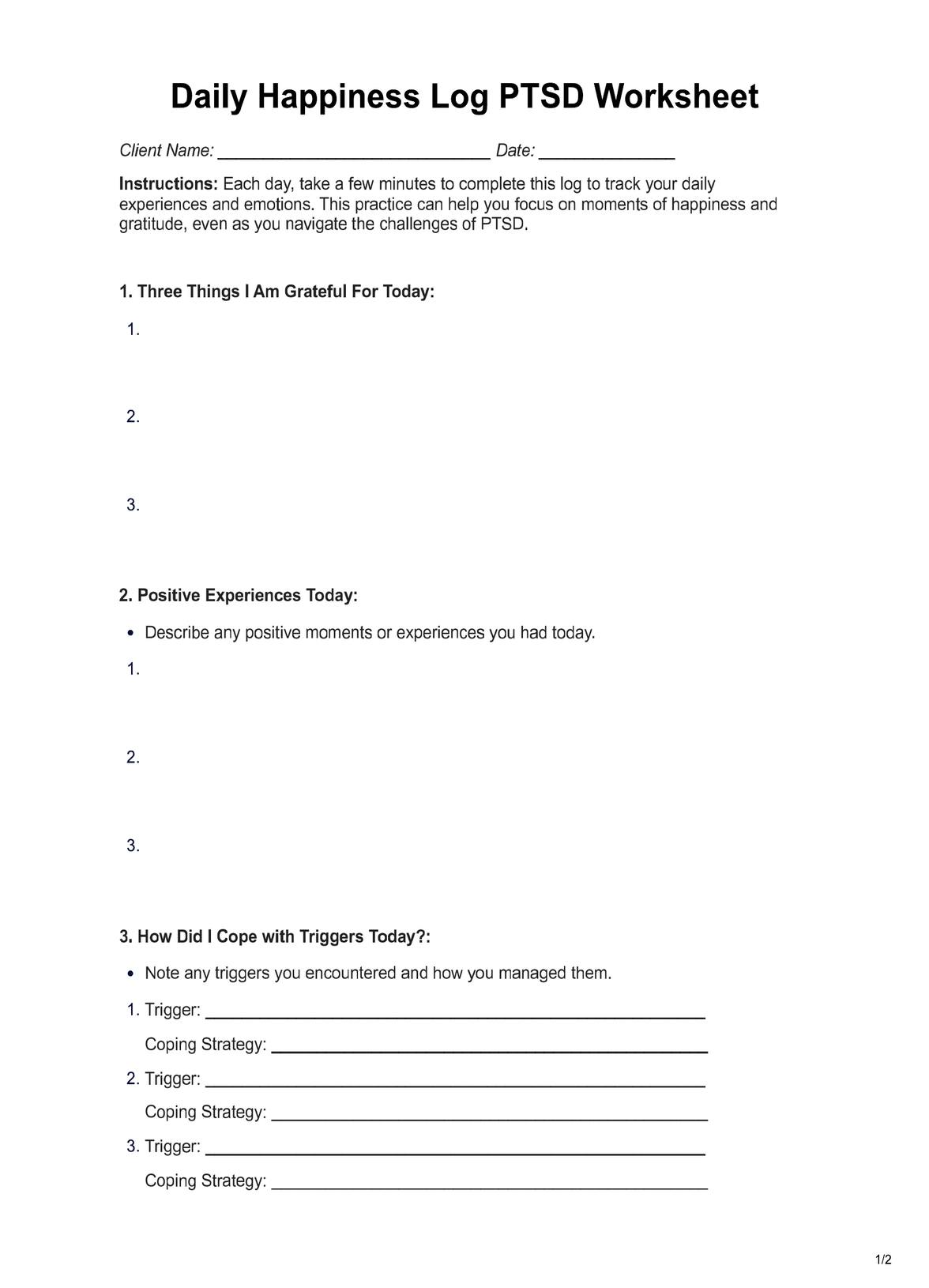
Engaging in practices like keeping a Daily Happiness Log can help individuals with PTSD notice and appreciate the positive moments that arise, which in turn can promote emotional healing. It's not about ignoring the trauma or pretending it didn't happen but rather about recognizing that happiness and gratitude can coexist with pain and sorrow. It's a vital step towards reclaiming one's life and moving beyond the shadow of trauma, ultimately promoting resilience and recovery.









