









What is body mass index?
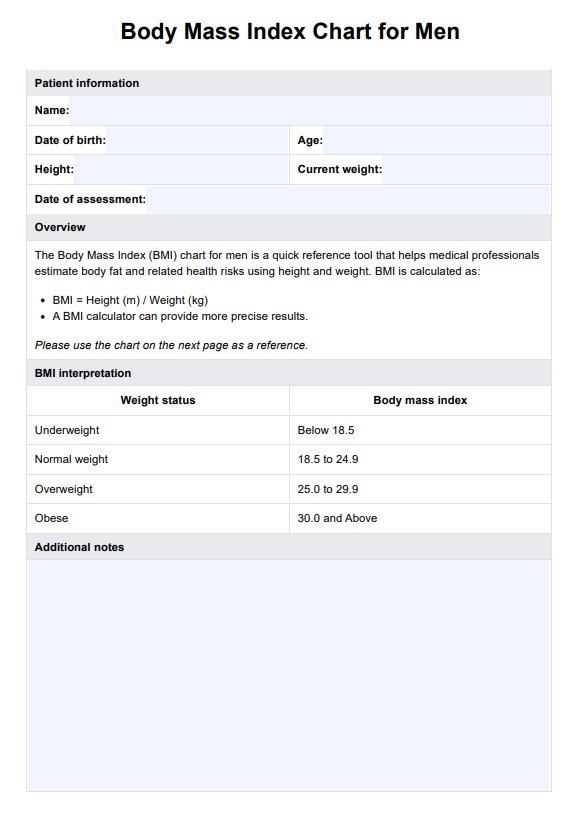
Body mass index (BMI) is a numerical value derived from a person's weight and height, used to estimate body fat, check low body fat levels, and assess health risks (Khanna et. al., 2022). The BMI formula is weight in kilograms divided by height in meters squared. Healthcare professionals use BMI to quickly categorize individuals into weight classifications—underweight, normal, overweight, or obese—helping determine if they fall within a healthy weight range.
While BMI is a convenient tool, it has limitations. It does not differentiate between muscle mass, fat, or bone, which can underestimate body fat in some cases. A high BMI may not always indicate excess fat, especially in muscular individuals (National Heart, Lung, and Blood Institutem 2019). Despite these limitations, elevated BMI values are associated with increased risks of high blood pressure, heart disease, severe obesity, and chronic health conditions.
Practitioners should consider body composition, waist circumference, and lifestyle factors when interpreting BMI results. Using a BMI calculator provides a fast way to calculate BMI, but it should be part of a comprehensive health assessment for determining healthy body weight and reducing potential health risks.









