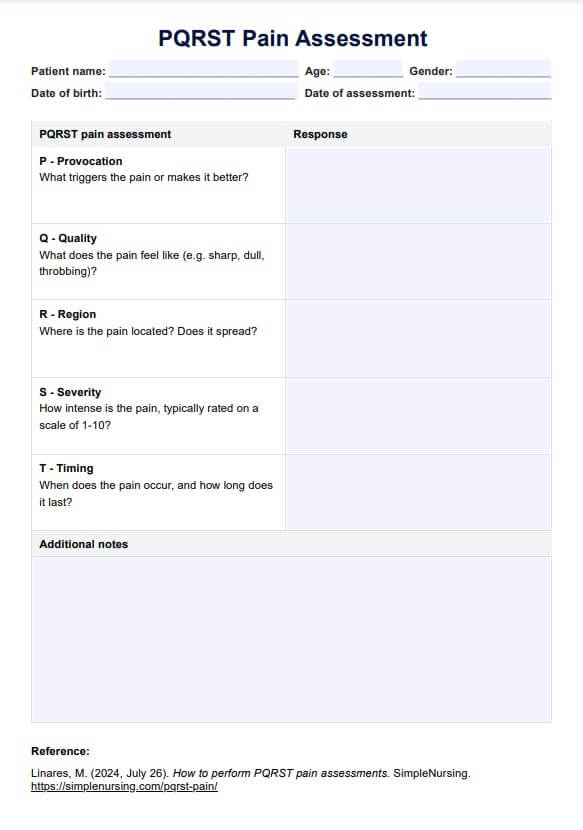




Hva er PQRST Pain Assessment?
Smerte er en kompleks og svært individuell opplevelse som kan være vanskelig å uttrykke med ord. Det kan variere fra mildt ubehag til alvorlig, svekkende smerte. Det er ofte flerdimensjonalt og involverer både fysiske og emosjonelle komponenter. Av denne grunn bruker helsepersonell forskjellige verktøy for å vurdere smerte hos pasientene sine.
Et av disse verktøyene er PQRST Pain Assessment. PQRST står for provokasjon, kvalitet, region, alvorlighetsgrad og tid. Det er en omfattende vurdering som hjelper helsepersonell å forstå pasientens smerte og ta passende behandlingsbeslutninger.
PQRST Pain Assessment har fem komponenter:
- ProvokasjonDette inkluderer alle aktiviteter eller situasjoner som fremkaller smerte eller skade, for eksempel bevegelse, pust eller kroppsholdning;
- Kvalitet: Dette ser på egenskapene og kvaliteten på smerten, for eksempel intensitet, plassering og varighet;
- Regionen: Dette utforsker hvordan smerten beveger seg fra ett område av kroppen til et annet;
- Alvorlighetsgrad: Dette innebærer at personen vurderer smerten på en skala fra 1-10 og;
- Tid: Denne komponenten spør hvor ofte smerten oppstår og hvor lenge den varer.
Klinikere kan bruke PQRST i forskjellige omgivelser og scenarier, for eksempel i magesmerter, brystsmerter eller nociceptive smerter. Det brukes ofte til å spore en persons fremgang i behandlingen og bidra til å avgjøre om en bestemt intervensjon påvirker smerten.