

In the ever-evolving landscape of healthcare software, two prominent contenders stand out: Carepatron and WebPT. These platforms are designed to streamline operations and enhance patient care within physical therapy practices and other healthcare settings. Understanding their differences is vital for medical practices seeking the optimal solution to meet their needs.
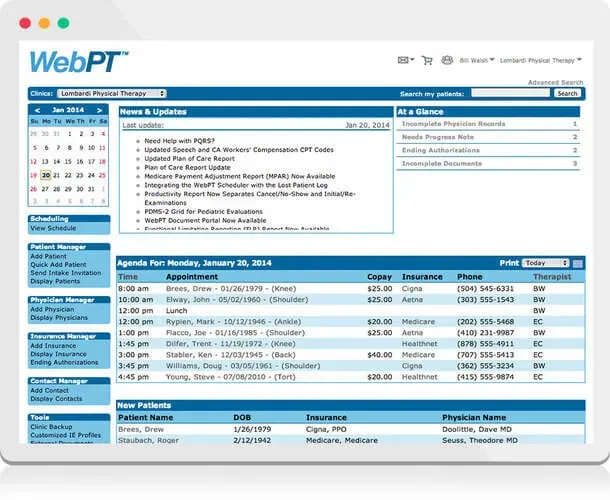
WebPT has garnered extensive acclaim, evident in its positive reviews and widespread adoption among physical therapists. Known for its robust features explicitly tailored for physical therapy, WebPT offers comprehensive patient charting, documentation systems, and revenue cycle management tools. Its user-friendly interface and seamless integration with third-party applications make it a go-to choice for practices of various sizes.
On the other hand, Carepatron enters the arena with its own set of strengths. Positioned as a modern, cloud-based application, Carepatron aims to revolutionize healthcare workflows with innovative features and a user-centric approach. While offering similar functionalities like patient charts and billing software, Carepatron may differentiate itself by emphasizing user experience, business performance analytics, and responsive customer support.
Both platforms prioritize the seamless delivery of care, empowering physical therapists and healthcare practitioners to focus on what they do best: improving patient outcomes. Whether optimizing scheduling, facilitating communication within rehab therapy and patient care teams, or ensuring compliance with industry standards, Carepatron and WebPT strives to enhance every aspect of the patient journey.
In the following sections, we'll delve deeper into each platform's specific features, advantages, and considerations for hospital health care itself. By examining factors such as scalability, integration capabilities, and support services, medical practices can make an informed decision when choosing between Carepatron and WebPT, ultimately enhancing efficiency, productivity, and the quality of care delivery.