





Fewer no-shows with automated reminders across Carepatron practices.
Star rating across 900+ reviews on Capterra and G2.
Saved per week on average by removing manual scheduling from your workflow.
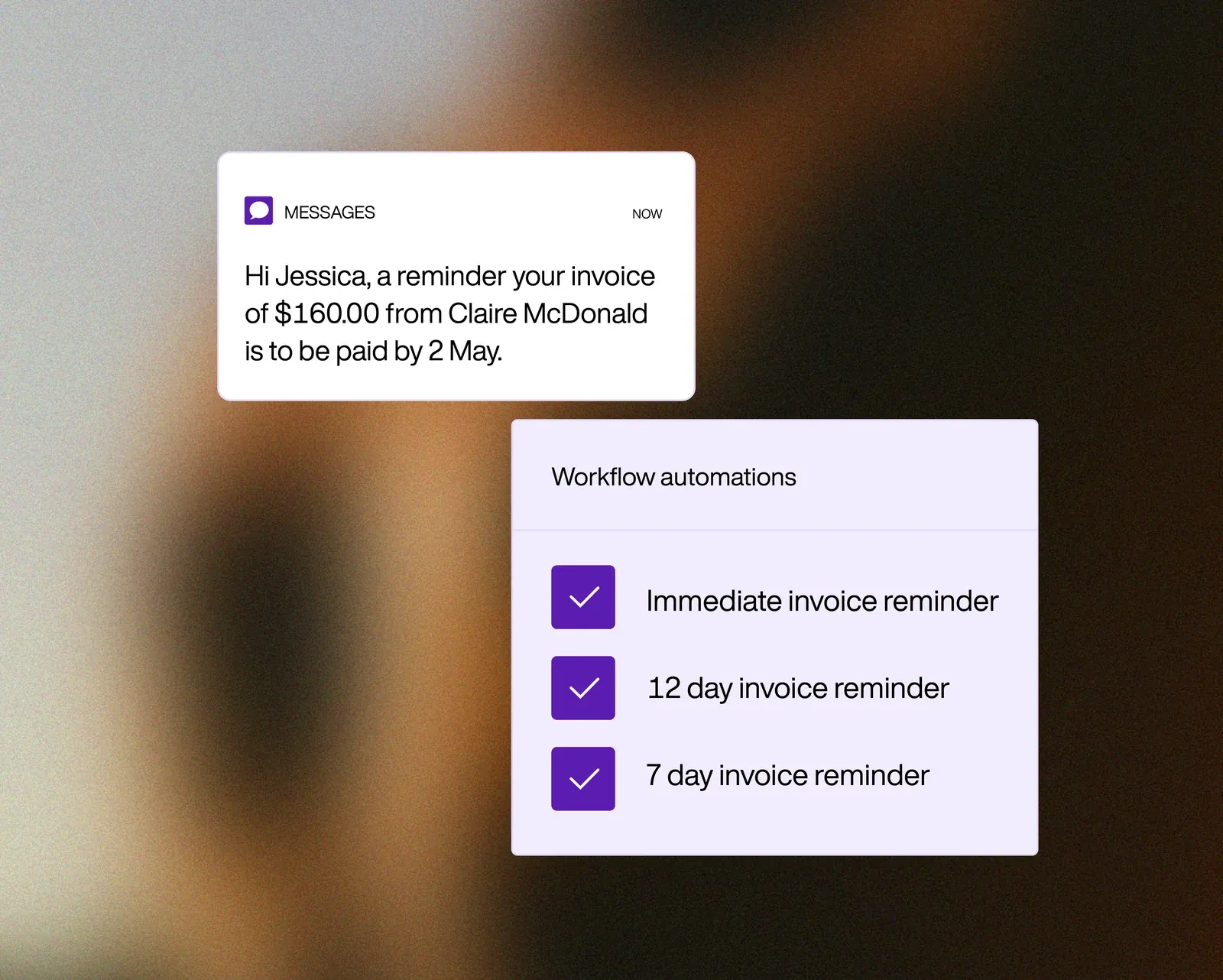
Invoices in clicks
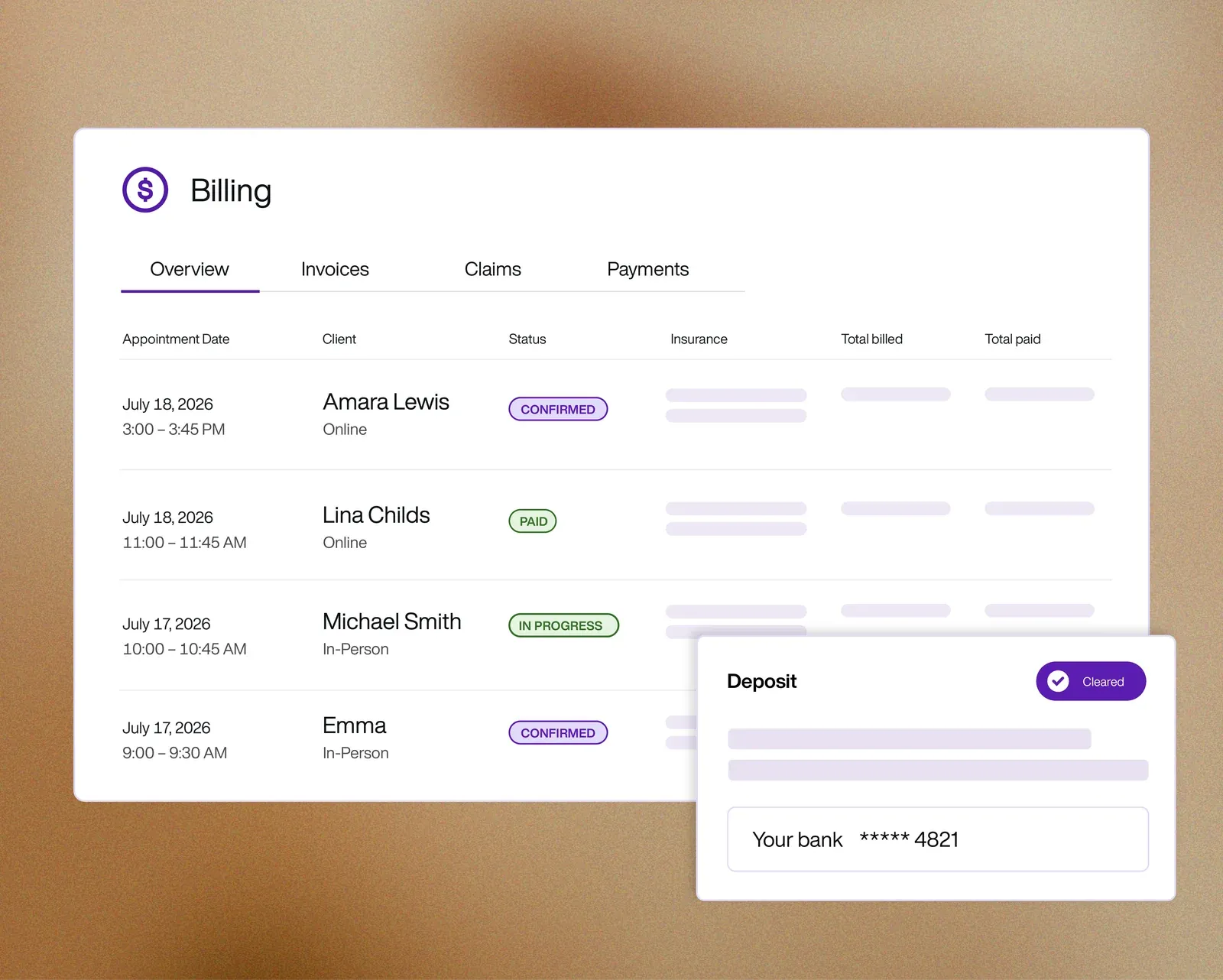
Create invoices from an appointment, a client record, or the billing page with your branding. Send a payment link and your client pays online. Set up invoice reminders so overdue payments chase themselves.
- Create invoices from appointments or client records
- Multiple services on a single invoice
- Automated invoice reminders for overdue payments
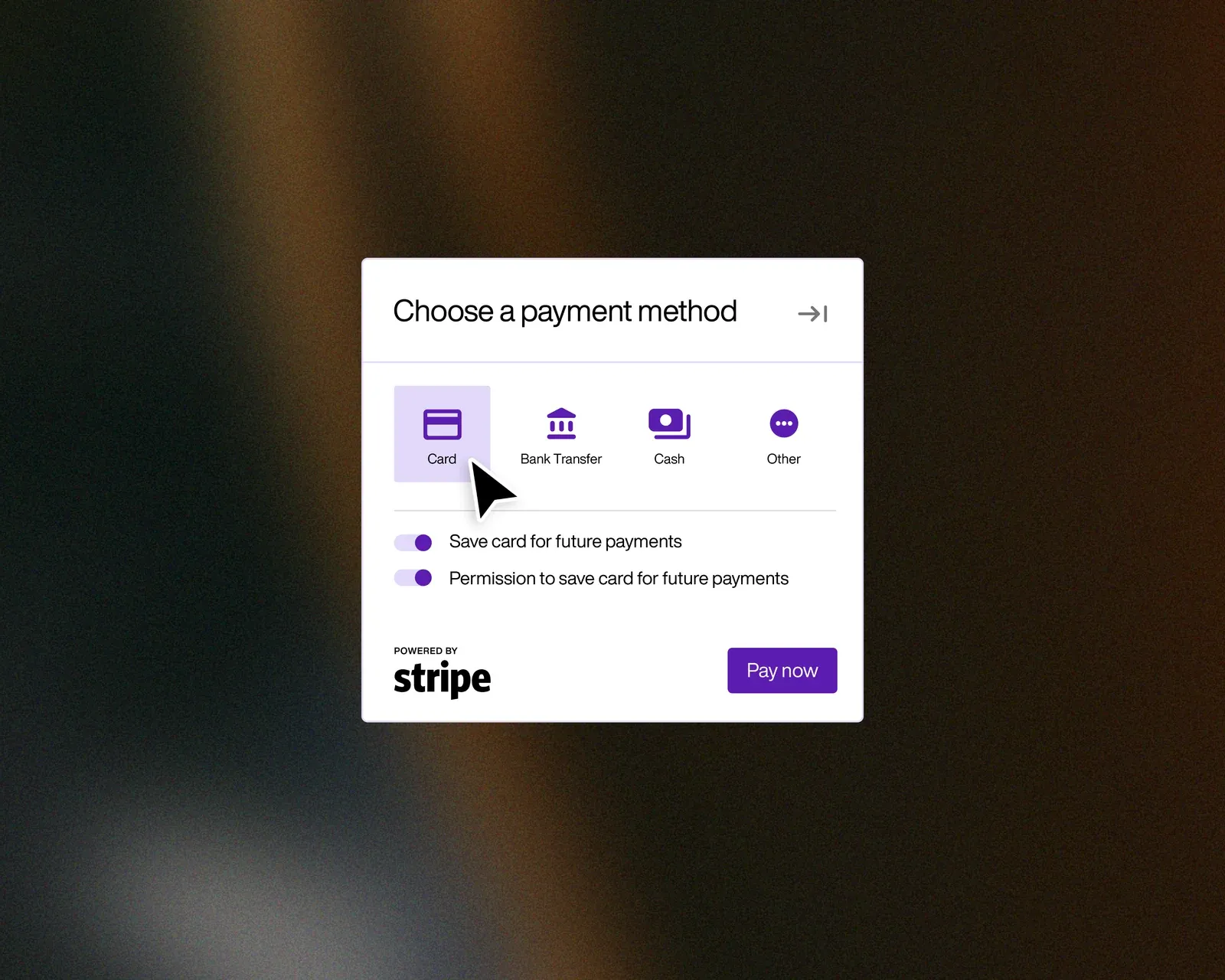
Get paid, effortlessly
Powered by Stripe. Clients pay by credit card from the invoice link or their portal. Save cards on file and charge with a single click. Process cash or other payment types and record them manually.
- Credit card payments via Stripe with saved cards on file
- ACH payments for US clients
- Send payment links or charge saved cards in one clickt
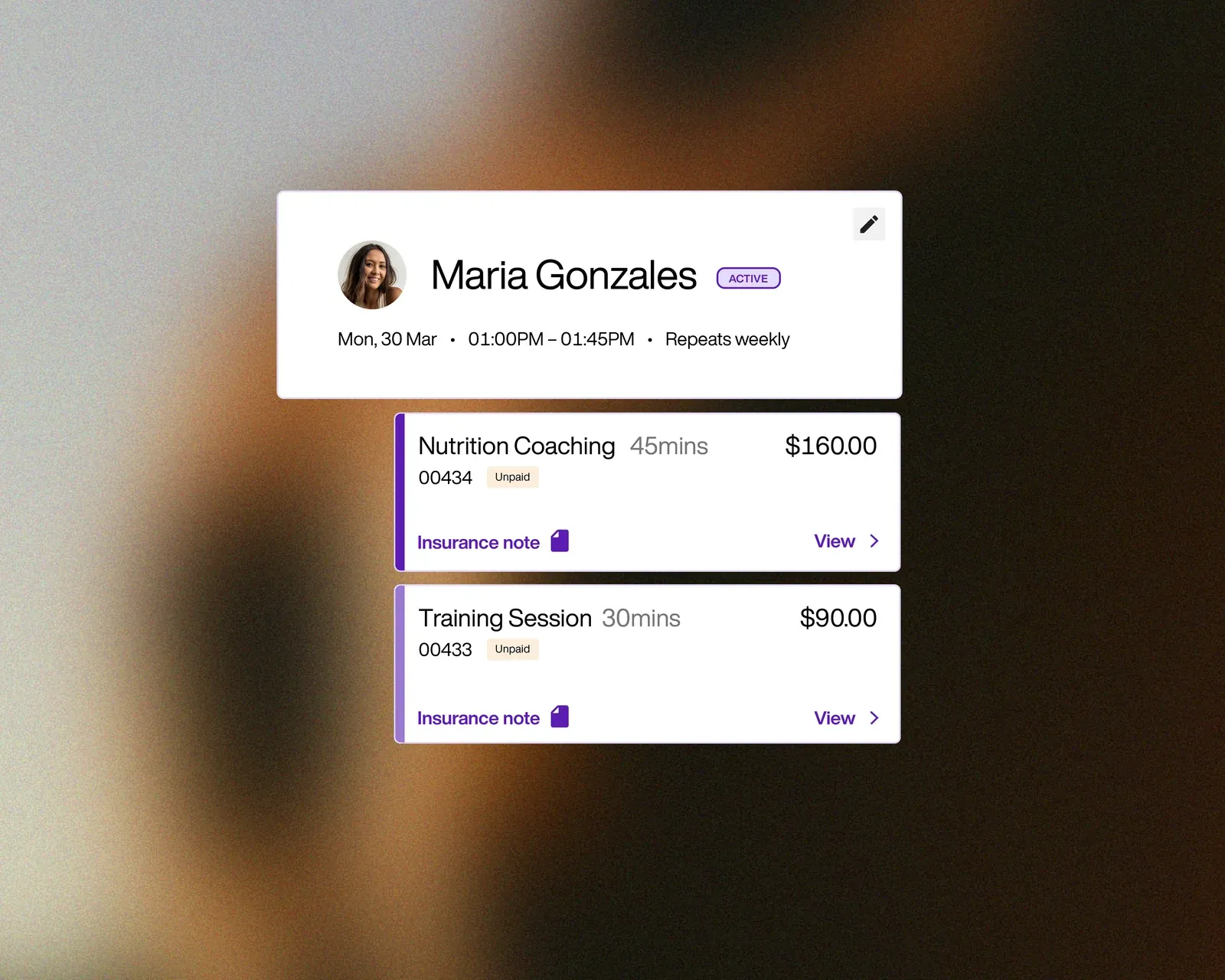
Claims that submit cleanly
Store client insurance details, link them to appointments, and create CMS-1500 forms with the information already filled in. Submit electronically and track it through to payment.
- CMS-1500 forms pre-filled from client and appointment data
- Electronic submission with real-time status tracking
- Built-in validation catches errors before you submit
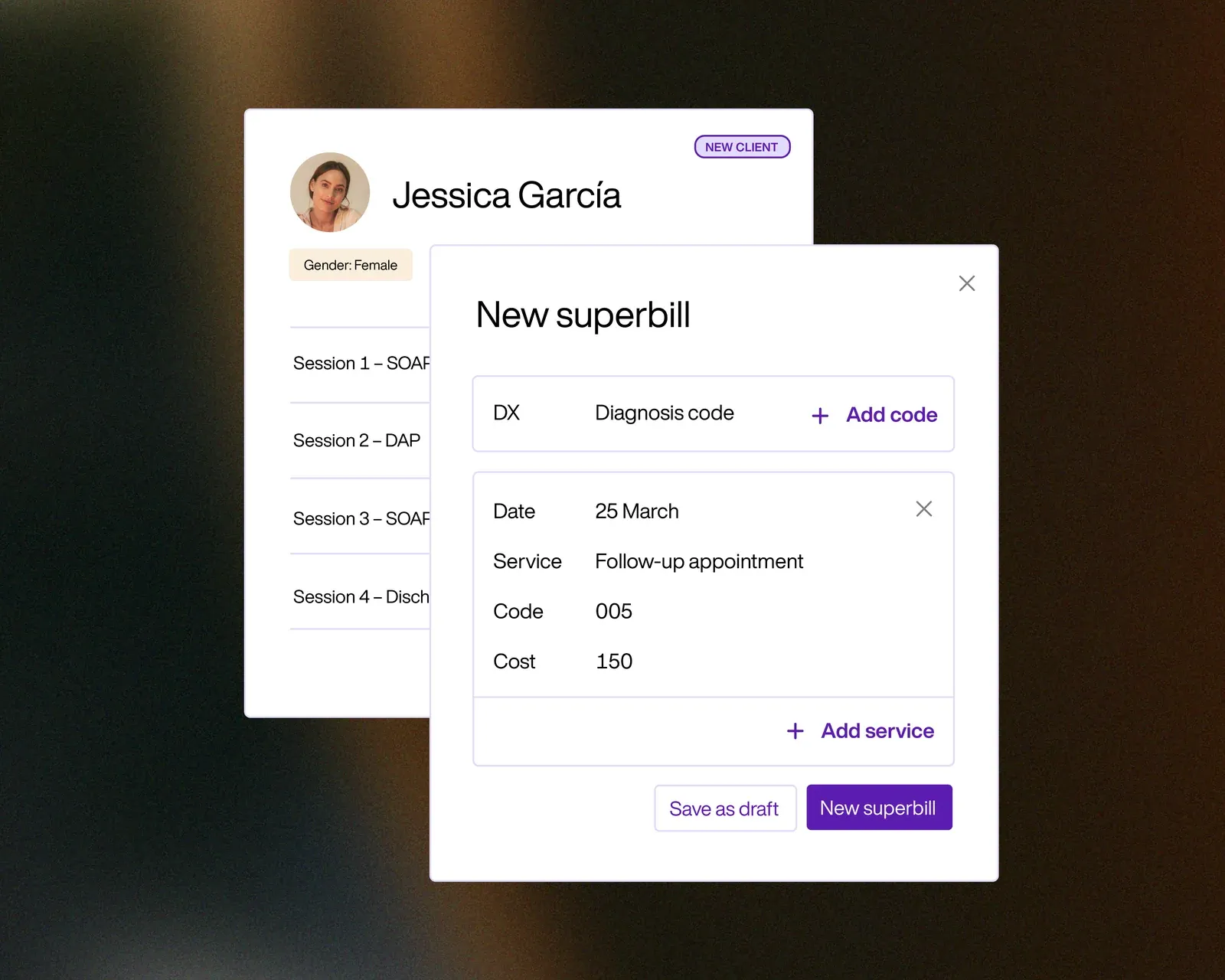
Superbills, sorted
Generate superbills with CPT codes, diagnosis codes, and place of service automatically populated from appointment data.
- Auto-populated CPT codes, DX codes, and place of service
- Manual or automated monthly superbill delivery
- Clients submit to their insurance for reimbursement
Explore what’s next in your workflow
Frequently asked questions
Yes. Free with unlimited clients, AI scribe, telehealth, and core features. No credit card required.
Most practices are up and running in under an hour. Import your existing client data or start fresh.
Yes. Carepatron is HIPAA audited, GDPR, PIPEDA, and SOC 2 Type II compliant. 256-bit encryption on all client data.
Yes. There’s no contract or lock-in and getting started is free. Run both side by side until you’re ready to fully switch.
Yes. Carepatron is used by over 100 different clinician types spanning behavioural health, allied health, medical, and wellness practices in over 120 countries. Our templates, workflows, and clinical tools adapt to how you work.