


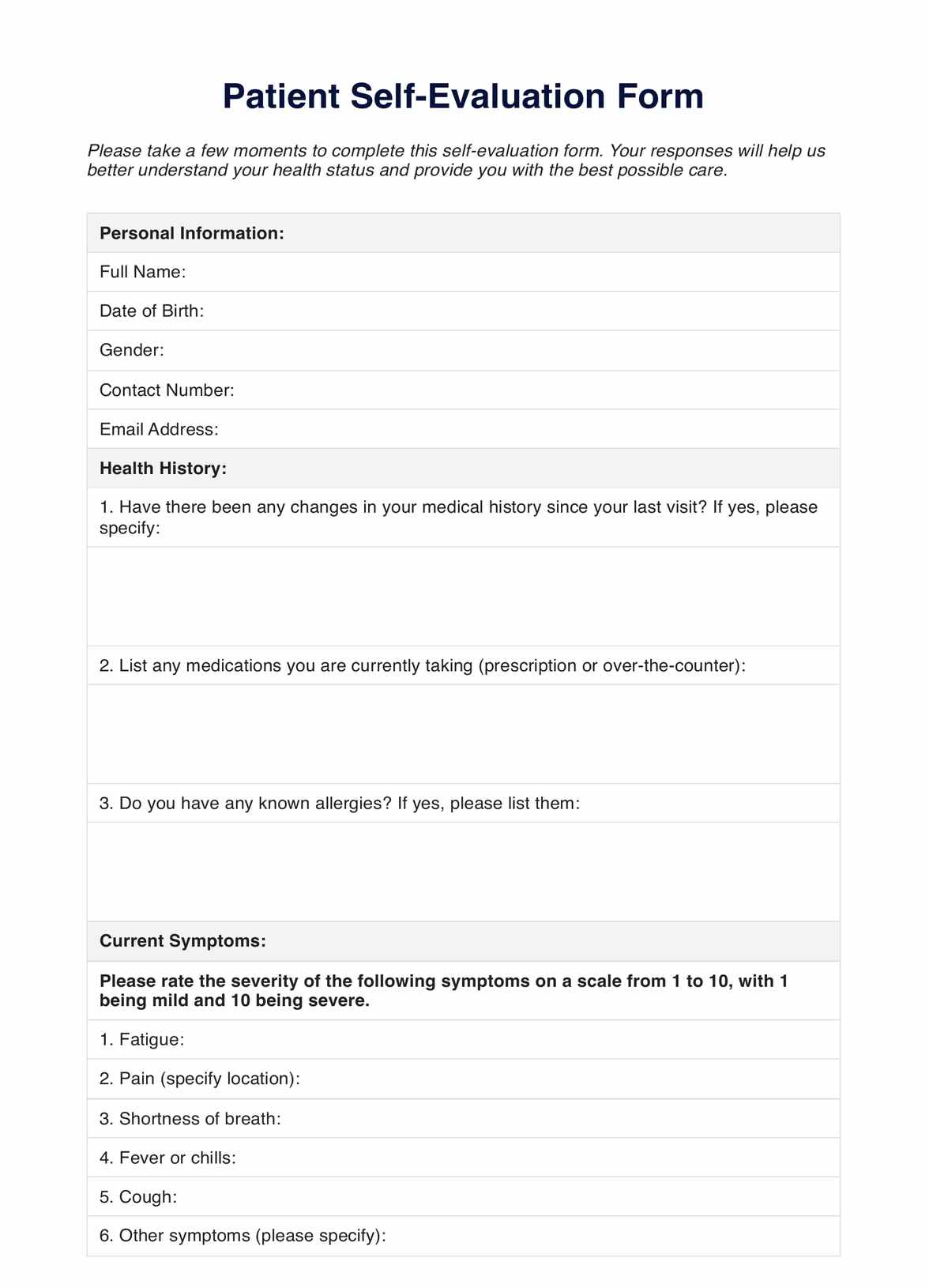




What is a Patient Self-Evaluation?
Patient Self-Evaluation is a proactive approach that empowers individuals to actively participate in assessing their own health status, symptoms, and overall well-being. It involves a structured process where individuals systematically evaluate various aspects of their health, enabling them to gain insights into their conditions, track progress, and make informed decisions in collaboration with healthcare professionals.
This self-assessment typically includes an honest reflection on physical, emotional, and mental aspects. Patients assess factors such as pain levels, energy levels, emotional states, and the impact of their health on daily activities. Importantly, it goes beyond mere symptom tracking – patient self-evaluation encourages individuals to consider the broader context of their lives, considering lifestyle factors, stressors, and environmental influences.
The importance of Patient Self-Evaluation lies in fostering a proactive and engaged role in one's healthcare journey. By regularly assessing their health status, individuals can detect subtle changes, identify patterns, and communicate effectively with healthcare providers. This process enhances the accuracy of diagnoses, facilitates personalized treatment plans, and promotes a sense of autonomy in managing one's health.









