





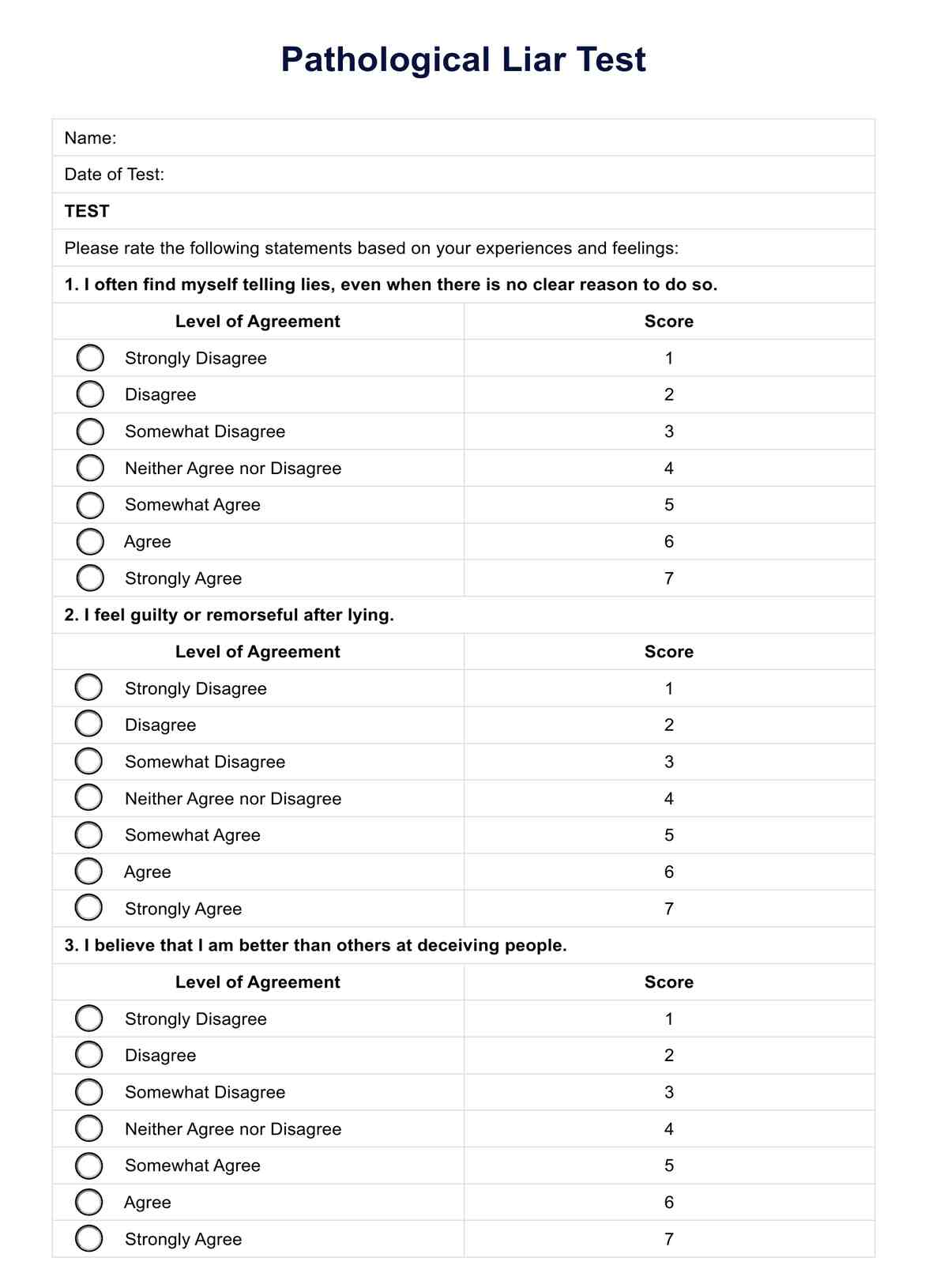




What is a pathological liar?
A pathological liar, or a compulsive liar, is an individual who has told lies, often without a clear motive or benefit. This pathological or compulsive lying extends beyond occasional fibs or exaggerations; it becomes a pervasive aspect of the individual's personality and communication style. Pathological lying is not simply about avoiding punishment or gaining personal advantage; instead, it reflects a deep-seated inclination to fabricate falsehoods consistently.
Compulsive liars may exhibit lying behavior across various aspects of their lives, from personal relationships to professional interactions; unlike occasional lying, which most people engage in to some extent, pathological or compulsive lying is characterized by a compulsive need to deceive, even when there is no apparent reason to do so.
From a mental health perspective, pathological lying is often considered a symptom of underlying psychological issues, such as certain personality disorders or impulse control disorders. While not all pathological liars have diagnosable mental health conditions, the behavior itself can be indicative of broader emotional or psychological challenges.
Identifying and understanding pathological lying behavior is essential, especially for mental health professionals who may encounter individuals struggling with this issue.
Characteristics of a pathological liar
Pathological lying, also known as compulsive lying, can have significant impacts on personal relationships, professional interactions, and overall psychological well-being.
Below are the defining characteristics of a pathological liar:
- Persistent lying: Engages in frequent and habitual lying behavior, often without a clear motive or benefit.
- Compulsive deception: Own lies become a pervasive aspect of their communication style, extending across various aspects of their lives.
- Lack of remorse: Shows little to no guilt or remorse for their lying behavior, even when confronted with evidence of falsehoods.
- Manipulative tendencies: Uses white lies to manipulate situations or manipulate the perceptions of others to achieve personal goals or gain sympathy.
- Difficulty distinguishing truth: May struggle to differentiate between reality and fiction, blurring boundaries between truth and lies.
- Pattern of inconsistency: Their lies tend to be inconsistent and contradictory, making it challenging to discern the truth from falsehoods.
- Refusal to admit falsehoods: Often vehemently denies lying, even when confronted with irrefutable evidence or inconsistencies in their stories.
- Tendency to escalate lies: Lies tend to escalate over time, becoming increasingly elaborate or dramatic to maintain the illusion of truth.
- Unnecessary lying: Engages in lying behavior even when there is no apparent reason or benefit, such as telling white lies or fabricating stories for no discernible purpose.
- Association with personality disorders: Pathological lying is often associated with underlying personality disorders.
- Difficulty passing lie detector tests: Due to habitual lying behavior, pathological liars may struggle to pass initial lie detector tests or exhibit physiological signs of deception even when telling lies.









