



What is the Navicular Drop Test (NDT)?
Imagine you're out for your regular morning jog. The sun is just beginning to rise, and the air is crisp and cool against your skin. You've been running for a few minutes when you notice a dull ache in your lower leg. It's not enough to stop you in your tracks, but it's there, nagging at you with every step. As you continue your run, you can't help but wonder: could this pain be a sign of something more serious?
This scenario is all too familiar for many runners, especially those who have experienced lower leg pain or sustained injuries while pursuing their passion for running. Whether it's shin splints, knee pain, or something more severe like stress fractures, understanding the underlying causes of these issues is crucial for both prevention and treatment.
One diagnostic tool sports physical therapists and clinicians often use is the Navicular Drop Test (NDT). This clinical test provides valuable insights into foot pronation and the dynamic navicular motion during activities like normal walking or running.
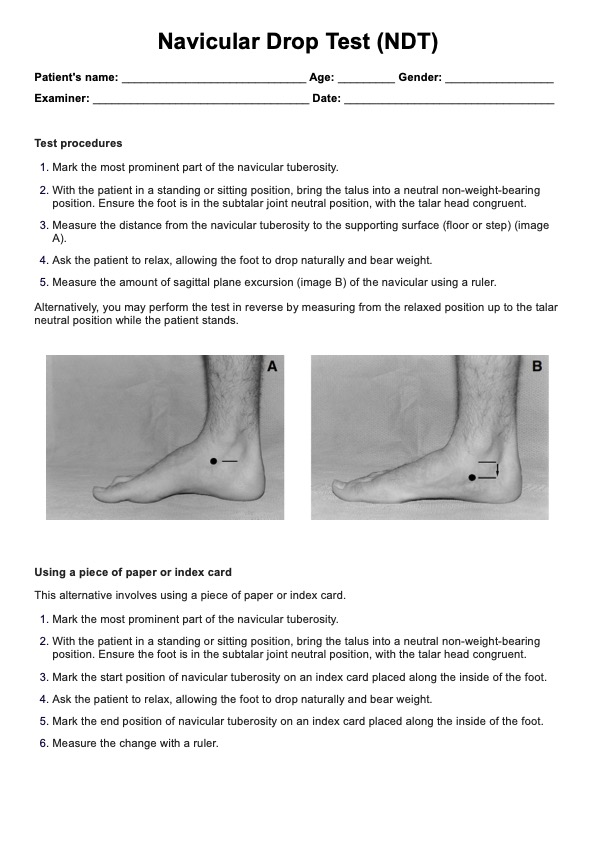
So, what exactly is the NDT? Essentially, it measures the amount of navicular drop, which is the difference in height of the navicular tuberosity from a neutral position to a weight-bearing position. This drop is indicative of how much the foot pronates during the stance phase of gait. While the NDT is widely used in clinical practice, it's essential to note that it's just one component of a comprehensive clinical assessment (Vinicombe et al., 2001).
Why does this matter? Well, excessive navicular drop or increased navicular drop has been identified as a risk factor for various lower extremity injuries, including medial tibial stress syndrome (shin splints), patellofemoral pain syndrome (front knee pain), and even ankle injuries such as stress fractures.
By assessing the navicular position before and during weight-bearing activities, clinicians can gain valuable insights into foot posture and function. This information not only helps identify individuals at risk of sustaining injuries but also guides treatment strategies, such as orthotic intervention or exercise programs.
Alternative techniques, such as the Feiss Line Test, can be used to determine the height of the medial arch using the navicular position. The Navicular Drop Test plays a significant role in the clinical assessment of foot posture and function, particularly in identifying individuals at risk of sustaining overuse injuries during physical activities like running. By understanding the dynamics of navicular motion and its relationship to foot pronation, clinicians can effectively intervene and support injured runners in their journey toward recovery and injury prevention.