How to use the McGill Friendship Questionnaire?
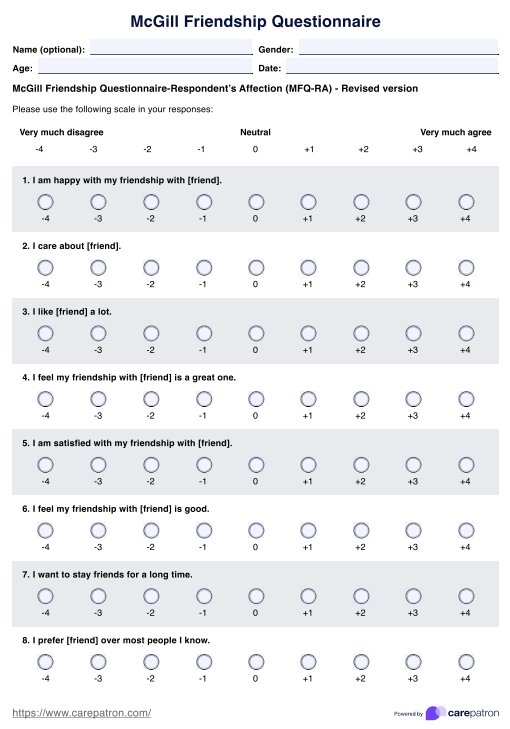
The McGill Friendship Questionnaire is an invaluable tool for medical professionals assessing friendship quality and emotional support in clients’ lives. Using Carepatron’s McGill Friendship Questionnaire template, mental health professionals and relationship counselors can guide clients through evaluating their social connections, offering insights to improve their emotional well-being.
Step 1: Access the questionnaire
Carepatron provides an easy-to-use McGill Friendship Questionnaire template, available directly within this guide. Simply click "Use template" to open it. You can customize it before printing it and using it in sessions, helping facilitate a structured and supportive assessment process of the client’s friendship experiences.
the client
Introduce the McGill Friendship Questionnaire to the client, explaining its purpose of assessing the quality of their friendships. Clarify that the questionnaire is designed to capture positive aspects and areas needing support, helping the client feel at ease with the assessment.
Step 3: Assess the client with the questionnaire
Guide the client through the questionnaire, encouraging honest responses. Each item will gauge various friendship qualities, from emotional security to companionship. Support them as they respond; help them feel calmer by providing a comfortable environment that promotes open, thoughtful answers. You may administer it as an interview or ask them to fill it out themselves.
Step 4: Gather and interpret data
Collect the client’s responses, and analyze them based on the questionnaire's scoring structure. The McGill Friendship Questionnaire provides a comprehensive view of friendship quality, highlighting strengths and areas for potential improvement in social interactions.
Step 5: Discuss findings with client
Share the results with the client, discussing insights regarding their friendship dynamics. This conversation helps clients recognize the role friendships play in their emotional health, addressing positive findings and any areas that may benefit from additional focus.
Step 6: Provide client education and next steps
Offer guidance on how clients can cultivate stronger friendships, whether through conflict resolution, seeking companionship, or enhancing reliability within relationships. Outline actionable steps they can take and suggest follow-up sessions to track progress in developing healthier, supportive friendships.