







Keto Diet Food ListAI Template IconToolbar IconShare Icon

Keto Diet Food List

Master the Keto Diet with our comprehensive Food List. Download the free PDF for a detailed guide and examples to optimize your ketogenic journey.

Matt Olivares avatar

By Matt Olivares on Aug 2, 2025.

Fact Checked by Ericka Pingol.

Use Template

What is a Keto Diet Food List?

A Keto Diet Food List serves as a structured grocery guide for individuals embarking on a ketogenic diet which is a low carbohydrate diet characterized by high saturated fat intake and moderate protein. These lists are commonly created by individuals conducting personal research to support diet for weight loss or by healthcare professionals such as dietitians and nutritionists, who customize food plans for clients based on clinical needs, including body fat percentage, carb intake, and blood sugar control.

Since most people adopt a very low carb diet to lose weight, the foods listed are selected to support fat metabolism, encourage ketosis, and deliver essential nutrients without exceeding the daily limit of total carbohydrate intake.

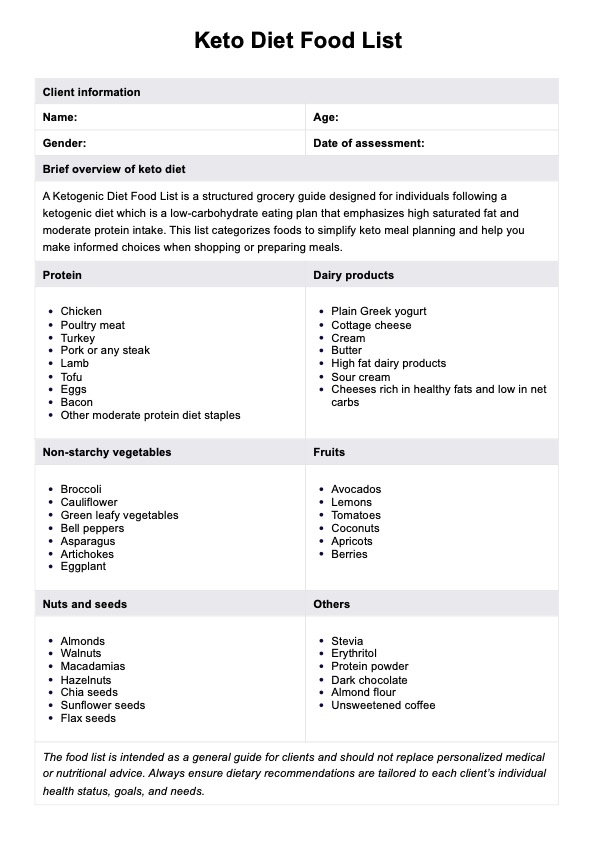
A general keto diet food list may include the following:

  • For protein: Chicken, poultry meat, turkey, pork, steak, fatty fish, lamb, tofu, eggs, bacon, and other moderate protein diet staples (ensuring correct g of protein per meal).
  • Dairy products: Plain Greek yogurt, cottage cheese, cream, butter, high fat dairy products, sour cream, and cheese—all rich in healthy fats and low in net carbs.
  • Non-starchy vegetables: Broccoli, cauliflower, green leafy vegetables, bell peppers, asparagus, artichokes, eggplant—typical low carb veggies that supply nutritious foods.
  • Fruits: Avocados, lemons, tomatoes, coconuts, apricots, and berries, which are low carb foods compared to high carb foods like sweet potatoes and fruit juice.
  • Nuts and seeds: Almonds, walnuts, macadamias, hazelnuts, chia seeds, sunflower seeds, and flax seeds, rich in polyunsaturated fats and fiber.
  • Others: Stevia, erythritol, protein powder, dark chocolate, almond flour, and unsweetened coffee. These are common pantry items in successful keto diet plans.

Foods to avoid include: pasta, bread, whole grains, syrups, fruit juice, soda, honey, high carb foods, starchy vegetables, dried fruits, trail mixes, mangos, bananas, grapes, quinoa, and chocolate with added sugars.

Keto Diet Food List Template

Download PDF Template

How does our Keto Diet Food List work?

To get a copy of the keto diet list of foods, click the "Use Template" button to open a fillable version in the Carepatron app. You can also click "Download" for a ready-to-print version.

This keto diet food list template helps organize groceries for individuals beginning a low carb high fat plan or clinicians guiding therapeutic diets. Whether someone is new to the keto diet or a practitioner advising on nutritional protocols, this tool provides a flexible format.

The list is divided into categories:

  • Protein
  • Dairy products
  • Non-starchy vegetables
  • Fruits
  • Nuts
  • Seeds
  • Miscellaneous (e.g., stevia, erythritol, coconut oil, avocado oil, olive oil, keto foods)

Additional fields include sections for:

  • Peer and professional recommendations
  • Items to avoid (reducing impulse purchases of high carb foods)
  • Notes for personal or therapeutic goals

This structure ensures the list accommodates both weight loss strategies and medical nutrition therapy, such as managing blood pressure or cardiovascular disease.

Always remember that this ketogenic diet food list is intended as a general guide for clients and should not replace personalized medical or nutritional advice. Always ensure dietary recommendations are tailored to each client’s individual health status, goals, and needs.

When would you use this Keto Diet Food List template?

Here are some instances when you can take advantage of the keto foods list:

Before shopping for keto diet ingredients

This food list can be used to prep for a very low carbohydrate meal plan aligned with one's diet for weight loss, helping ensure fewer carbs and ample healthy fats are consumed.

When dietitians and nutritionists are customizing healthy foods lists for clients

Dietitians and nutritionists use it to create customized plans for individuals managing weight, high blood pressure, digestive health, or transitioning into a low calorie diet. It helps them encourage patients what to eat on the keto diet.

If a person has drug-resistant epilepsy or Type 2 diabetes.

A keto diet may be appropriate for patients with Type 2 diabetes or drug-resistant epilepsy, supporting outcomes like lowering blood pressure, enhancing insulin sensitivity, or seizure reduction through stored fat metabolism and ketone production.

What are the benefits of keto diets?

Here are the benefits of advising patients to try keto diet:

Significant weight loss

A ketogenic diet encourages the body to burn fat for fuel (Masood et. al., 2023), leading to rapid fat loss and improved body composition. When paired with intermittent fasting or HIIT exercises, the metabolic effects may be even more pronounced.

Type 2 diabetes management

Obesity and excess fat can heighten the risk of a person having Type 2 Diabetes down the line in their life. Keto diets are known for shaving off excess fat and significant weight loss, so people who don’t have diabetes can adopt such a diet to lessen the risk of getting it.

Those with Type 2 Diabetes can adopt this plan because studies have shown that keto diets can improve blood sugar management and insulin sensitivity.

Drug-resistant epilepsy management

For individuals with seizures unresponsive to medication, a high fat diet that induces ketosis can reduce seizure frequency (Mishra et. al., 2024). Ketones, produced from fatty acid metabolism, serve as an alternative energy source for the brain and may have an anti-epileptic effect (Jensen et. al., 2020).

Keto diets are considered to be effective in helping patients with drug-resistant epilepsy manage their seizures, though this is regarded as a last resort. Keto diets revolve around ketosis. In this state, ketones are produced whenever the body burns fat instead of carbs. The brain uses ketones for energy, and ketones have an anti-epileptic effect.

References

Jensen, N. J., Wodschow, H. Z., Nilsson, M., & Rungby, J. (2020). Effects of ketone bodies on brain metabolism and function in neurodegenerative diseases. International Journal of Molecular Sciences, 21(22), 8767. https://doi.org/10.3390/ijms21228767

Masood, W., Uppaluri, K. R., Annamaraju, P., & Khan Suheb, M. Z. (2023, June 16). Ketogenic diet. StatPearls Publishing. https://www.ncbi.nlm.nih.gov/books/NBK499830/

Mishra, P., Singh, S. C., & Ramadass, B. (2024). Drug resistant epilepsy and ketogenic diet: A narrative review of mechanisms of action. World Neurosurgery: X, 22, 100328. https://doi.org/10.1016/j.wnsx.2024.100328

Commonly asked questions

You can get any food that can provide protein, but you must ensure you only consume up to 10 to 20% protein daily. Too much protein can convert the protein to glucose, slowing your transition to ketosis.

Yes, but don’t use sugar or high-carb sweeteners. Examples of sweeteners you can include are erythritol and stevia, but make sure to moderate your use of these.

Yes. You must ensure you get the necessary macronutrients to enter and sustain ketosis. It’s best to consult with dietitians and nutritionists if you’re not knowledgeable about tracking macronutrients.

EHR and practice management software

Get started for free

*No credit card required

Free

$0/usd

Unlimited clients

Telehealth

1GB of storage

Client portal text

Automated billing and online payments







