




Iron-rich Foods ListAI Template IconToolbar IconShare Icon

Iron-rich Foods List

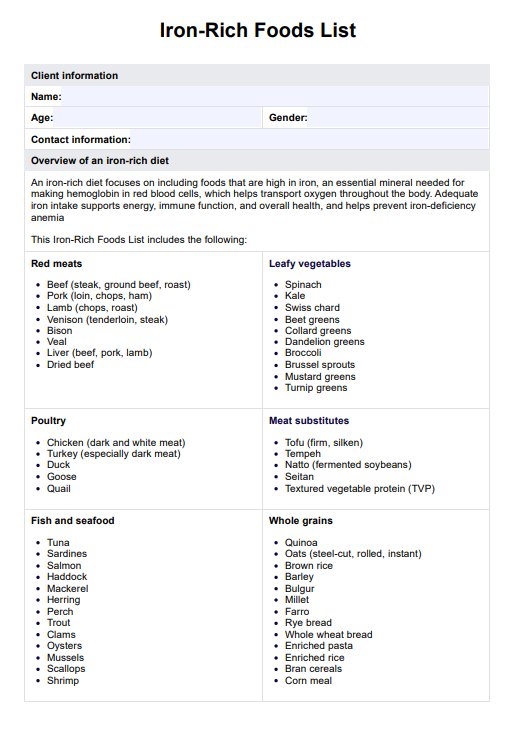
Download our free Iron-rich Foods List to help you shop for iron-rich foods to add to your diet!

Matt Olivares avatar

By Matt Olivares on Aug 2, 2025.

Fact Checked by RJ Gumban.

Use Template

What are iron-rich foods?

Iron is an essential mineral necessary for various physiological functions. Most notably, it is crucial for the production of hemoglobin, the protein in red blood cells that transports oxygen throughout the body. Iron also supports the formation of myoglobin, which delivers oxygen to muscle tissues and contributes to the body's energy production processes. Iron is an important nutrient for immune function, healthy growth, brain development, and other vital bodily functions.

There are two primary forms of dietary iron: heme and non-heme. Heme iron is derived from animal-based foods, while non-heme iron is found predominantly in plant-based sources such as leafy greens, legumes, whole grains, nuts, and seeds. Non-heme iron may also be present in animal products, particularly those sourced from herbivores. The body absorbs heme iron more efficiently, though iron absorption can be boosted by combining nonheme iron sources with vitamin C–rich foods like citrus fruits.

Iron-rich foods commonly include:

  • Red meats (e.g., beef, pork, venison): High in iron and excellent sources of heme iron.
  • Poultry (e.g., chicken, turkey, duck): Rich foods that help carry oxygen through hemoglobin in red blood cells.
  • Fish (e.g., tuna, sardines, salmon): Good food sources of iron and other nutrients.
  • Meat substitutes (e.g., tofu, tempeh): Great options for plant-based foods and protein foods.
  • Leafy vegetables (e.g., kale, spinach, broccoli): Dark leafy greens are high in non-heme iron.
  • Whole grains (e.g., quinoa, oats, brown rice): Iron content varies but includes foods high in nonheme iron.
  • Legumes (e.g., lentils, chickpeas, soybeans): Great plant sources with many health benefits.
  • Beans (e.g., black beans, kidney beans, navy beans): Important mineral content and rich sources of iron.
  • Nuts (e.g., almonds, cashews, macadamia nuts): Nutrient-dense, some of which are high in iron.
  • Seeds (e.g., flaxseeds, pumpkin seeds, sesame seeds, hemp seeds): Foods that support adequate iron stores.
  • Fruits (e.g., dried apricots, strawberries, watermelon): Dried fruit, like dried apricots, helps increase iron.
  • Fortified cereals (e.g., bran flakes, cornflakes, oat cereals, instant oatmeal): Iron fortified cereals and breakfast cereals with iron found in supplemental iron forms.

This list serves as a practical guide for identifying nutrient-dense sources of iron to support overall health and well-being.

Iron-rich Foods List Template

Download PDF Template

How does our Iron-Rich Foods List work?

Carepatron’s Iron-Rich Foods List is designed to support clinical conversations around nutrition and iron intake. With a simple four-step workflow, healthcare professionals can seamlessly integrate this tool into patient consultations to improve dietary planning, address iron deficiency risks, and reinforce long-term health education.

Step 1: Access the food list handout

To begin, click the “Use template” button located on this page. This will direct you to Carepatron’s secure platform, where you can open and edit the Iron-Rich Foods List within the app. You can also click "Download" to get a PDF copy of the file.

Step 2: Use the handout during patient consultation

During the consultation, use the handout as a reference to the comprehensive list of iron-rich foods. This supports a personalized conversation around nutritional needs and helps clinicians easily identify potential dietary gaps or iron-deficiency risks such as iron deficiency anemia or inadequate intakes of iron.

Step 3: Discuss how the food list works

Review the categories with your patient to clarify the difference between heme and non-heme iron sources. Discuss how each group (meat, grains, legumes, etc.) contributes to overall iron intake, and highlight foods that align with the patient’s preferences, cultural context, and lifestyle. Encourage dietary variety, iron absorption strategies, and balance using vitamin C to maximize iron absorption and maintain adequate iron stores.

Step 4: Provide patient support and education

Complete the “Additional notes” section with individualized recommendations, such as how much iron the patient needs, meal ideas, or supplementation considerations. Use this opportunity to educate the patient on factors that affect iron absorption, such as pairing iron-rich foods with citrus fruits and vitamin C, and encourage follow-up as needed to monitor progress and outcomes. Iron-deficient patients may benefit from dietary supplements, such as ferrous sulfate or iron supplements, if their dietary iron intake is insufficient.

When is it best to start adding iron-rich foods to a diet?

Incorporating iron-rich foods into the diet is particularly important during several key life stages and physiological conditions that increase iron requirements.

Infancy through adolescence

During early childhood and pre-adolescence, rapid growth and development significantly increase the body's demand for iron. Pediatric patients are especially vulnerable to iron deficiency, which can impair cognitive development, immune function, and physical growth. Clinicians should counsel caregivers on the importance of iron-rich nutrition during these formative years to prevent conditions such as iron deficiency anaemia.

Menstruation and pregnancy

Individuals who menstruate are at increased risk of iron loss due to monthly blood loss. During pregnancy, iron requirements increase further to support fetal development, placental growth, and the expansion of maternal blood volume. Iron-rich dietary intake, and supplementation when clinically indicated, can help maintain adequate iron status and reduce the risk of iron-deficiency anemia. Pregnant women and menstruating women are considered high risk and may need iron supplements or supplemental iron.

Physically active individuals

Athletes and individuals engaged in regular high-intensity physical activity may experience greater iron demands due to increased erythropoiesis, muscle repair, and potential iron loss through sweat and gastrointestinal microbleeding. Adequate iron intake supports optimal oxygen transport, energy metabolism, and muscle function necessary for sustained performance, while helping the body absorb iron efficiently.

What are the benefits of consuming iron-rich foods?

Consuming iron-rich foods offers the following benefits:

Regulate oxygen transport

Since iron aids in the formation of hemoglobin (UCSF Health, 2019), it can help ensure that the hemoglobin of red blood cells performs its function of distributing oxygen throughout the body.

Lower the risk of getting anemia

Anemia is a blood-related condition characterized by hemoglobin deficiency and the decline of red blood cell amounts in the body (Turner et. al., 2023). If this isn't managed well, it can lead to unwanted complications such as heart problems, pregnancy issues, postpartum depression, developmental issues and delays, fatigue, and cognitive impairment, to mention a few. Iron deficiency is the common cause of anemia (Warner & Kamran, 2023).

One way to lower the risk of getting anemia or manage it is to consume enough iron-rich foods.

Ensure a healthy pregnancy

Pregnant women need to ensure they're maintaining enough iron in their bodies (Institute of Medicine (US) Committee on Nutritional Status During Pregnancy and Lactation, 1990). Iron-rich foods can help increase the blood volume and oxygen that they and their baby need. If a pregnant woman has an iron deficiency, she runs the risk of pre-term birth and having low birth weight.

Boost physical endurance

Those physically active, especially athletes, will significantly benefit from iron-rich foods (Solberg & Reikvam, 2023). These foods should energize them and ensure their muscles can meet the demands of their activity or sport.

References

Institute of Medicine (US) Committee on Nutritional Status During Pregnancy and Lactation. (1990). Iron nutrition during pregnancy. National Academies Press. https://www.ncbi.nlm.nih.gov/books/NBK235217/

Solberg, A., & Reikvam, H. (2023). Iron status and physical performance in athletes. Life (Basel, Switzerland), 13(10), 2007. https://doi.org/10.3390/life13102007

Turner, J., Badireddy, M., & Parsi, M. (2023). Anemia. In StatPearls. StatPearls Publishing. https://www.ncbi.nlm.nih.gov/books/NBK499994/

UCSF Health. (2019, March 14). Hemoglobin and functions of iron. https://www.ucsfhealth.org/education/hemoglobin-and-functions-of-iron

Warner, M. J., & Kamran, M. T. (2023). Iron deficiency anemia. In StatPearls. StatPearls Publishing. https://www.ncbi.nlm.nih.gov/books/NBK448065/

Commonly asked questions

Having too much iron is a bad thing. It can lower the body’s ability to absorb zinc, cause ulcers and inflammations, and lead to organ failure.

Yes. You can get enough iron by consuming plant-based foods, but you might need supplements to boost your iron intake.

Those with iron deficiency will likely have pale skin, dizziness, headaches, shortness of breath, fatigue, weakness, rapid heartbeats, brittle nails, and hair loss.

EHR and practice management software

Get started for free

*No credit card required

Free

$0/usd

Unlimited clients

Telehealth

1GB of storage

Client portal text

Automated billing and online payments







