







Gut Health QuizAI Template IconToolbar IconShare Icon

Gut Health Quiz

Discover how Carepatron enhances digestive health management with customizable templates, secure data, and improved patient-provider communication.

Telita Montales avatar

By Telita Montales on Aug 2, 2025.

Fact Checked by Ericka Pingol.

Use Template

Why is gut health important?

Gut health is a critical aspect of overall well-being, encompassing the function and balance of the entire digestive system (Guinane & Cotter, 2013). A healthy gut contributes significantly to the absorption of nutrients, the digestion of food, and the elimination of waste. The digestive tract, which is home to a complex community of bacteria and microorganisms, plays a pivotal role in maintaining our health by supporting metabolic processes and protecting against harmful pathogens and toxins.

Maintaining a healthy gut means nurturing this delicate ecosystem to promote efficient digestion, optimal nutrient absorption, and a robust immune response. A healthy gut also helps prevent the onset of chronic diseases and supports mental health through the gut-brain axis. Moreover, gut health plays an essential role in immune function, weight management, skin issues, and the body’s ability to handle food allergies and food sensitivities.

What does it mean to have bad gut health?

Bad gut health refers to a disruption in the balance and function of the digestive system, which can manifest through various symptoms and conditions. This imbalance often results from factors like poor diet, stress, and overuse of antibiotics, leading to issues such as food allergies, irritable bowel syndrome (IBS), and food sensitivities. A diet low in whole grains, fruits, vegetables, and fermented foods can contribute to sluggish digestion and an unhealthy gut microbiome dominated by harmful bacteria.

Symptoms of poor gut health can include digestive discomfort, bloating, gas, diarrhea, constipation, acid reflux (Healthdirect Australia, 2024), and irregular bowel movements. Beyond the digestive tract, poor gut health can affect the immune system, leading to increased vulnerability to infections and contributing to systemic issues such as skin problems, brain fog, joint aches, and fatigue. Recognizing these signs is crucial for addressing underlying imbalances and restoring gut health.

What complications can bad gut health lead to?

Poor gut health can lead to a range of complications if left unaddressed. These include chronic digestive conditions like irritable bowel syndrome (IBS) and inflammatory bowel disease (IBD) (Northeast Digestive, 2023), which can significantly impact quality of life. Additionally, an imbalanced gut microbiome can affect the immune system, increasing the risk of autoimmune diseases, chronic inflammation, and frequent infections. Other potential complications include mental health issues such as anxiety and depression, metabolic disorders like obesity and type 2 diabetes, and even cardiovascular diseases.

Furthermore, poor gut health can impair the function of the gut-brain axis, disrupt the balance of beneficial bacteria, and contribute to poor digestion and inadequate sleep. The interconnectedness of gut health with various bodily systems underscores the importance of maintaining a healthy digestive tract.

What are Gut Health Quizzes?

Gut Health Quizzes are informative yet straightforward tools designed to help individuals assess their digestive health status. These questionnaires typically include items about dietary habits, hydration, physical activity, weight, and common digestive symptoms such as bloating or constipation. A well-structured gut health quiz can help identify factors contributing to gut issues and poor digestive health.

Although not a diagnostic tool, a Gut Health Quiz offers a preliminary view of a person's digestive well-being, helping to raise awareness and identify individuals who may benefit from further clinical evaluation or lifestyle modifications. It also educates individuals about the importance of maintaining optimal gut health through balanced meals that include probiotic foods, whole grains, legumes, and adequate hydration.

What is usually expected from Gut Health Quizzes?

Gut Health Quizzes offer a structured and accessible way to assess digestive health risk based on self-reported behaviors and symptoms. Upon completion, the quiz typically categorizes results to reflect whether an individual’s gut health appears optimal, warrants attention, or signals a potential need for medical follow-up.

In clinical or wellness settings, these quizzes can serve as helpful conversation starters, offering practitioners a quick snapshot to guide more detailed assessments and personalized recommendations. A Gut Health Quiz can also encourage patients to reflect on their gut type, dietary habits, stress levels, and lifestyle patterns that may influence digestion, immune function, and overall well-being.

How does our Gut Health Quiz work?

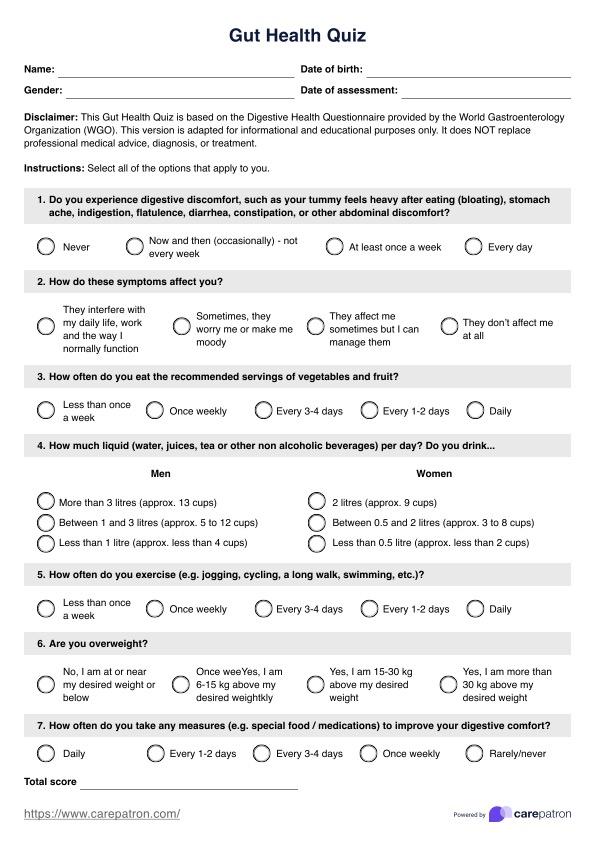
Carepatron’s Gut Health Quiz is based on the Digestive Health Questionnaire developed by the World Gastroenterology Organisation (WGO) (2025), a well-regarded resource for evaluating digestive well-being.

The quiz comprises 8 Likert-type questions that assess key aspects of digestive health, including symptom frequency, dietary intake, hydration levels, physical activity, weight status, and efforts to support digestive comfort. Each response is scored, and the total score offers a practical interpretation (Sámano et. al., 2022):

  • A score greater than 15 indicates Good Digestive Health.
  • A score between 5 and 15 suggests a High Risk of digestive health issues.
  • A score below 5 indicates Poor Digestive Health, warranting prompt medical attention.

This structured tool can help healthcare professionals quickly gauge an individual's digestive health and identify areas where further evaluation or lifestyle counseling may be beneficial. It also serves as an educational prompt, encouraging patients to actively engage in managing their gut health through stress management, dietary improvements, and mindful choices regarding foods and probiotics.

What are the benefits of taking a Gut Health Quiz?

When used appropriately, a Gut Health Quiz offers several clinical and educational benefits:

Promotes awareness of digestive health

Many patients underreport or overlook mild digestive symptoms. A structured quiz can raise awareness of how gut health impacts overall well-being and prompt individuals to share relevant concerns with their healthcare professional. It can also encourage them to focus on dietary improvements, such as consuming probiotic foods, fermented foods, vegetables, and fruits, to support beneficial bacteria.

Supports early identification of potential issues

By highlighting patterns of symptoms and behaviors associated with poor gut health, the quiz allows practitioners to detect individuals who may benefit from further diagnostic workup or preventive interventions.

Guides recommendations for lifestyle changes

The quiz results can inform practical discussions around dietary adjustments, hydration, physical activity, and stress management—all key factors in supporting a healthy gut microbiome and digestive function.

Facilitates patient-provider communication

Armed with quiz insights, patients are better prepared to engage in productive dialogue with their healthcare team. This can lead to more personalized and effective care planning.

Encourages proactive health management

Above all, a Gut Health Quiz empowers individuals to take a more active role in managing their digestive health and supporting their overall quality of life. With guidance and support from healthcare providers, patients can adopt sustainable practices to maintain optimal gut health, improve digestion, and enhance their body’s natural immune function.

References

Guinane, C. M., & Cotter, P. D. (2013). Role of the gut microbiota in health and chronic gastrointestinal disease: Understanding a hidden metabolic organ. Therapeutic Advances in Gastroenterology, 6(4), 295–308. https://doi.org/10.1177/1756283x13482996

Healthdirect Australia. (2024, March 13). Gut health. https://www.healthdirect.gov.au/gut-health

Northeast Digestive. (2023, March 17). How autoimmune diseases affect the gut. https://northeastdigestive.com/blog/how-autoimmune-diseases-affect-the-gut/

Sámano, R., Esparza-Juárez, F., Chico-Barba, G., González-Medina, E., Sánchez-Jiménez, B., & Hernández‐Trejo, M. (2022). Association of diet, body mass index, and lifestyle on the gastrointestinal health risk in a sample of adults. International Journal of Environmental Research and Public Health, 19(17), 10569. https://doi.org/10.3390/ijerph191710569

World Gastroenterology Organisation. (2025). Health test.https://www.worldgastroenterology.org/forms/health-test.php

Commonly asked questions

Examining the endocrine system involves assessing symptoms, reviewing the patient's medical history, and conducting specific diagnostic tests to evaluate hormone levels and gland function. This comprehensive approach helps identify any imbalances or disorders affecting the body and endocrine system.

Assessment techniques for endocrine disorders include blood tests to measure hormone levels, imaging studies to visualize gland structure, and dynamic testing to evaluate gland function and response to stimulation or suppression.

You should consider seeing an endocrinologist if you frequently experience symptoms suggestive of an endocrine disorder, such as unexplained weight changes, fatigue, or irregular menstrual cycles, or if you have been diagnosed with an endocrine condition and need specialized care.

EHR and practice management software

Get started for free

*No credit card required

Free

$0/usd

Unlimited clients

Telehealth

1GB of storage

Client portal text

Automated billing and online payments







