Everyone has a story to tell, and here we share and celebrate those who chose care as their life's work.
These are their words, their work and we're grateful to share them.
Elizabeth and Dennis handed their billing to Carepatron and grew My Therapeutic Concepts from five clients to seventy in two months, without losing their evenings.
## **Understanding gender dysphoria**
Gender dysphoria is a psychological condition where an individual experiences significant distress or discomfort due to a mismatch between their gender identity and the sex assigned at birth (Turban, 2022). Unlike mental disorders that affect one's cognitive functions or perception of reality, gender dysphoria specifically pertains to the distress arising from this incongruence. People experiencing gender dysphoria often feel that their true gender is different from the one society expects based on their physical characteristics, leading to substantial mental health concerns and emotional distress (Garg et. al., 2023). Historically referred to as gender identity disorder, the term has evolved to reflect a more accurate understanding of the condition and improve transgender health care approaches.
Symptoms of gender dysphoria can vary widely but often include a strong desire to be treated as the opposite gender or to alter one's physical appearance through hormone therapy, gender affirming surgery, or other gender dysphoria treatment options. These symptoms can deeply impact an individual's day-to-day life, influencing their mental well-being, social settings, and their perceived gender role in society. While gender dysphoria is not uncommon, it is crucial to approach this condition with care, utilizing tools such as an online gender dysphoria test or gender dysphoria quiz to assist in identifying those in need of support from healthcare professionals.
## **What is a Gender Dysphoria Quiz?**
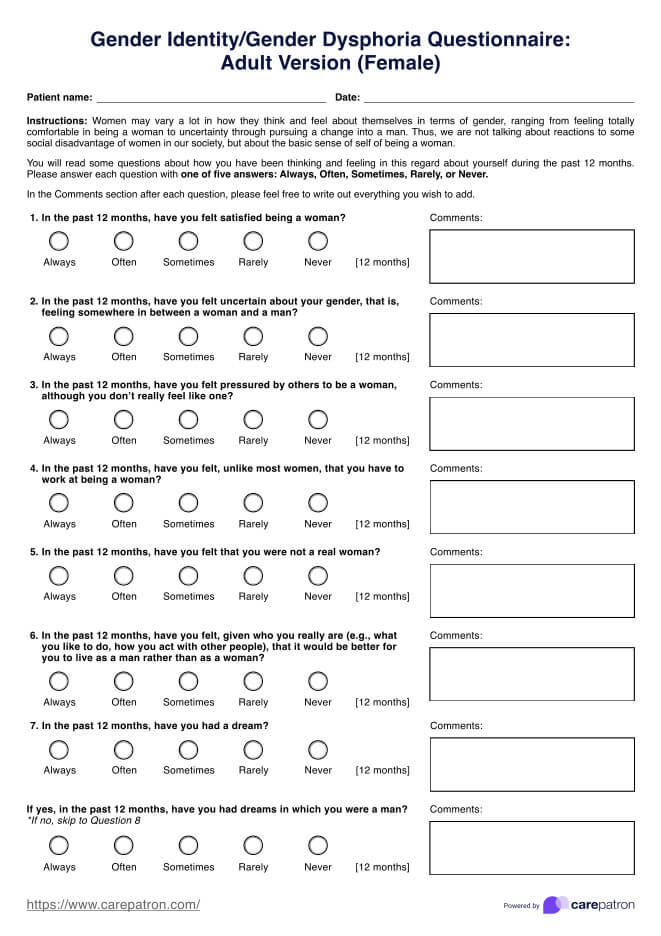
A Gender Dysphoria Quiz is a specialized tool designed to assess the presence and intensity of gender dysphoria in individuals. Specifically, the Gender Identity/Gender Dysphoria Questionnaire for Adolescents and Adults is a 27-item measure used either through structured interviewer-led sessions or as a self-report questionnaire. This quiz aims to gauge how closely an individual's experiences align with their gender identity, particularly when there is a discrepancy between their gender identity and the sex assigned at birth or assigned gender.
This gender dysphoria test is crucial for identifying those who may be experiencing significant mental health concerns related to their gender identity, such as low self esteem or distress in social situations. The quiz serves a dimensional purpose, assessing the degree of gender dysphoria rather than categorizing it as a binary condition. It is especially useful for adolescents and adults who deviate from the traditional male-female gender binary, including transgender or non binary individuals. This includes individuals diagnosed with gender identity disorder, those who identify as "gender variant," and those with disorders of sex development (DSD).
The results of the quiz can help a mental health professional understand the severity of gender dysphoria symptoms and guide appropriate interventions. For some, this might involve hormone therapy, coping strategies, or behavioral therapy to align their physical appearance and social role with their true gender identity. It also assists in addressing mental health issues and testing for dangerous behaviors that may arise due to the distress of gender dysphoria.
## **How does our Gender Dysphoria Quiz work?**
Carepatron's Gender Dysphoria Quiz is designed to provide an accessible and user-friendly way for individuals to assess their experiences with gender dysphoria. The quiz consists of carefully crafted questions that explore various aspects of one's feelings about their gender identity and the sex assigned at birth, including secondary sex characteristics, societal expectations, and significant distress in public or private settings.
Users respond to questions about their emotional distress, discomfort with physical traits such as facial hair or body structure, and desire to align with the opposite gender or undergo physical changes. Once completed, the quiz generates a score indicating the likelihood of experiencing gender dysphoria. This preliminary assessment helps identify whether further consultation with a mental health professional or involvement in support groups is advisable. It is an initial step toward understanding one's gender dysphoria symptoms and can guide individuals toward appropriate support, such as therapy, legal documents changes, or hormone treatment.
## **Scoring and interpreting the Gender Dysphoria Quiz**
Scoring the Gender Dysphoria Quiz involves summing the responses from all 27 items and then dividing this total by 27. This process results in an average score where a lower number indicates a higher degree of gender dysphoria. It's important to note that items 1, 13, and 24 are reverse-scored to accurately reflect the intensity of dysphoria and emotional distress.
The quiz categorizes items into different indicators: subjective indicators of gender identity and dysphoria (Items 1-2, 5-10, 16, and 24-27), social indicators (Items 3-4, 11, 13-15, and 17-19), somatic indicators (Items 20-22, such as discomfort with secondary sex characteristics), and socielegal indicators (Items 12 and 23, including legal documents and assigned sex). Each item also includes a comment section for participants to elaborate on their answers, providing additional context for their responses. This structured approach helps in interpreting the results, understanding the various dimensions of gender dysphoria, and determining whether the individual meets the diagnostic criteria listed in the Diagnostic and Statistical Manual (DSM-5).
## **Next steps after using the quiz**
After administering the Gender Dysphoria Quiz, medical professionals should carefully analyze the results to determine the next steps for the patient. If the quiz reveals significant gender dysphoria, it's crucial to further explore the individual's experiences and needs. Engaging with a qualified mental health professional is essential to assess the depth of one's gender identity concerns and to address any mental health issues that may be present.
The next step often involves a thorough evaluation of the patient's experience of gender dysphoria, including their feelings about their sex characteristics and their desire for potential changes. For those strongly wanting to alter their sex characteristics, discussions about testing hormone therapy may be appropriate. Additionally, behavioral therapy can be a valuable tool for supporting individuals in managing the psychological impacts of their gender dysphoria.
### **References**
Garg, G., Marwaha, R., & Elshimy, G. (2023, July 11). Gender dysphoria (sexual identity disorders). StatPearls Publishing. https://www.ncbi.nlm.nih.gov/books/NBK532313/
Turban, J. (2022, August). What is gender dysphoria? American Psychiatric Association. https://www.psychiatry.org/patients-families/gender-dysphoria/what-is-gender-dysphoria
Commonly asked questions
Confirming gender dysphoria typically involves a comprehensive assessment by a qualified mental health professional using tools like the Gender Dysphoria Quiz. This process includes evaluating the individual's experiences, feelings about their gender identity, and any distress related to their sex assigned at birth.
Soothe gender dysphoria by engaging in supportive therapies, such as behavioral therapy, and considering medical interventions like hormone therapy if appropriate. Creating a safe and affirming environment that respects one's gender identity can also significantly alleviate distress.
Gender dysphoria is not classified as a mental illness but rather a condition where there is a significant conflict between one's gender identity and sex assigned at birth. It can, however, lead to mental health concerns such as anxiety or depression if not properly addressed.