

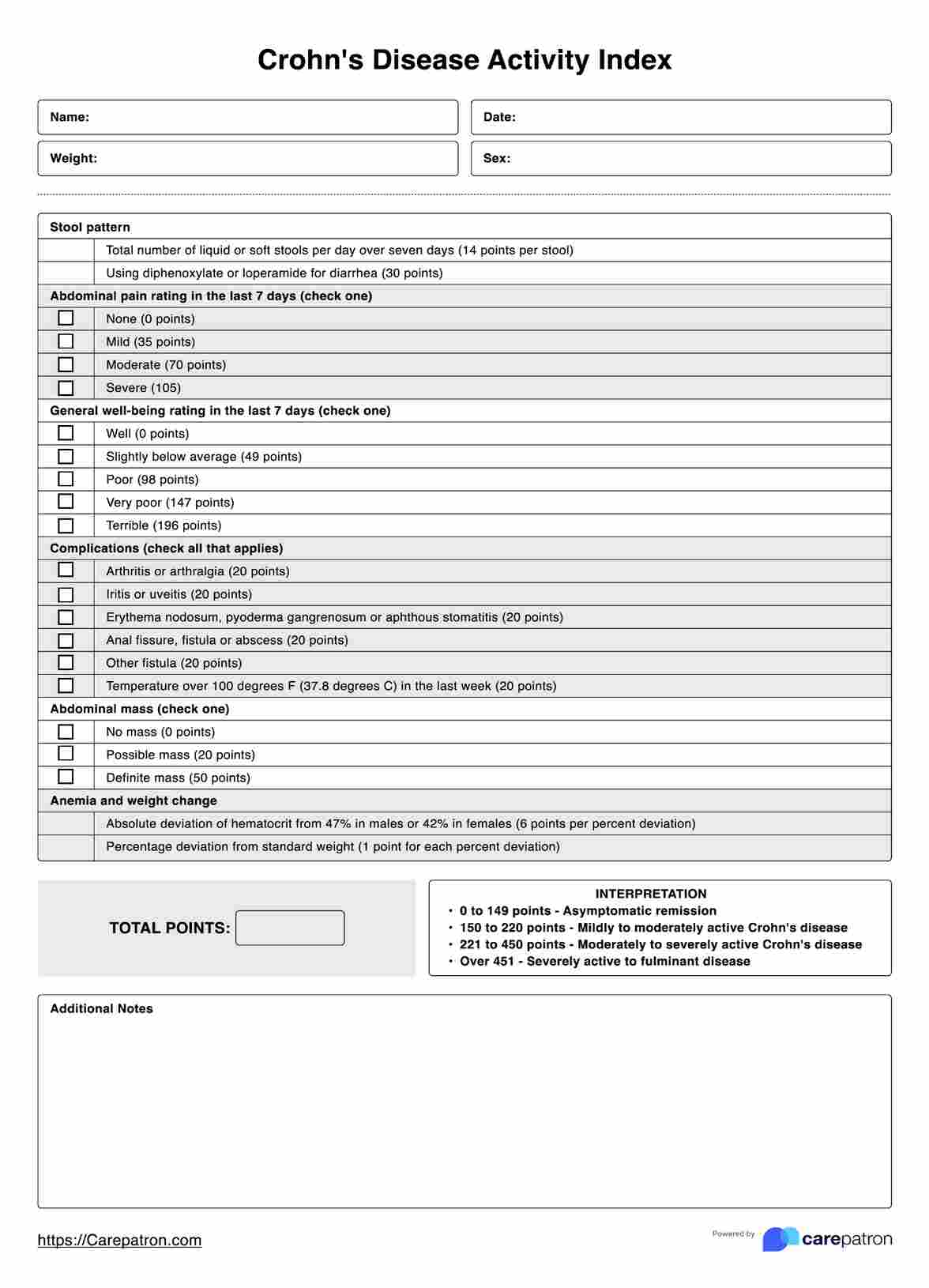




What is a Crohn's Disease Activity Index (CDAI)?
Crohn's disease is an inflammatory bowel disorder that causes chronic inflammation of the gastrointestinal (GI) tract. It can affect any part of the GI tract, from the mouth to the anus, but usually affects the lower sections, including the ileum and colon.
People with Crohn's disease can develop anemia, malnutrition, and weakened immune systems, leading to more severe problems. Treatment options include medication, special diets, and lifestyle changes. Surgery may be necessary if the inflammation is severe or if medications are ineffective in managing the symptoms.
Doctors use the (CDAI) to measure the effectiveness of treatments and monitor disease activity. The CDAI is a numerical index that measures disease activity using various factors.
It assesses the number of stools per day, abdominal pain, general health, hematocrit level (a measure of anemia), weight change, and complications. Each factor has a numerical value; the total score can range from 0 (no disease activity) to 600 (severe disease activity).
The CDAI is a valuable tool for measuring the activity level of Crohn's disease, but it has some limitations. It is not an exact measure of disease activity, as other factors, such as diet and lifestyle, can also affect the score. Additionally, the CDAI does not consider any psychological or emotional symptoms of Crohn's disease.