









What is a concussion?
A concussion is a type of traumatic brain injury that occurs when a blow, jolt, or impact to the head—or a sudden force to the body—causes the brain to rapidly shift within the skull (Centers for Disease Control and Prevention, 2024). This movement can disrupt normal brain functions, leading to structural and chemical changes that result in a wide range of physical, cognitive, and emotional symptoms.
Clinically referred to as a mild traumatic brain injury (National Institute of Neurological Disorders and Stroke, 2024), a concussion still requires careful monitoring, as it can sometimes escalate into a more serious brain injury if not properly managed. Early concussion assessment, supported by baseline testing, can be instrumental in preventing complications, especially in individuals at higher risk, such as athletes or those with previous head injuries.
Causes
Concussions can result from a wide array of incidents, most commonly falls, sports injuries, motor vehicle accidents, or physical abuse (Ferry & DeCastro, 2023). In sports medicine, concussions are a frequent concern during contact sports, particularly during a sports season.
Additionally, head trauma from being struck by an object or experiencing whiplash from sudden acceleration or deceleration can also trigger a concussion (Agarwal et. al., 2024). While most cases are considered a mild concussion, repeated concussions or impacts can lead to a more serious injury or long-term neurological disorders.
Symptoms
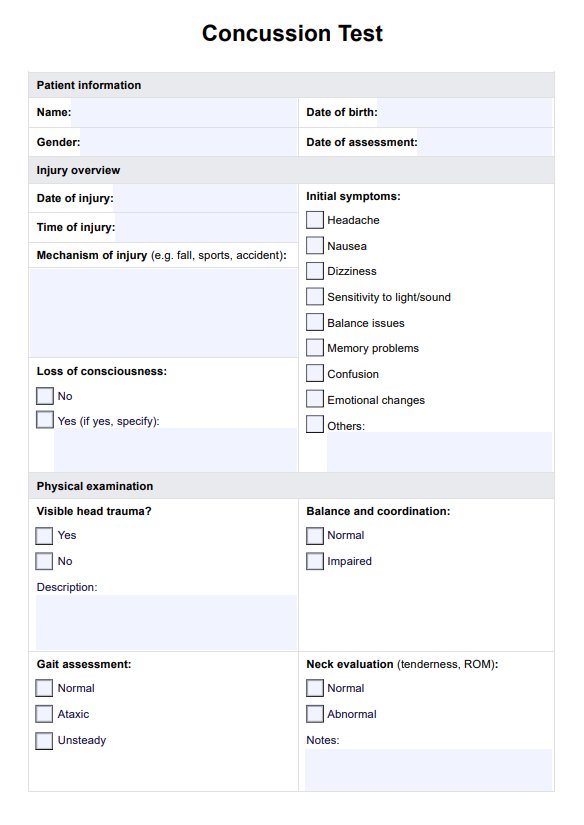
Concussion symptoms can vary significantly depending on the individual and severity of the injury. Common symptoms include headache, dizziness, nausea, sensitivity to light and sound, confusion, and fatigue (NHS, 2023). Some patients may experience temporary loss of consciousness, ringing in the ears, or vision disturbances.
Behavioral changes such as irritability, emotional instability, or sleep disturbances are also frequently reported (Howlett et. al., 2021). In more severe cases, repeated vomiting, seizures, or prolonged confusion may indicate a medical emergency. Symptoms may appear immediately following the head injury or be delayed by hours or even days. A thorough physical exam, coupled with cognitive testing and neurological evaluation, is essential for accurate diagnosis.
Clinicians should remain vigilant for signs of a more serious brain injury, especially in patients involved in clinical trials or those with pre-existing neurological disorders.
Treatment
The cornerstone of concussion treatment is rest, specifically mental rest and physical rest, to allow the brain to heal (The Children's Hospital of Philadelphia, 2014). Patients should refrain from strenuous activities and mental activities like screen time or work that demands high concentration. Symptom management may include acetaminophen for headaches and anti-nausea medications for gastrointestinal discomfort (University of Michigan Health, 2017).
Importantly, alcohol and sedatives should be avoided. A gradual return to activity should be guided by a health care professional, especially in athletes or high-risk individuals. If concussion symptoms persist beyond the expected recovery window, referral to a specialist for further evaluation and other brain functions testing may be warranted.









