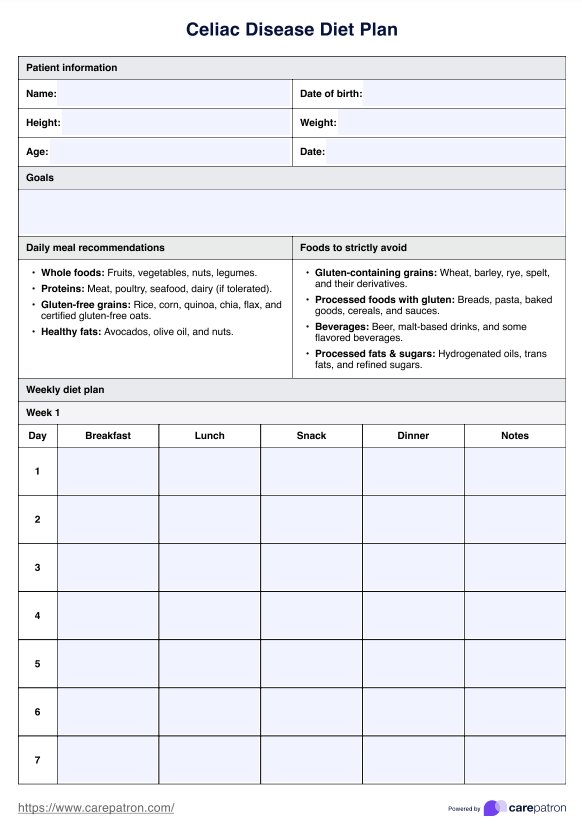
What is a Celiac Disease Diet Plan?
A Celiac Disease Diet Plan is a meal plan that eliminates gluten to prevent adverse immune reactions in people with celiac disease, gluten intolerance, or non-celiac gluten sensitivity. This gluten-free diet removes wheat, barley, and rye while incorporating nutritious foods that support digestive health. Individuals following this plan must choose gluten-free options such as gluten-free bread, grains, and naturally gluten-free products.
Adopting a healthy diet with balanced macronutrients is crucial, ensuring adequate fiber, protein, and vitamins. Since many gluten-free products lack certain nutrients, choosing whole, minimally processed foods is essential for maintaining long-term health.
Food to include
A Celiac Disease Diet Plan should emphasize nutritious foods that are naturally gluten-free and support a healthy diet. Eating gluten-free includes consuming fresh fruits and vegetables, which provide essential vitamins and fiber. Lean proteins such as poultry, fish, and seafood are excellent choices. Dairy products like milk, cheese, and yogurt are typically safe unless lactose intolerance exists.
Legumes, beans, and nuts are great plant-based protein sources. Whole grains such as rice, corn, potato, flax, and chia are excellent alternatives to wheat-based products. Certified gluten-free flours like almond, coconut, and tapioca can be used for baking.
Many gluten-free products, including gluten-free bread and pasta, are available to replace wheat-based foods. Oats are acceptable if labeled gluten-free and consumed in moderation. Homemade soups and sauces without gluten-containing additives are also good dietary choices.
Foods to avoid
For individuals eating gluten-free, avoiding gluten-containing foods is crucial. This includes wheat, barley, rye, and any products derived from them. Processed carbohydrates such as conventional breads, pasta, cookies, and cakes should be replaced with gluten-free options. Gluten-free flour should be used instead of wheat flour in cooking and baking. Beverages like beer and malt alcohol contain gluten and must be excluded.
Many condiments, including soy sauce, salad dressings, and marinades, often contain hidden gluten and require careful label checking. Processed fats, including trans fats and hydrogenated oils, may also contribute to inflammation and should be limited. High-sugar foods should be minimized to maintain a balanced meal plan. Since many gluten-free products can be highly processed, selecting whole, nutritious foods is recommended to ensure a healthy diet while eating gluten-free.