





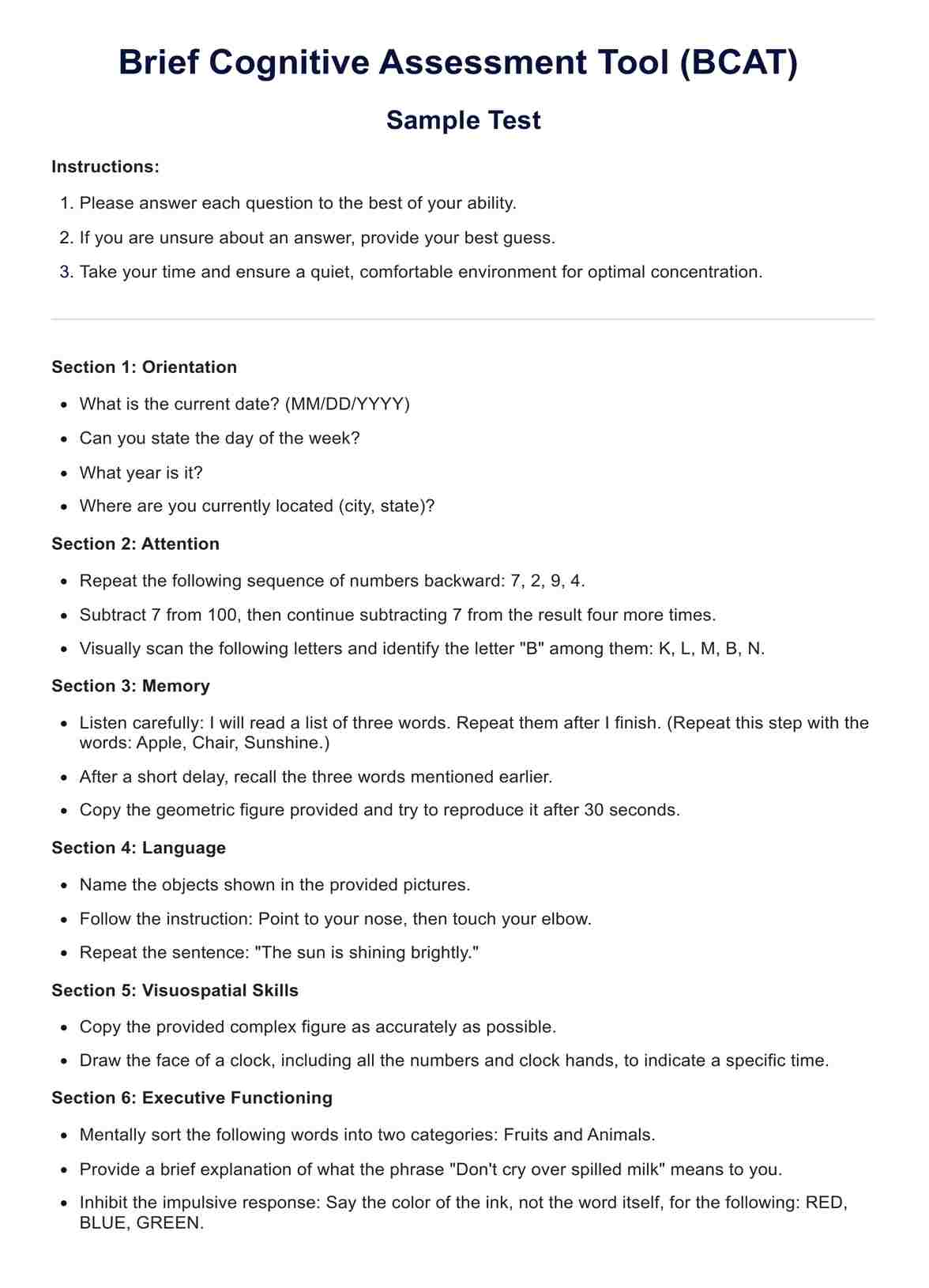




The Brief Cognitive Assessment Tool (BCAT)
The Brief Cognitive Assessment Tool (BCAT) is a structured instrument developed to evaluate cognitive function, cognitive skills, and cognitive impairments across various domains. This tool is particularly valuable in the context of assessing individuals for potential cognitive impairment, dementia, or other cognitive disorders. The BCAT encompasses a range of cognitive domains, including memory, attention, language, executive function, and visuospatial skills, offering a well-rounded evaluation.
One of the distinctive features of the BCAT is its efficiency, allowing for a comprehensive cognitive assessment within a relatively short period. This makes it particularly useful in various healthcare settings, including primary care, geriatrics, and neurology. The instrument is designed to be user-friendly, facilitating ease of administration by healthcare professionals, including physicians, nurses, and other trained staff.
The BCAT incorporates evidence-based practices in cognitive assessment, drawing on established principles in neuropsychology and geriatric care. It takes into account the multifaceted nature of cognitive function and the importance of early detection of cognitive disorders. The comprehensive nature of the BCAT enables practitioners to identify specific areas of cognitive strengths and weaknesses, guiding subsequent interventions, care planning, and support strategies.









