



What is brachial neuritis?
Brachial neuritis, or Parsonage-Turner syndrome, is a rare neurological condition characterized by the sudden onset of severe pain in the shoulder and upper arm, followed by muscle weakness or even paralysis in the affected arm. It results from inflammation of the brachial plexus—a network of nerves in the neck and shoulder that controls movement and sensation in the upper extremity. While its exact cause is often unclear, triggers may include autoimmune reactions, infections, trauma, or post-surgical complications.
Though there is no cure for brachial neuritis, the condition often improves on its own over several months to a couple of years. Treatment primarily focuses on pain management, typically using medications like NSAIDs or corticosteroids. If muscle weakness develops, physical therapy is commonly recommended to help restore strength, flexibility, and function in the affected arm.
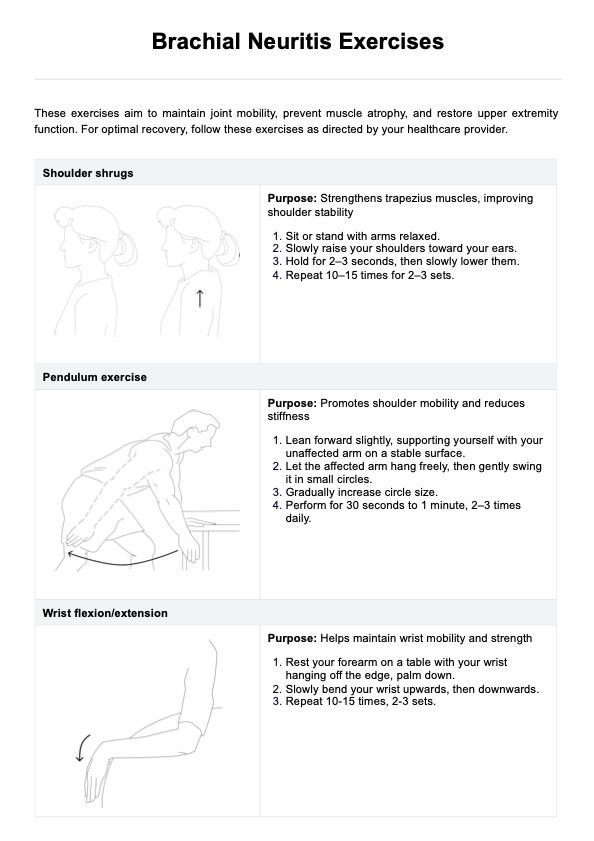
Rehabilitation exercises also play a crucial role in the recovery process for brachial plexus injuries, helping to strengthen muscles, improve flexibility, and restore upper extremity function. These exercises aim to reduce pain, prevent stiffness, and enhance mobility in the affected arm.
Strengthening exercises target the muscles around the shoulder and upper arm, compensating for weakened or injured nerves and reducing strain on affected areas. Stretching exercises help maintain joint flexibility and prevent stiffness that could delay recovery. Occupational therapy may also be included to improve fine motor skills and support daily activities.