





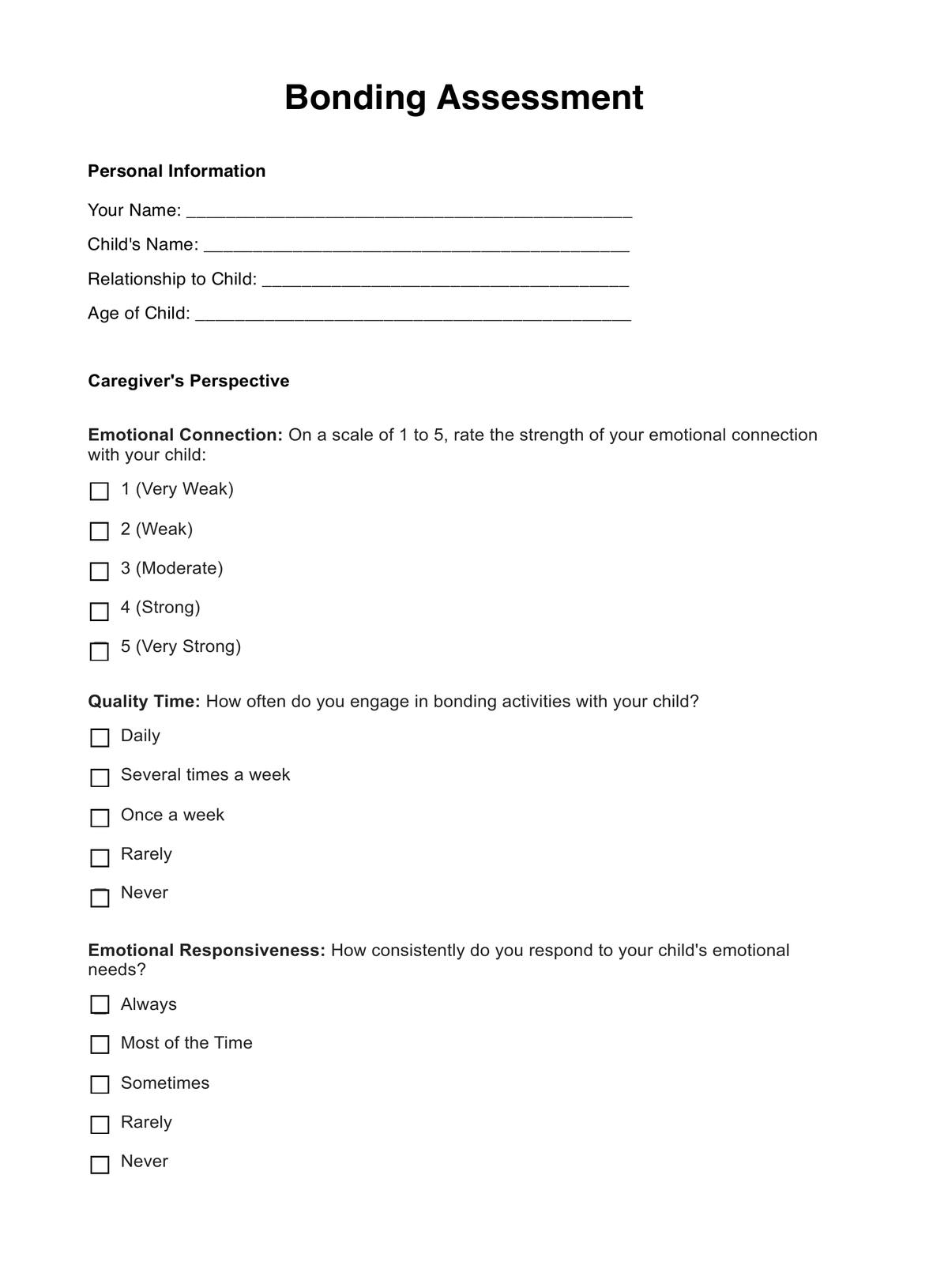




What is a Bonding Assessment?
The significance of bonding in parent-child relationships cannot be underestimated, and bonding assessment is a pivotal tool designed to measure the depth and quality of the connection between caregivers and children. This evaluation measures attachment levels and assesses the parent or caregiver's capability to fulfill the child's emotional and developmental requirements.
Various , such as the Parental Bonding Instrument (PBI), Attachment Q-Set (AQS), Strange Situation, and Mother-Child Bonding Inventory (MCBI), encompass a combination of self-report surveys, interviews, and observations to comprehensively comprehend parent-child dynamics. The results of these assessments are essential in identifying potential relationship issues and devising effective strategies for improvement.
Bonding assessments have diverse applications, including healthcare settings like hospitals and pediatric clinics, as well as foster care agencies and family courts. They prove especially invaluable in ensuring child safety, facilitating adoption or foster care placements, and aiding parents seeking guidance in honing their parenting skills.
By leveraging bonding assessments, the groundwork is laid for robust, nurturing, and enduring parent-child bonds, acting as the cornerstone for a child's wholesome development. Whether a concerned parent is seeking insights or a child-focused professional, bonding assessment checklist can provide an indispensable resource to foster resilient, nurturing relationships that shape a child's well-being.









