









What Is a Bicep Tear?
A bicep tear or bicep tendon tear is a musculoskeletal condition characterized by partial or complete tearing of one of the tendons anchoring the biceps muscle to the shoulder or elbow. This tear can occur proximally, at the superior aspect of the bicep near the shoulder, or distally, at the inferior part near the elbow. While proximal tendon tears are more frequently observed, distal tendon tears, though less common, often require surgical intervention due to the bicep's role in forearm supination and elbow flexion.
The etiology of a is multifactorial. Acute tears often result from sudden, forceful movements or heavy lifting without proper technique or conditioning. Chronic tears, on the other hand, are generally attributed to long-term degenerative changes due to aging or overuse, particularly in individuals frequently engaged in repetitive overhead activities or sports that involve forceful, repeated throwing motions.
The biceps brachii, with its two-headed anatomical structure, is critical to the biomechanical functions of the arm, providing stability to the glenohumeral and elbow joints and facilitating movements such as flexion and supination. Consequently, a tear in the bicep tendon can significantly compromise upper limb functionality and quality of life.
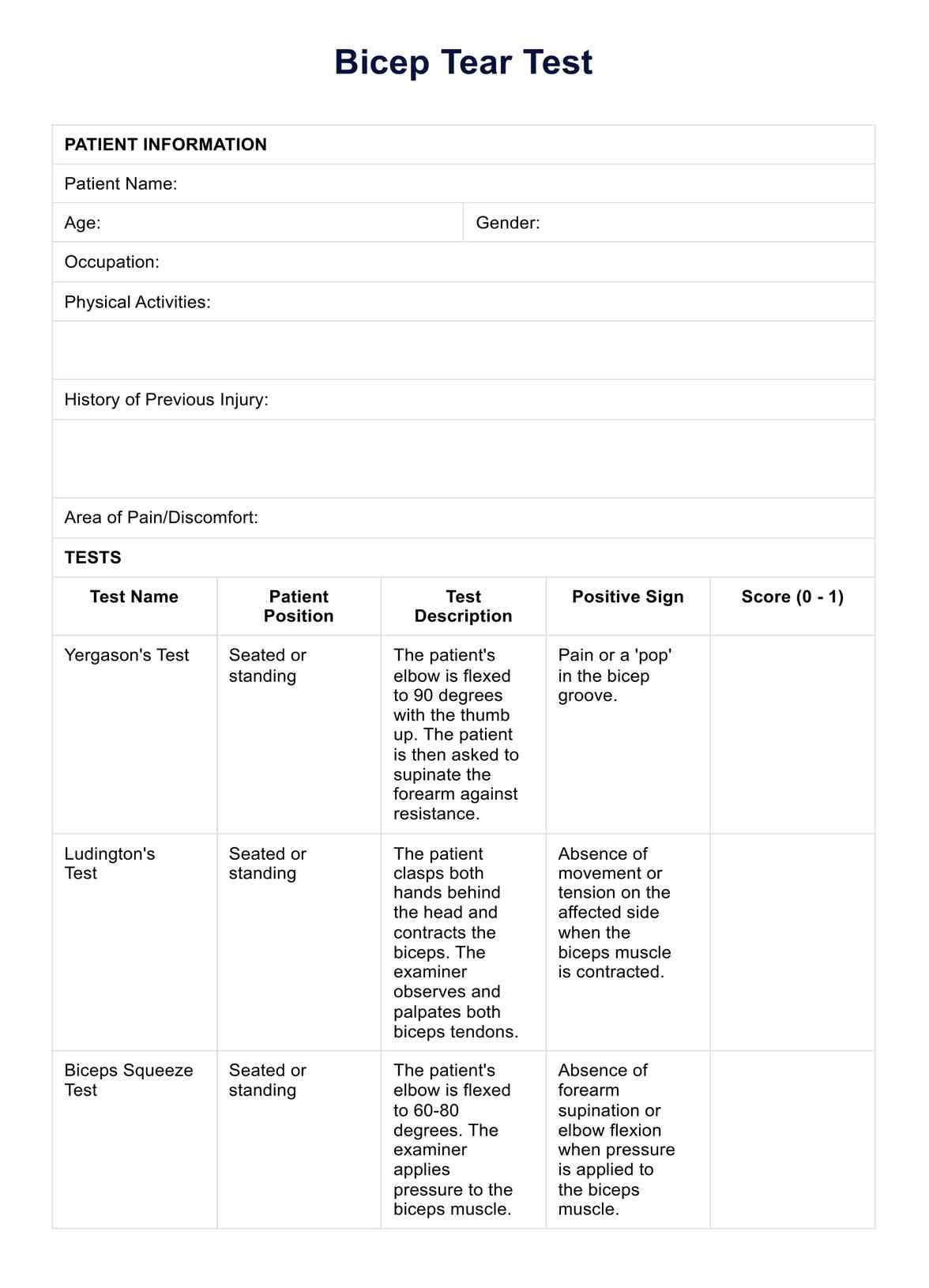
Given the clinical implications, prompt diagnosis and management are paramount. Clinical tests like the Yergason's, Ludington's, Biceps Squeeze, and Hook Tests are often used in differential diagnosis. It is incumbent upon healthcare professionals to have a comprehensive understanding of these diagnostic tests to ensure timely and appropriate management of this condition.









