


What is the Brief Illness Perception Questionnaire?
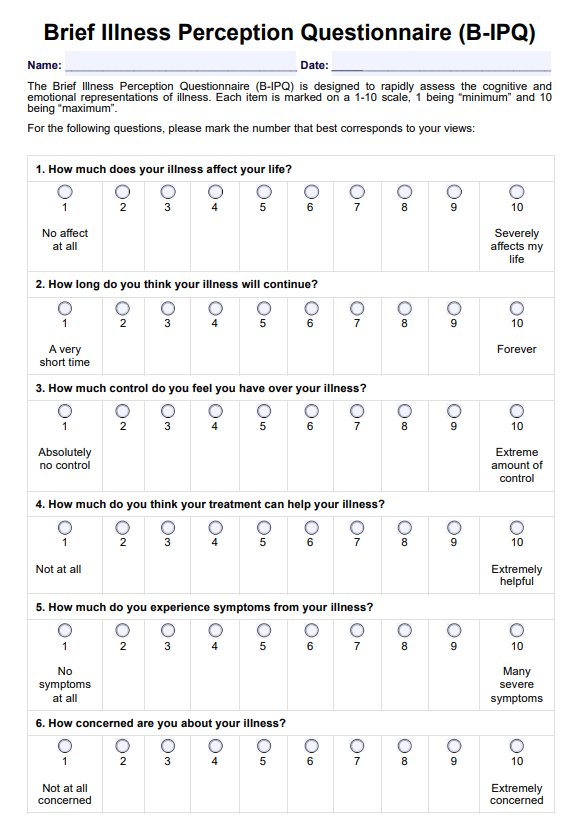
The Brief Illness Perception Questionnaire (B-IPQ) is a tool designed to rapidly assess individuals' cognitive and emotional perceptions of their illness (Broadbent et al., 2006). It was developed as a concise alternative to the original Illness Perception Questionnaire and consists of nine items rated on a scale from 0 (minimum) to 10 (maximum).
The B-IPQ is grounded in the self-regulatory model, which describes how individuals process health threats. This model suggests that situational stimuli, such as symptoms, elicit both cognitive and emotional representations of the illness (Broadbent et al., 2006). Cognitive representations include perceptions of the illness's identity, consequences, cause, timeline, and controllability, while emotional representations encompass reactions like anger, distress, and fear. Together, these representations influence how individuals understand and respond to their health conditions.
Of the nine items in the B-IPQ, five assess cognitive illness representations: effect on life, duration, personal control, effectiveness of treatment, and experience of symptoms (Basu & Poole, 2016). Two items evaluate emotional illness representations, specifically concern about the illness and its impact on mood. One item measures illness comprehensibility, and another captures the perceived cause of the illness, allowing respondents to list the three most likely contributing factors (Basu & Poole, 2016).
The B-IPQ has been widely used to assess patient perceptions in chronic illnesses, including cancer, diabetes, and arthritis. Research shows that positive illness perceptions are associated with better treatment adherence, while negative perceptions in occupational health settings are linked to prolonged sickness and future disability, regardless of the severity of the medical condition (Basu & Poole, 2016). Notably, interventions aimed at altering negative illness perceptions have been shown to improve recovery and outcomes (Broadbent et al., 2006).
The B-IPQ has demonstrated robust discriminant validity, showing great ability to distinguish between illness (Broadbent et al., 2006). The questionnaire's concurrent validity is also reliable when applied to conditions such as asthma, renal disease, and diabetes (Broadbent et al., 2006). Additionally, its predictive validity has been observed in studies of patients recovering from myocardial infarction, where it correlates with mental and physical functioning, including attendance at cardiac rehabilitation classes (Broadbent et al., 2006).