

The Health Effects of Wildfire Smoke

## **How do wildfires start?**
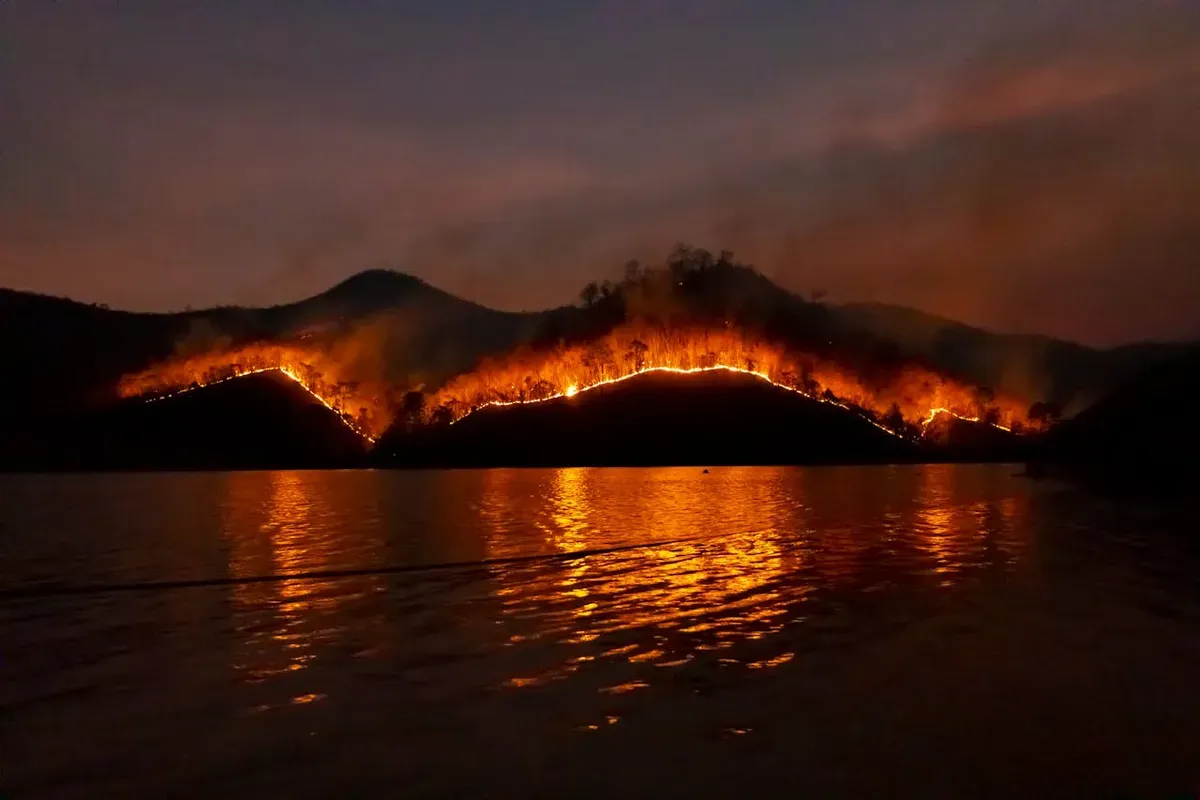
Wildfires are unplanned and uncontrolled fires that burn through forests, grasslands, and other natural areas. They can start from natural causes, like when lightning strikes, or from human actions, such as leaving campfires unattended, tossing lit cigarettes, or when downed power lines spark flames.
Once a fire starts, dry conditions, high temperatures, and strong winds can cause it to spread quickly, sending large amounts of smoke and pollutants into the air. This smoke contains tiny particles and harmful chemicals that can travel far beyond the fire zone, worsening air quality and putting nearby communities at risk.
>Knowing how wildfires start is key in environmental health because they’re closely linked to serious health impacts like lung disease, COPD, heart problems, and overall public health risks.
## **The 2025 California wildfires**
In January 2025, California faced terrible wildfires, most notably the Palisades and Eaton fires, which destroyed over 12,000 structures and killed at least 25 people. The widespread smoke from these fires dramatically reduced outdoor air quality, increasing exposure to fine particles and other air pollutants.
This decline posed serious health hazards, especially for people who had pre-existing diseases, including chronic obstructive pulmonary disease (COPD), lung disease, or cardiovascular disease.
Due to high patient volumes, healthcare facilities experienced extraordinary challenges, including clinic closures, treatment delays, and hospital overcrowding. Road closures and power outages also hindered patient transportation and medical equipment functioning, hampering disease control efforts and affecting public health.
One high-profile victim was filmmaker David Lynch. Lynch, a lifetime smoker, was diagnosed with COPD (emphysema) in 2020. He was forced to evacuate his Los Angeles house in January 2025 due to raging flames. The stress and increased exposure to bad air quality most certainly exacerbated his condition, resulting in his death from cardiac arrest on January 16, 2025.
This tragedy is a sobering reminder of how environmental crises disproportionately affect older adults and those with underlying health conditions. It also underscores the urgent need for strong public health measures and environmental health science interventions to protect vulnerable populations during disasters.
## **Wildfire smoke health effects (long term)**
>Prolonged exposure to wildfire smoke impairs lung function and raises the chance of acquiring chronic respiratory diseases.
Long-term exposure to wildfire smoke can lead to a wide range of chronic health impacts that affect multiple systems in the body, especially in sensitive groups and people with pre-existing health conditions. Here are five long-term health effects of wildfire smoke exposure:
### **Impaired respiratory function**
Prolonged exposure to wildfire smoke impairs lung function and raises the chance of acquiring chronic respiratory diseases. Fine particles and other air pollutants in smoke, such as particulate matter, sulphur dioxide, nitrogen dioxide, and polycyclic aromatic hydrocarbons, can travel deep into the respiratory tract, worsening asthma and other lung illnesses.
This is especially concerning for people with chronic obstructive pulmonary disease (COPD) and those who already have breathing problems or extreme exhaustion.
For example, during Australia’s 2019–2020 bushfires, a long-term study found many residents experienced reduced lung capacity months after the fires ended, with some developing chronic bronchitis symptoms even without a prior respiratory diagnosis. This is especially dangerous for people who already live with COPD or severe asthma (Measuring the Impact of Bushfires on People with Respiratory Conditions, 2021).
### **Increased risk of cardiovascular disease**
Long-term exposure to wildfire smoke has been associated with harmful cardiovascular effects such as heart disease, heart failure, and premature death. Air pollution, particularly fine particulate matter and carbon monoxide, can cause systemic inflammation and oxidative stress, putting older persons and those with chronic heart disease at greater risk.
Healthcare providers should be aware of an increase in emergency room visits for chest discomfort, arrhythmias, and stroke during periods of prolonged smoke exposure.
A 2020 study reported that heavy smoke exposure during California wildfires raised the risk of out-of-hospital cardiac arrests by up to 70%. This dramatic increase underscores how wildfire smoke can trigger serious acute and potentially fatal cardiovascular events (Jett, 2025).
### **Worsening mental health**
The psychological toll of recurring wildfire incidents can result in persistent stress, anxiety, and depression, especially among relocated people or those with poor socio-economic positions. Reduced physical activity as a result of poor air quality and fear of smoke inhalation may have a negative influence on mental health.
These variables exacerbate long-term public health concerns, particularly when environmental health sciences and public health interventions are underfunded or reactive rather than proactive.
### **Chronic inflammation and weakened immune system**
Persistent exposure to wildfire smoke can cause chronic inflammation, impairing the immune system's ability to respond effectively to infections and injuries. Fine particulate matter and other air pollutants have been demonstrated to influence cytokine expression and immunological modulation, particularly in vulnerable populations.
Long-term implications may include increased susceptibility to autoimmune diseases and slower recovery from respiratory infections.
### **Health system burden and disease control challenges**
From a public health perspective, recurring wildfire seasons create sustained pressure on healthcare systems. Increased emergency room visits, hospital admissions, and the need for specialized respiratory care can overwhelm facilities, particularly in rural or under-resourced areas.
## **How are wildfire smoke health effects treated?**
Treating wildfire smoke-related health problems takes a mix of medical care, environmental protection, and public health strategies aimed at reducing exposure and preventing long-term harm. Here are some of them:
### **Respiratory symptom management**
Clinicians often turn to bronchodilators, corticosteroids, and supplemental oxygen to treat respiratory symptoms induced by wildfire smoke exposure, such as asthma attacks, trouble breathing, and COPD exacerbations. People with pre-existing health issues, such as other lung disorders, are more vulnerable, so regular check-ins and close monitoring are essential.
For high-risk groups like older adults and pregnant women, clinicians should focus on symptom control, pulmonary function assessments, and exposure assessment to prevent complications from particulate matter and fine particle pollution.
### **Cardiovascular disease monitoring and support**
Wildfire smoke can worsen heart disease and chronic heart conditions through inflammation triggered by carbon monoxide and other air pollutants. Patients may require medication adjustments, increased monitoring for arrhythmias, and rapid intervention during emergency room visits related to heart failure or chest pain.
Long-term exposure to ambient air pollution and fine particulate matter is also associated with an increased risk of cardiovascular events, especially in populations with poor underlying health status and limited access to care.
### **Indoor air quality improvements**
Improving interior environments is an essential aspect of reducing smoke exposure. Public health interventions stress using air conditioning and high-efficiency particulate air (HEPA) filters to reduce indoor air pollution.
People in at-risk groups should stay indoors, use the air quality index to check current air quality, and limit physical activity during wildfire events when forest fires and burning trees harm outdoor air quality.
### **Addressing mental health impacts**
Living through prolonged smoke events, and the displacement, financial strain, and uncertainty that come with them, can lead to anxiety, depression, and post-traumatic stress disorder (PTSD). Accessible mental health support, such as counseling, stress-reduction programs, and community outreach, helps people recover and build resilience.
Mental health planning should be part of every disaster response, with special attention to those who have pre-existing mental health conditions, limited resources, or repeated wildfire exposure.
### **Public health surveillance and outreach**
Public health teams issue air quality alerts, set up emergency shelters with clean air zones, and share practical tips for avoiding exposure. These outreach programs prioritize vulnerable groups, including seniors, pregnant women, and people with chronic respiratory or heart conditions.
Ongoing surveillance also helps environmental health scientists track health outcomes, such as low birth weight or changes in weight patterns, linked to smoke exposure.
### **Long-term health monitoring and research**
Long-term exposure assessment is key to understanding the effects of particle pollution and polycyclic aromatic hydrocarbons on the respiratory and cardiovascular systems.
Collaborative efforts between public health, clinical medicine, and environmental protection agencies are crucial to addressing these health risks amid increasing climate change and wildfire frequency.
## **Educating victims of wildfire smoke exposure**
Healthcare professionals play a crucial role in helping patients understand the health risks of wildfire smoke, especially those who are most vulnerable, like older adults, children, pregnant women, and people with respiratory conditions. Education should focus on spotting early symptoms, understanding the dangers of long-term exposure, and knowing how to prepare for future wildfire events.
Personalized care matters most for people with pre-existing conditions or from lower-income communities, where access to protective resources may be limited.
To help patients stay prepared and protect their health, clinicians can:
- Encourage the use of clean air shelters or safe rooms during forest fires
- Recommend portable HEPA air purifiers for homes
- Educate on minimizing outdoor activities during high-smoke days
- Help develop emergency kits with medications and asthma action plans
- Discuss the importance of maintaining a healthy body weight and respiratory fitness to reduce vulnerability
- Offer tailored guidance for pregnant people to mitigate risks to fetal health
By weaving preparedness and prevention tips into regular patient care, healthcare providers can strengthen community resilience and reduce the long-term impact of wildfire smoke exposure.
## **References**
Jett, C. (2025, January 21). How exposure to wildfire smoke impacts human health now, soon, and later - The Salata Institute. The Salata Institute. https://salatainstitute.harvard.edu/how-exposure-to-wildfire-smoke-impacts-human-health-now-soon-and-later/
Measuring the impact of bushfires on people with respiratory conditions. (2021). Woolcock. https://www.woolcock.org.au/news/measuring-the-impact-of-bushfires-on-people-with-respiratory-conditions