

Termination in counseling and psychotherapy
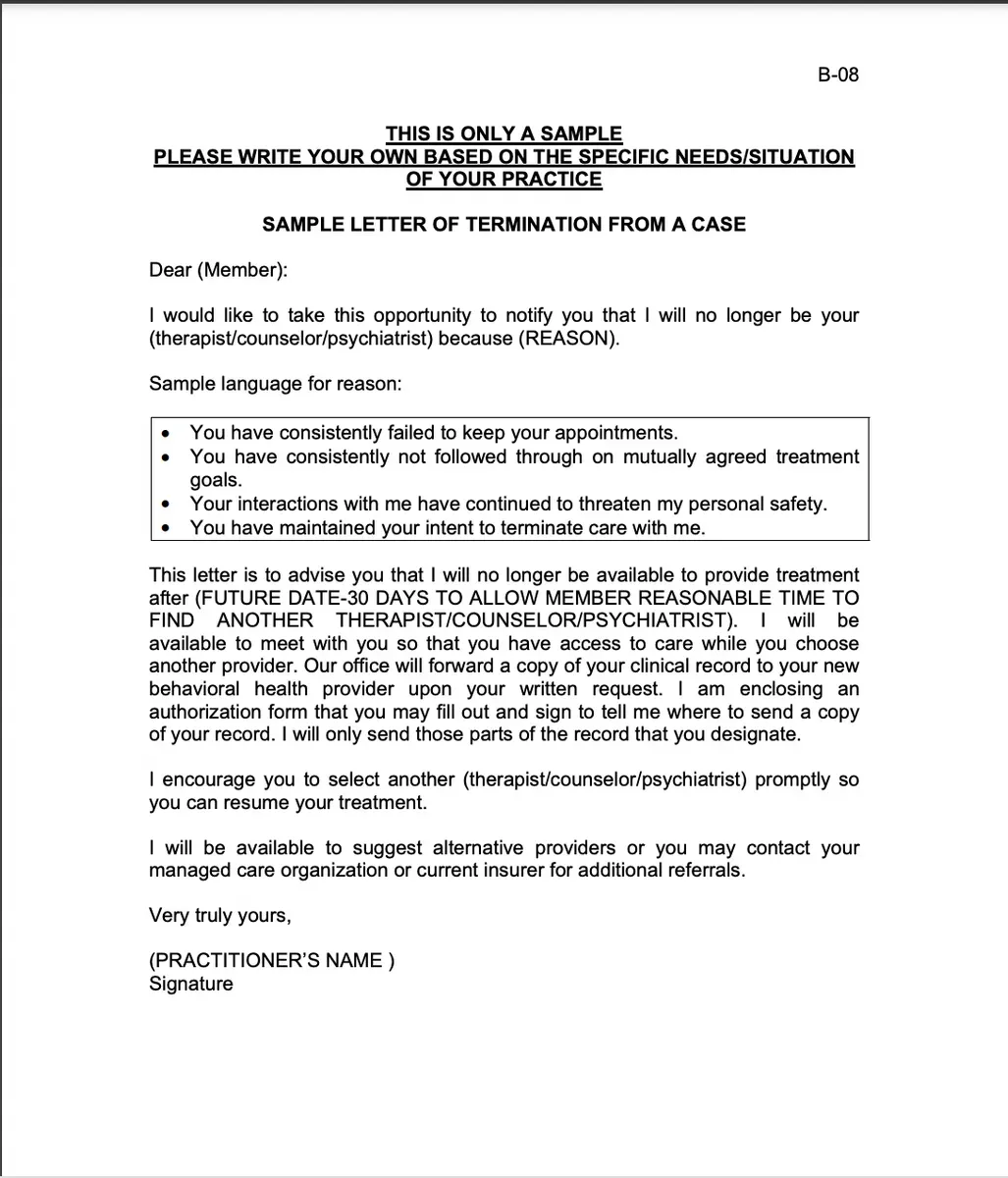
Termination is, perhaps, a key skill that therapists in a counseling practice need to master if they want to operate successfully. It is an essential part of the counseling process. Termination may result from the end of a long and trusting relationship with a client or from something more complicated, including numerous no-shows or simply being a bad fit.
While clients can terminate their relationship with a therapist at any point and for any (or no) reason, this process is slightly more complex for therapists. Knowing the right time to terminate therapy and how to navigate communications well will protect the counseling relationship and the welfare of both the client and therapist and ensure no ethical boundaries are breached.
This guide will explain how termination ethics work in the therapeutic process and outline exactly how and why you should end therapy with a client. These skills will enable you to look after your and your client's health, hopefully contributing to personal growth and developing positive relationships and coping skills, even after ending therapy.